There are festivals you attend, and festivals that absorb you.
The Kishiwada Danjiri Festival belongs to the second kind. From the moment I arrived, it felt as though the entire town had been pulled into the same rhythm. The streets were crowded, the drums relentless, the voices loud, and the energy almost physical. It moved through the ropes, the wooden floats, the runners and the spectators standing shoulder to shoulder along the road.
Kishiwada was not simply hosting an event. For one day, perhaps for an entire season, the town itself had become the festival.
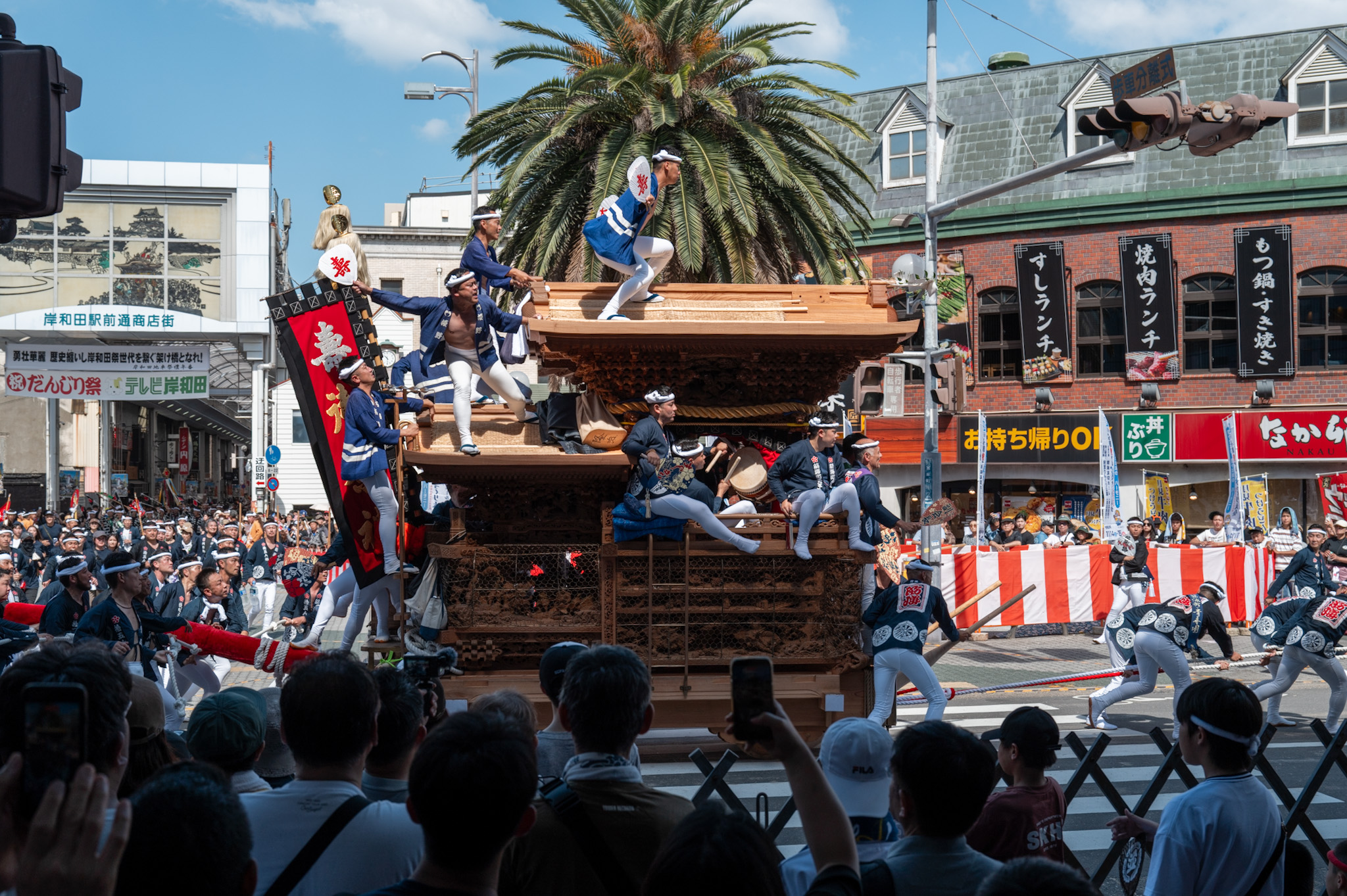
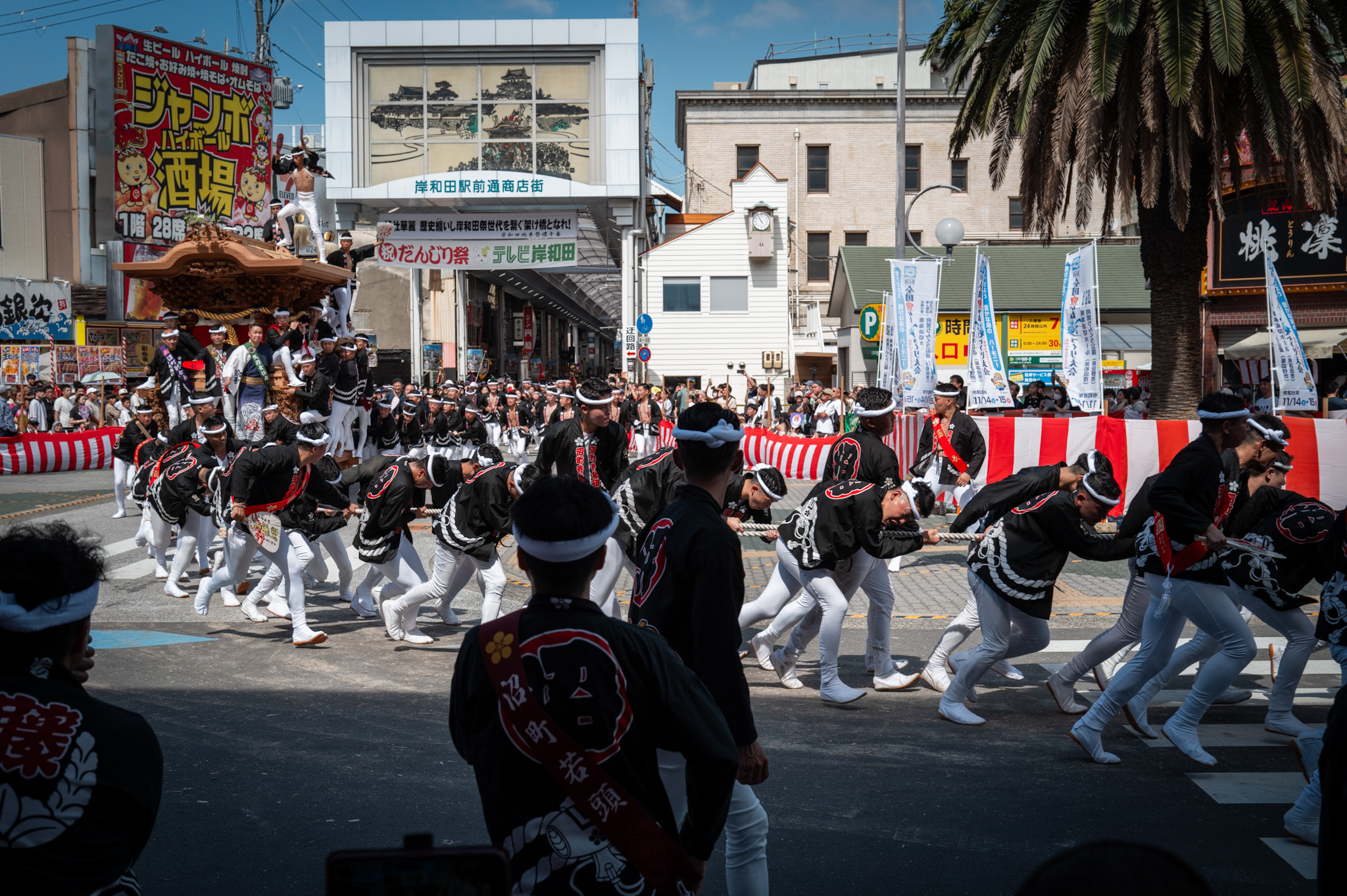
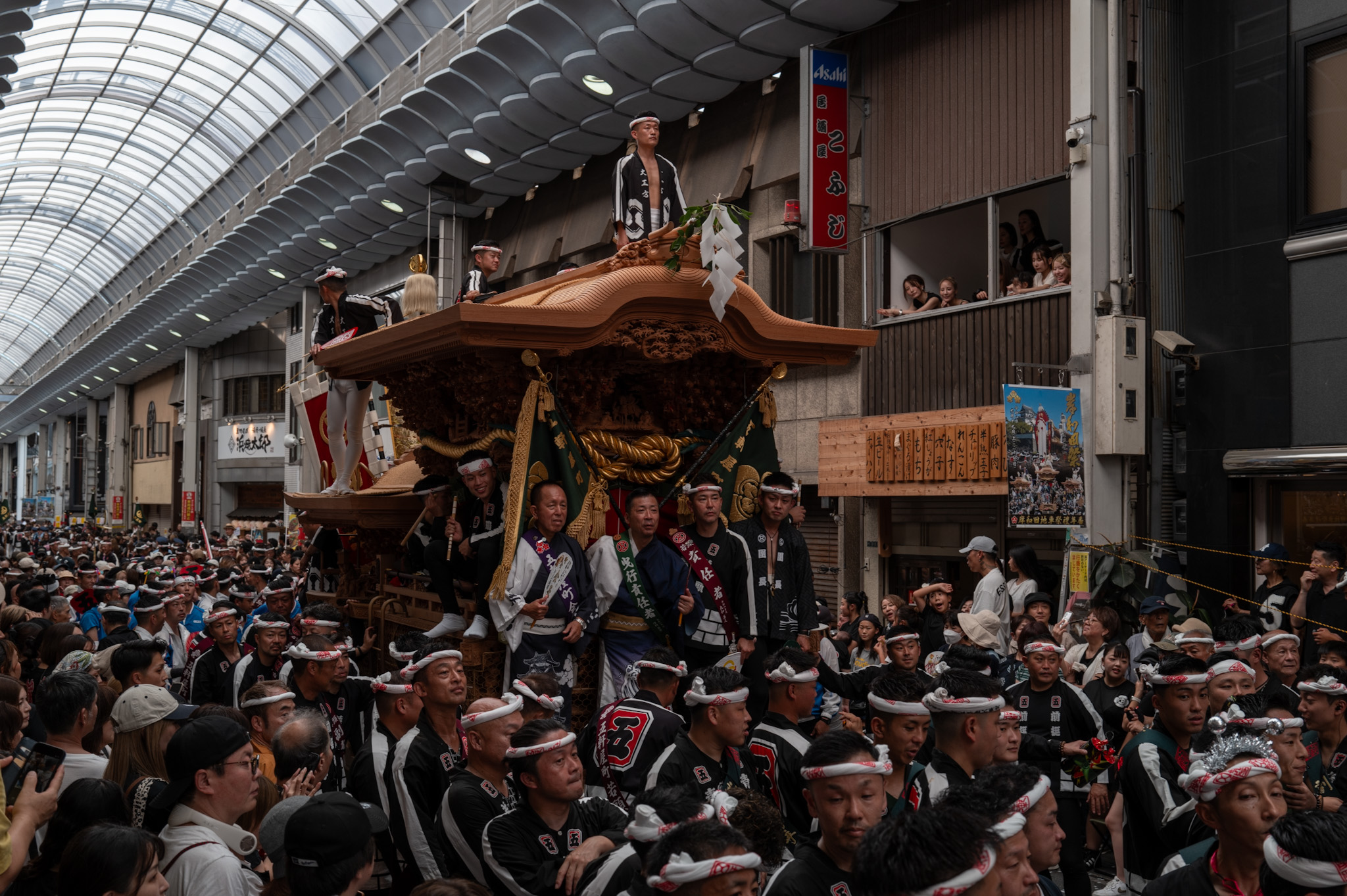
The Danjiri Matsuri has more than 300 years of history. Its origins are traditionally traced to 1703, when the lord of Kishiwada Castle organised celebrations connected with prayers for a successful harvest. Over the centuries, the religious ceremony evolved into the extraordinary public spectacle seen today: enormous, elaborately carved wooden floats pulled rapidly through narrow streets by teams representing different neighbourhoods.
But history alone cannot explain what happens in Kishiwada.
You understand the festival through the sound first. The heavy pulse of the taiko drums arrives before the float itself. Then come the whistles and shouted instructions, the movement of the crowd and the approaching mass of wood, ropes and people.
The danjiri appears almost like a building suddenly set in motion. It is beautiful, imposing and slightly frightening. Men balance and dance on its roof while dozens of runners pull from the front, coordinating speed, direction and timing. At the corners, everything becomes more intense. The crowd leans forward. The ropes tighten. The float turns with a combination of skill, strength and controlled risk.
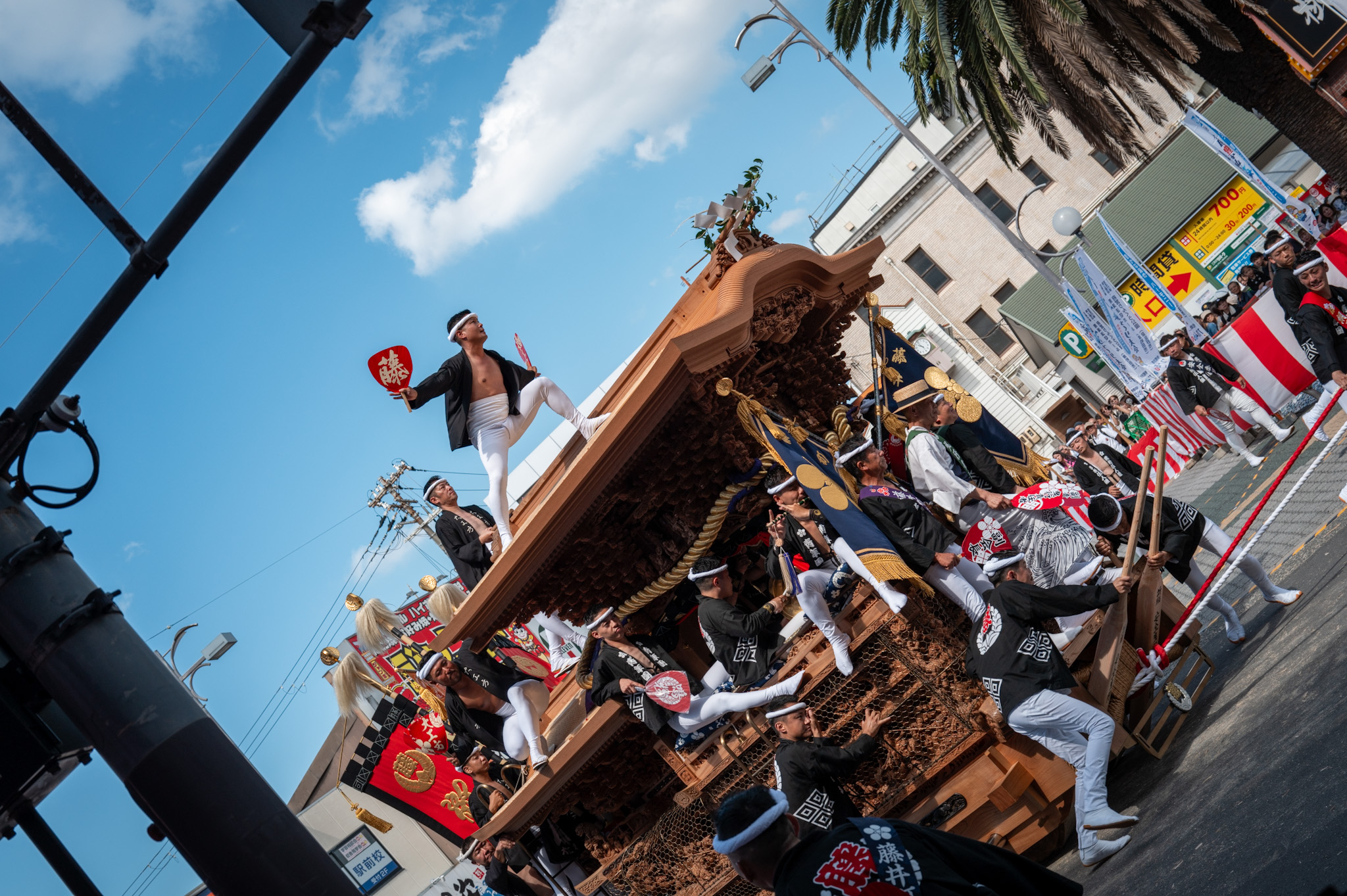
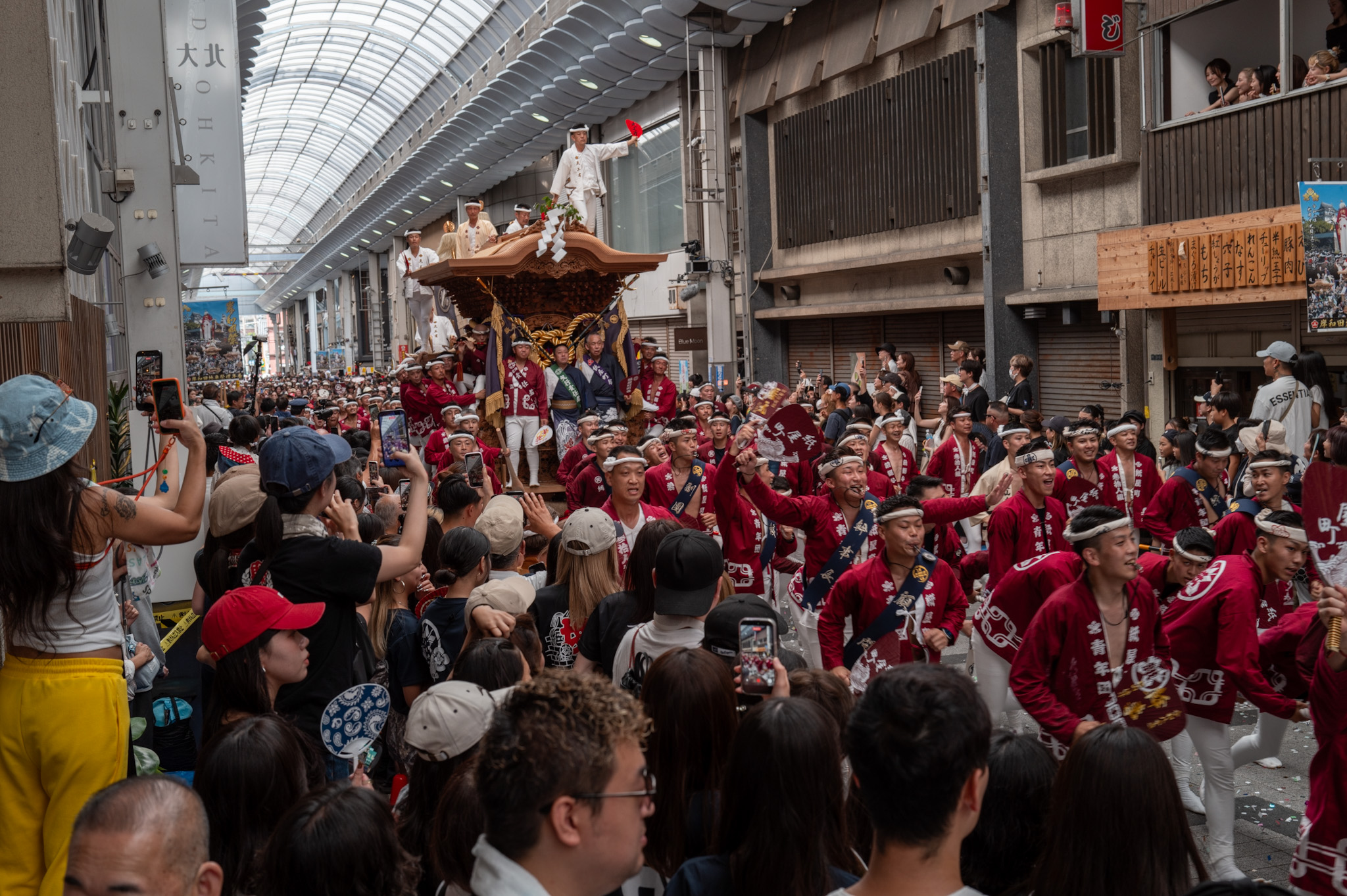
Yet what impressed me most was not the spectacle. It was the sense of collective ownership.
Children wore festival clothing and watched closely from the roadside. Teenagers moved confidently within the teams. Adults pulled the ropes, carried responsibilities and managed the crowds. Older residents observed from doorways and familiar corners, sometimes with the calm expression of people who had witnessed the same ritual throughout their lives.
Every generation seemed to have a place.
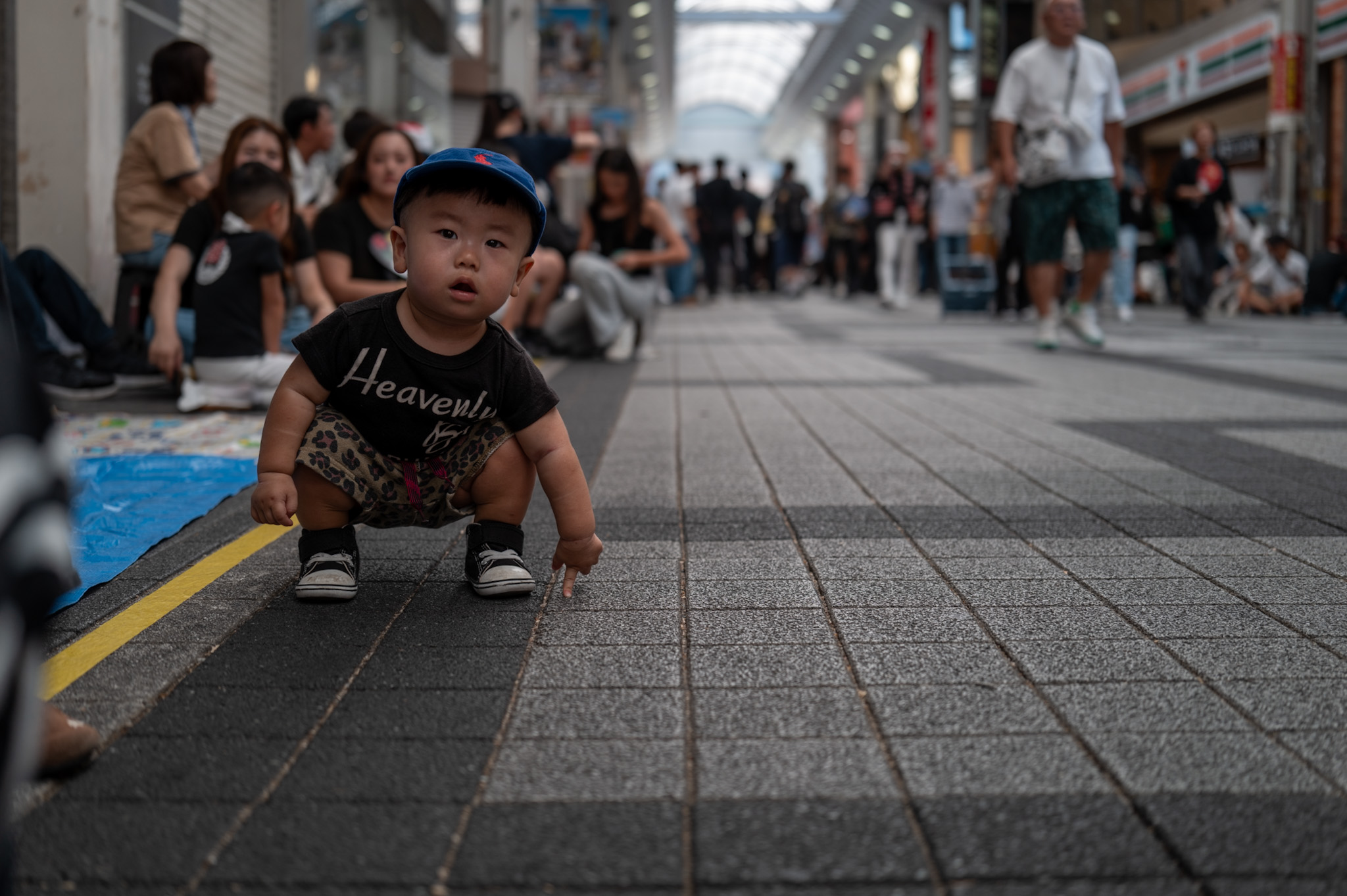
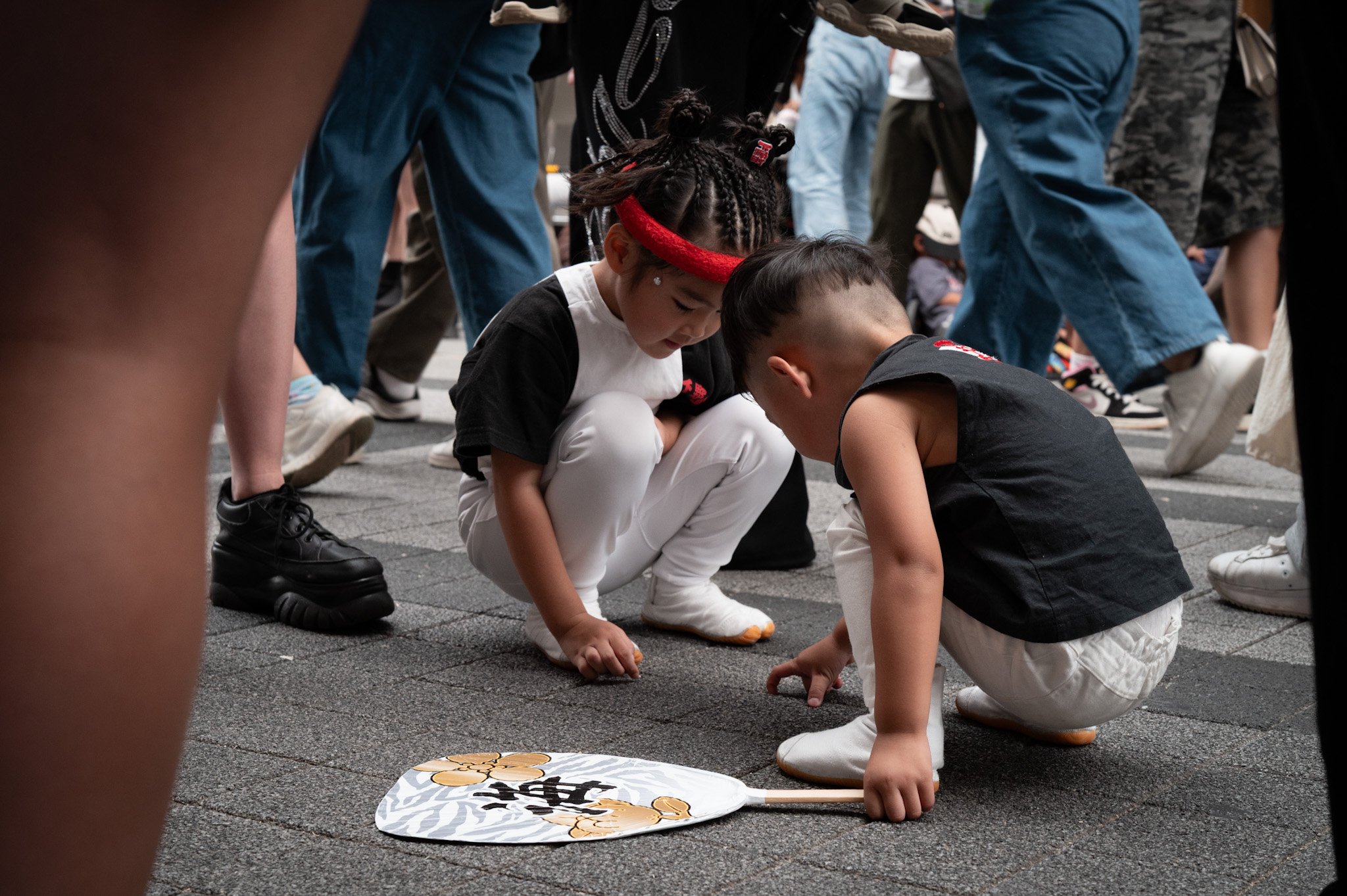
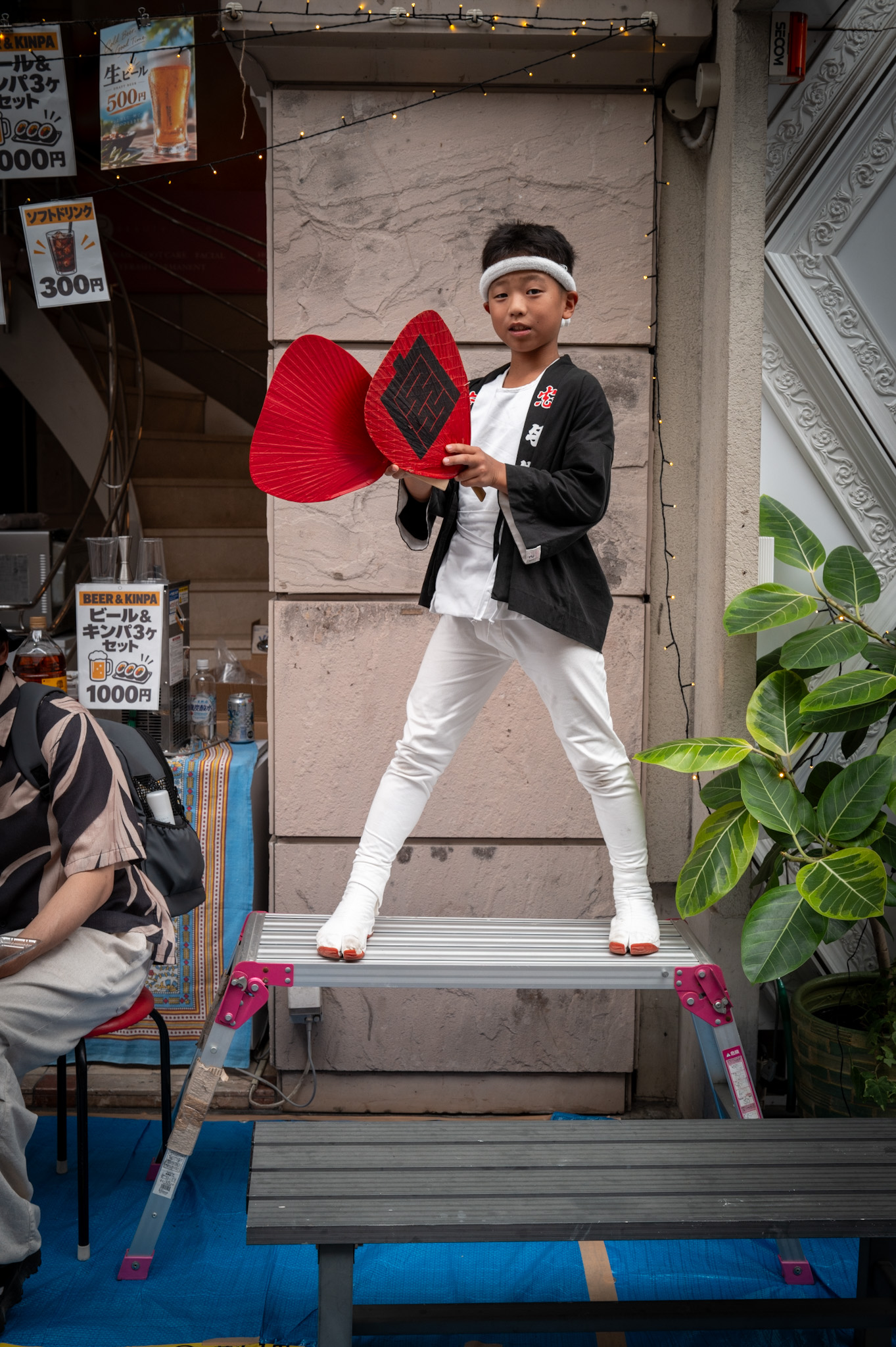
I spoke briefly with Nana, a young woman from Kishiwada who runs with one of the teams. “I think this festival is part of our identity,” she told me. “Everyone becomes so excited about it every year.”
She explained that preparations occupy a large part of the year and that the tradition begins early. “Even at school, we learn about the festival. We also learn and play its music. It is something that surrounds us from childhood.”
Her words helped me understand what I was seeing. The extraordinary coordination in the streets does not appear spontaneously over one weekend. It is taught, rehearsed and inherited. Children first hear the drums as spectators. Later, they may play them, pull the ropes or help organise the neighbourhood team. The festival continues because each generation is gradually invited inside it.
Throughout the day, I was also struck by the hospitality.
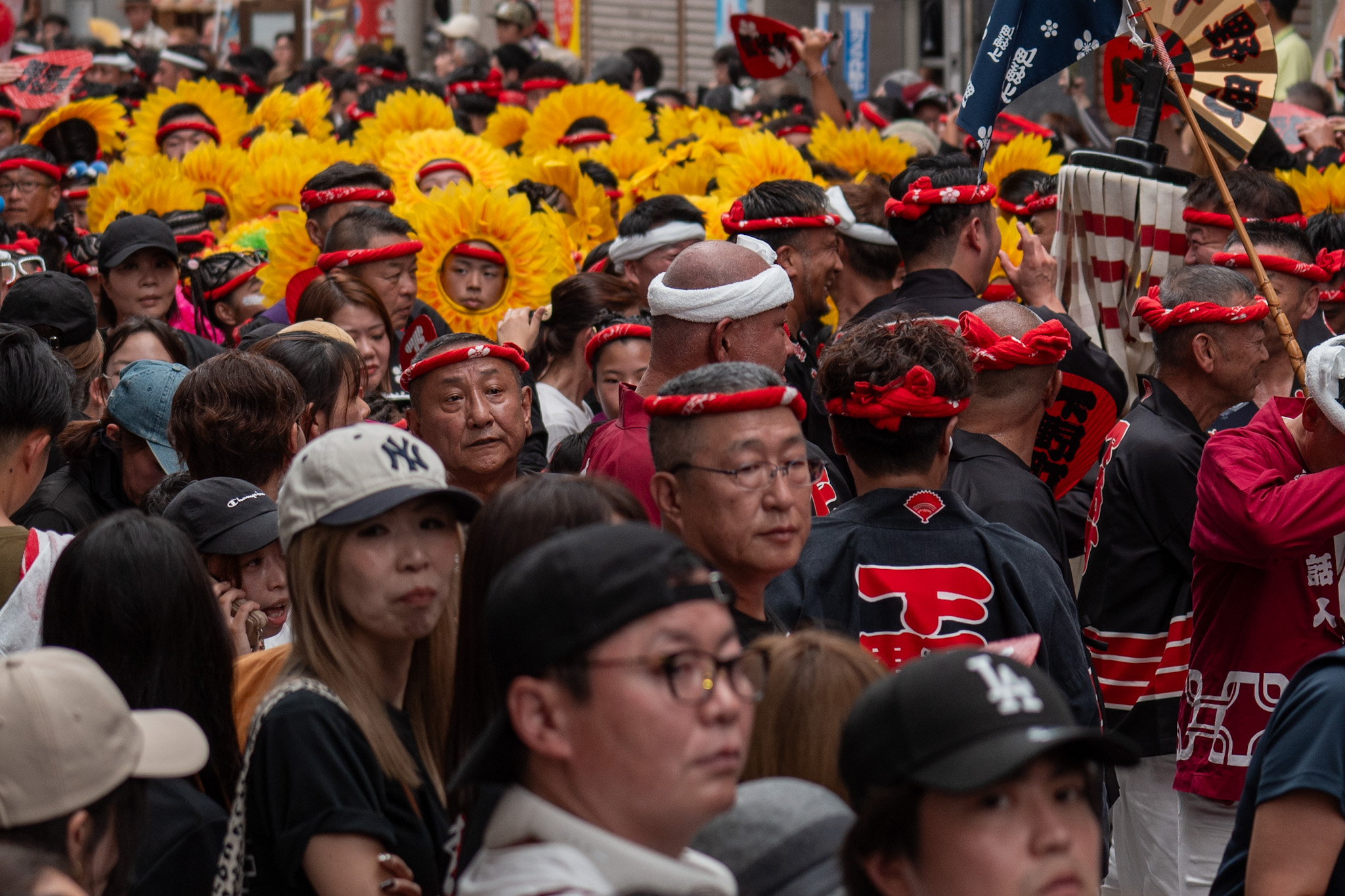
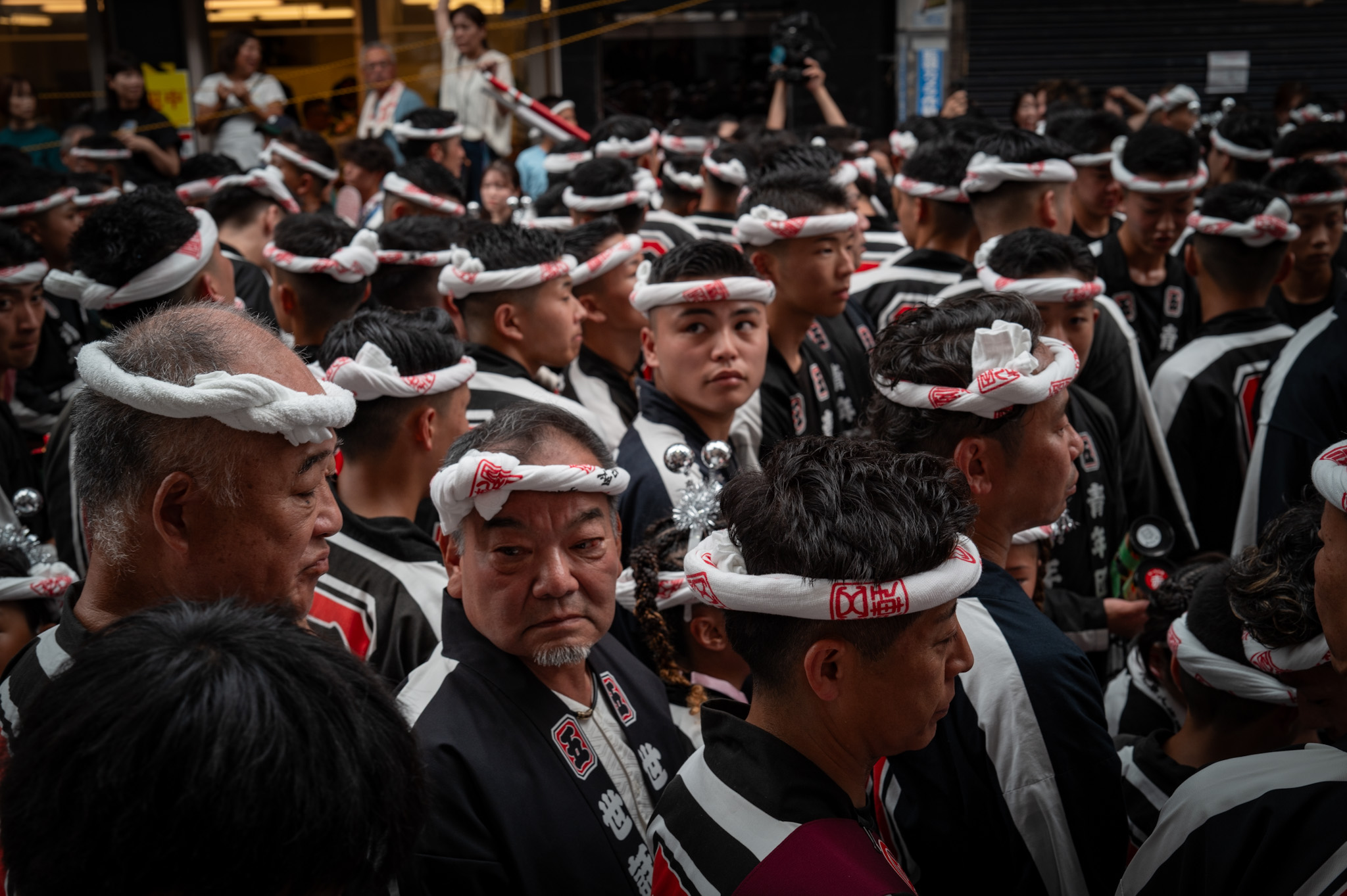
People smiled, explained what was happening and made space for me among the crowds. Despite the noise and the intensity, there was warmth everywhere. I never felt like an outsider intruding on a private tradition. Instead, I felt welcomed into it, even briefly. That generosity changed my day.
It would have been easy to photograph only the speed of the floats or the athleticism of the runners. But the more I watched, the more I noticed the quieter details: someone offering water to an exhausted participant, families waiting together, elderly residents greeting people they had known for decades, children copying the gestures of the adults. Tradition here was not preserved behind glass. It was sweating, shouting, running and beating a drum.
By the afternoon, the sound seemed to have entered my body. The rhythm followed me even when the floats had passed and the street temporarily emptied. There was always another drum in the distance, another team preparing to move, another wave of people gathering at the next corner.
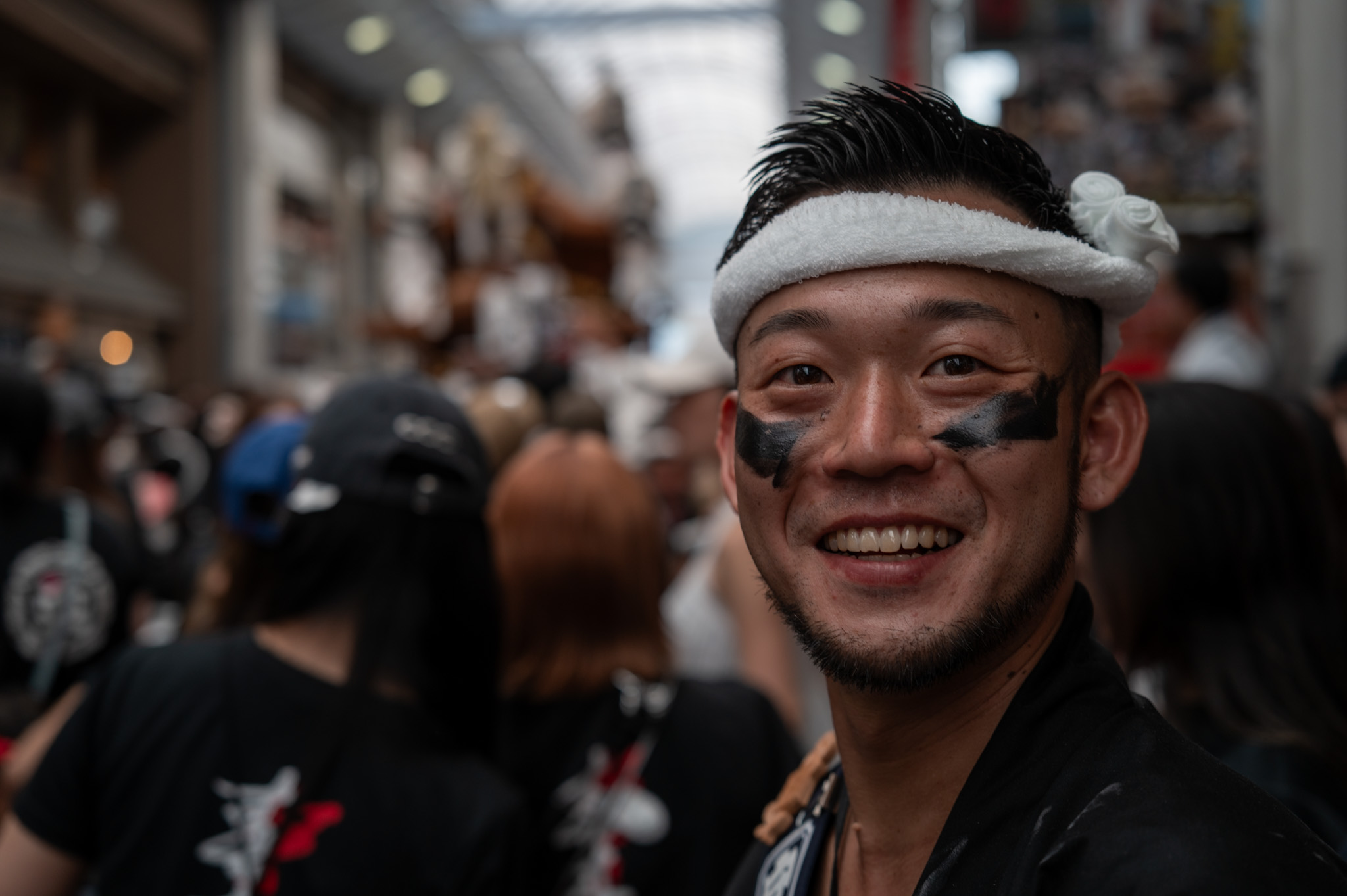
It was a beautiful day—not because it offered an untouched image of the past, but because the past was being actively carried forward. In Kishiwada, tradition is not nostalgia. It is participation, it is a rope held by hundreds of hands, it is the drumbeat learned at school. It is an elderly face in the crowd and a child waiting for the day when it will be their turn to run.
And for a few intense hours, it is the energy of an entire town moving together.
Kishiwada, 19/09/2026, Leica Q3 43
Discover more from THE QUIET REPORT
Subscribe to get the latest posts sent to your email.
