Hare krishna hare hare
Written by Maurizio “Mau” Vagnozzi
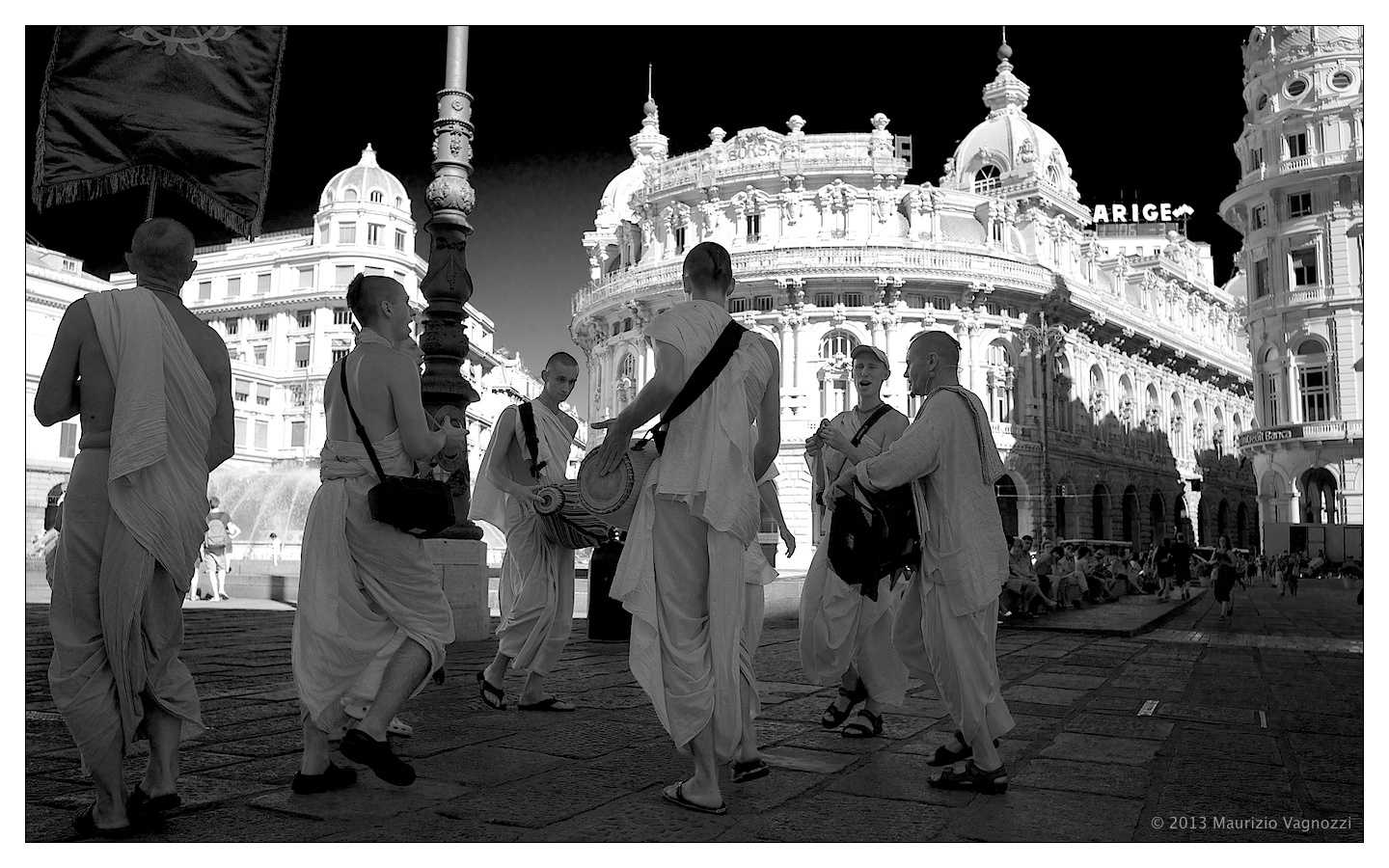
“Hare Krishna, Hare Rama, Hare Hare“: il ritmo dei tamburi e dei piatti mi ha dato la certezza che a qualche centinaia di metri ci fosse un gruppo di Hare Krishna già prima di vederli danzare in cerchio salmodiando il mantra di 16 parole che, quando mi ero messo in testa di imparare le antiche lingue orientali, ho letto nelle Upamishad del tardo 1500.
Ovvio che il mio ardito tentativo linguistico si sia schiantato dinnanzi alle 18 declinazioni, 32 coniugazioni, 256 accenti e 1024 differenti fonemi: da allora ritengo che l’inglese sia la lingua più facile al mondo.
hare kṛṣṇa hare kṛṣṇa
kṛṣṇa kṛṣṇa hare hare
hare rāma hare rāma
rāma rāma hare hare
I seguaci Hare Krishna, o, nella loro forma più completa, i seguaci dell’International Society for Krishna Consciousness (ISKCON) vanno collocati nella multiforme galassia dell’Induismo: pur riferendosi alle prime testimonianze di questa fede in India nel quindicesimo secolo, la data ufficiale della loro fondazione è però il 1966, a New York.
I propositi della diffusione della fede in Krishna, vengono attuati attraverso quattro precise regole di vita: (1) rifiuto di carne, pesce o uova nell’alimentazione, (2) rifiuto del sesso “illecito”: Il sesso è solo praticato tra coppie sposate, una volta al mese nel momento di fertilità, per procreare e poi educare i figli alla fede in Krishna, (3) rifiuto del gioco d’azzardo in tutte le sue forme, (4) rifiuto di qualsiasi “intossicazione”, ivi inclusi alcol, tabacco, caffeina, o qualsiasi “droga ricreativa”. Inutile dirvi che, personalmente, concordo solo sul terzo punto e pratico l’inverso degli altri tre con somma gioia e abiura.
La presenza musicale e cinematografica del mantra è innumerevole, tanto da influenzare anche me, con qualche immagine scattata nel centro di Genova, dopo che ero uscito dalla spettacolare mostra sulle immagini realizzate da Stanley Kubrick con la sua Leica III ….


Discover more from THE QUIET REPORT
Subscribe to get the latest posts sent to your email.

La prima foto B&W è un vero spettacolo tres tres tres belle.
Per quanto riguarda i 4 punti mi hai fatto pensare ai 10 peccati capitali, nessuno si sognerebbe di confessarne uno, tranne quello della “gola”, sbandierando piacere davanti ad un cannolo siciliano, piuttosto che ad una montagna di bignè.
Buona festa di mezz’etate
I peccati capitali son solo 10? Pensavo di averne commessi molti di più ….
Grande errore di segno blu, i peccati capitale sono sette…hahaha i comandamenti sono 10.
Non so perchè ho scritto 10, forse perchè pensavo ne sarenne bastato solo uno, (non ama il tuo prossimo come te stesso, in quanto molti non si amano per nulla) ma
Rispetta tutti sopratutto il diverso da te.
Li ho incontrati anch’io qualche volta, sono decisamente coinvolgenti.
La prima foto è spettacolare!
thanks! 🙂
Concordo, la prima foto e’ un capolavoro.
Complimenti, ti sei superato.
Il b&w è sempre una garanzia: devo dire che le foto fatte in Myanmar, dentro la fabbrica di sigari, meritano la palma di “migliori della stagione” 🙂