THE PULPO RELIGION
Written by Maurizio “Mau” Vagnozzi
There is a moment on the Camino de Santiago when hunger stops being simply a biological un necessity and becomes part of the pilgrimage itself. It happened to me in Melide, where countless pilgrims converge after walking for days from different directions, carrying different stories, blisters and expectations. Long before reaching the cathedral of Santiago, many of them make another essential stop: a table where an octopus awaits.
Not just any octopus.
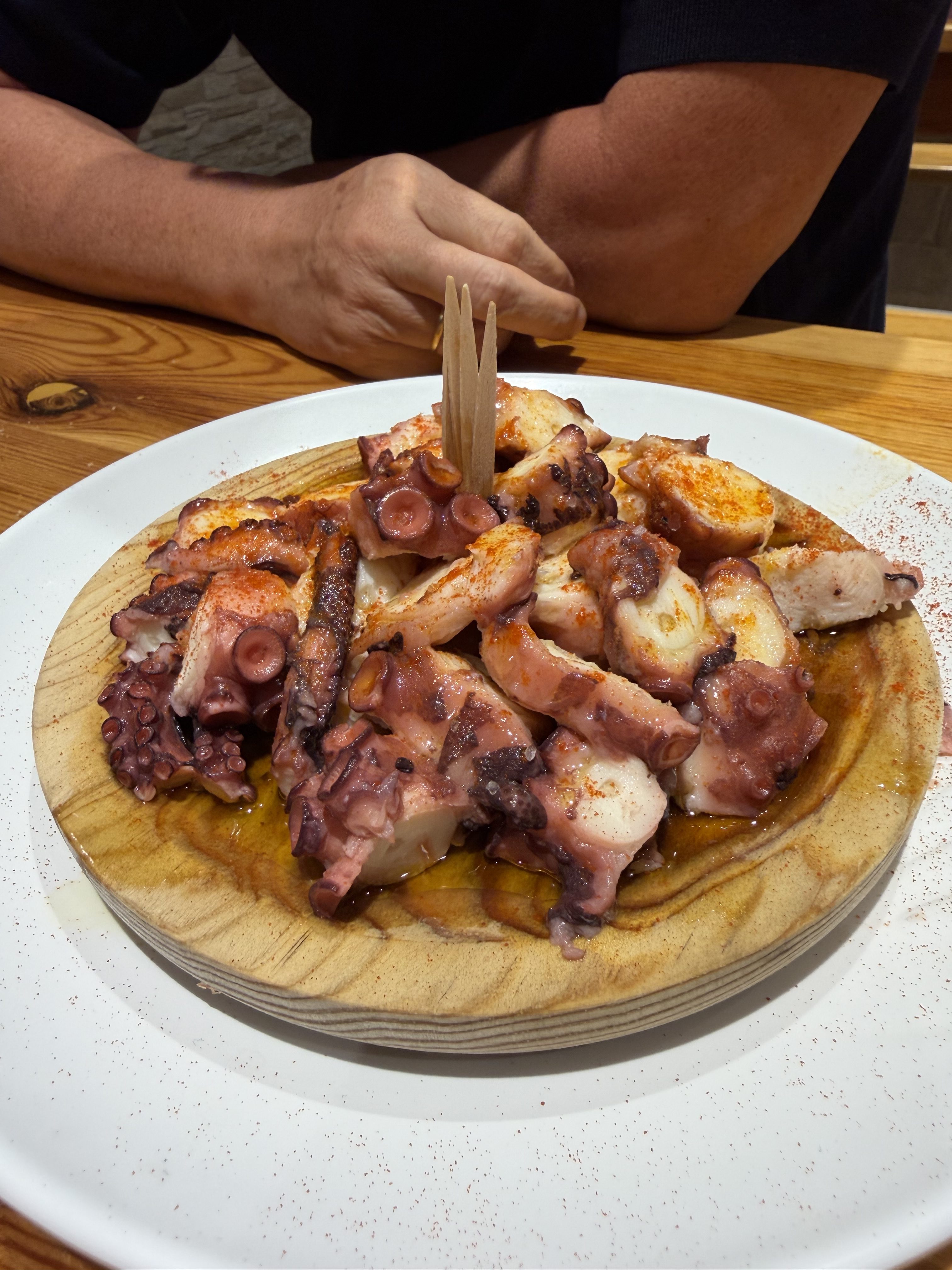
In Galicia, pulpo is neither an exotic seafood dish nor a tourist attraction. It is memory served on a wooden plate. It is a ritual repeated for generations, surviving fashions, Michelin stars and culinary reinventions. Around it, families gather on Sundays, villages celebrate their festas, and pilgrims discover that the Camino is also travelled through taste.
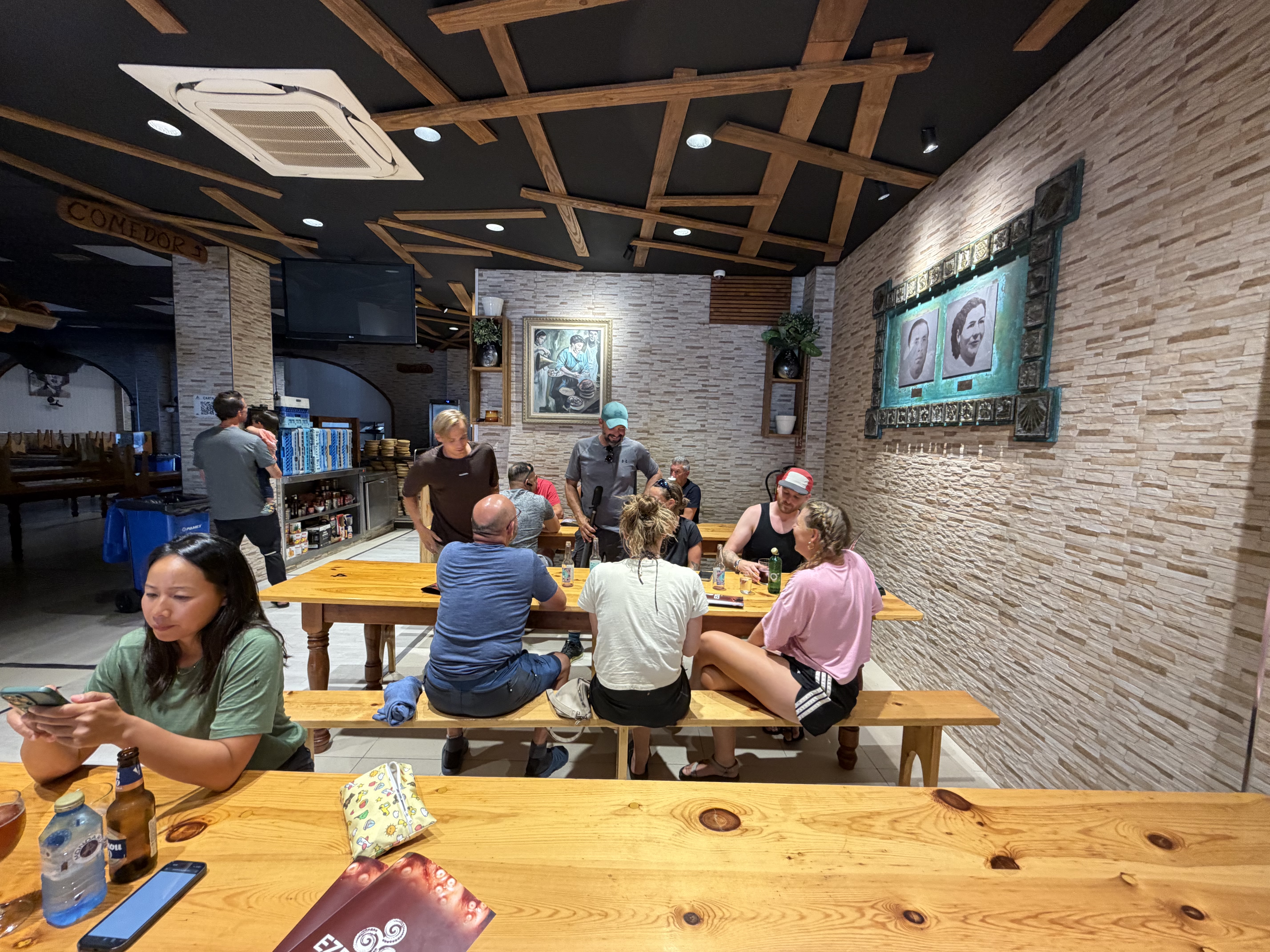
Walking into a traditional pulpería is like entering an extension of Galician culture. The atmosphere is remarkably simple. Wooden tables, the unmistakable scent of boiling octopus, waiters moving with practiced efficiency, conversations that overlap without ever becoming noisy. Nobody seems to be in a hurry.
In Melide, one name appears almost inevitably in every conversation: Pulpería Ezequiel. Established decades ago and now considered something of an institution, it has welcomed generations of locals alongside the endless river of pilgrims crossing Galicia. The place does not attempt sophistication. It does not need to. Reputation here has never depended on appearance but on consistency.
The preparation itself tells a story.
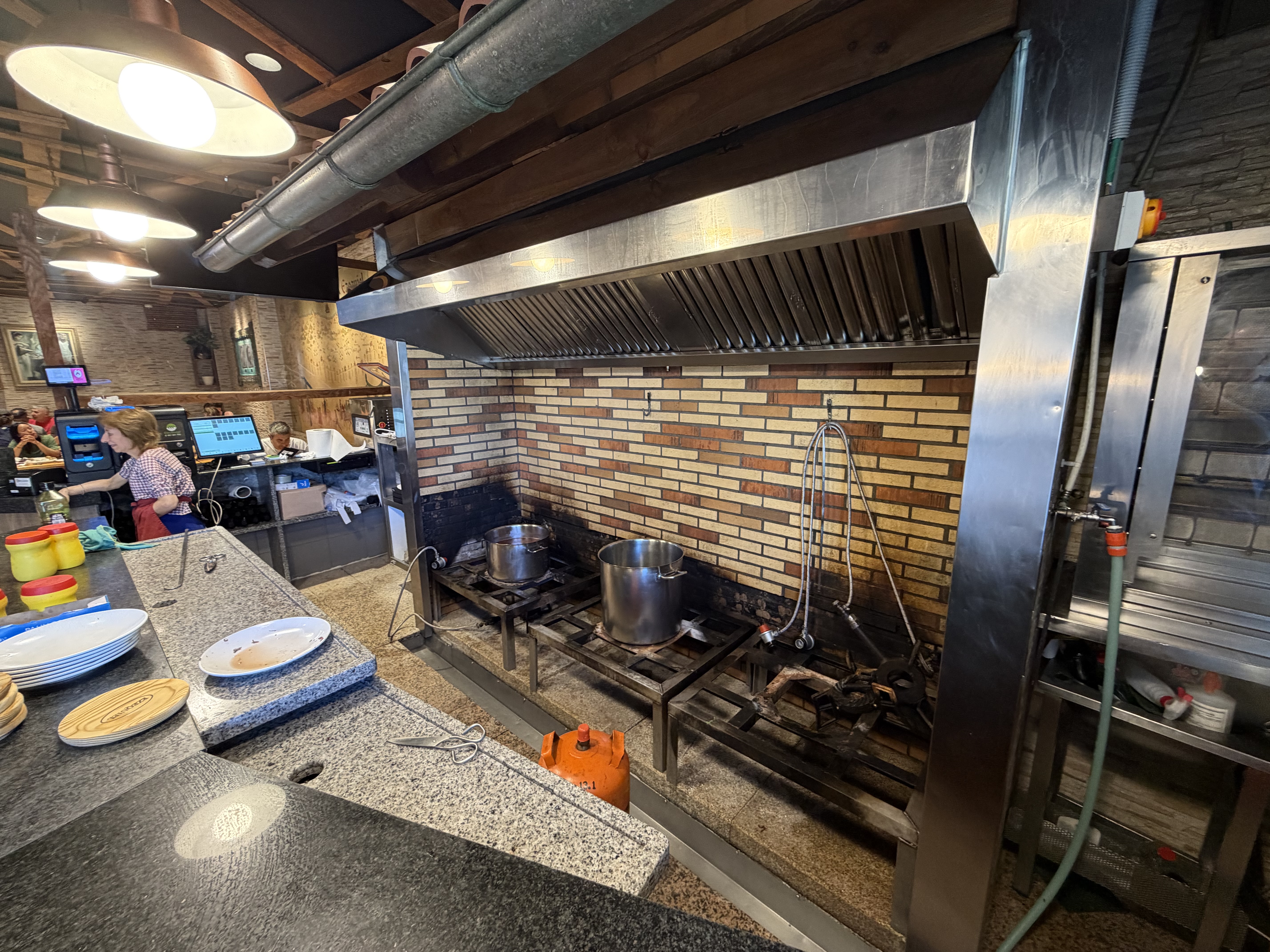
The octopus, traditionally caught along the Galician coast, is first frozen to soften its fibres before being slowly boiled in large cauldrons. Experienced cooks still speak of “frightening” the octopus, dipping it three times into boiling water before leaving it to cook completely, a gesture suspended somewhere between culinary technique and inherited folklore. Once ready, it is cut with scissors directly onto a round wooden plate, sprinkled generously with coarse sea salt, smoky pimentón, sweet or spicy depending on preference or on random case, and finally finished with a generous drizzle of Galician olive oil. Nothing else.
The simplicity is almost disarming.
No elaborate sauces. No decoration. Every ingredient is visible, honest and accountable.
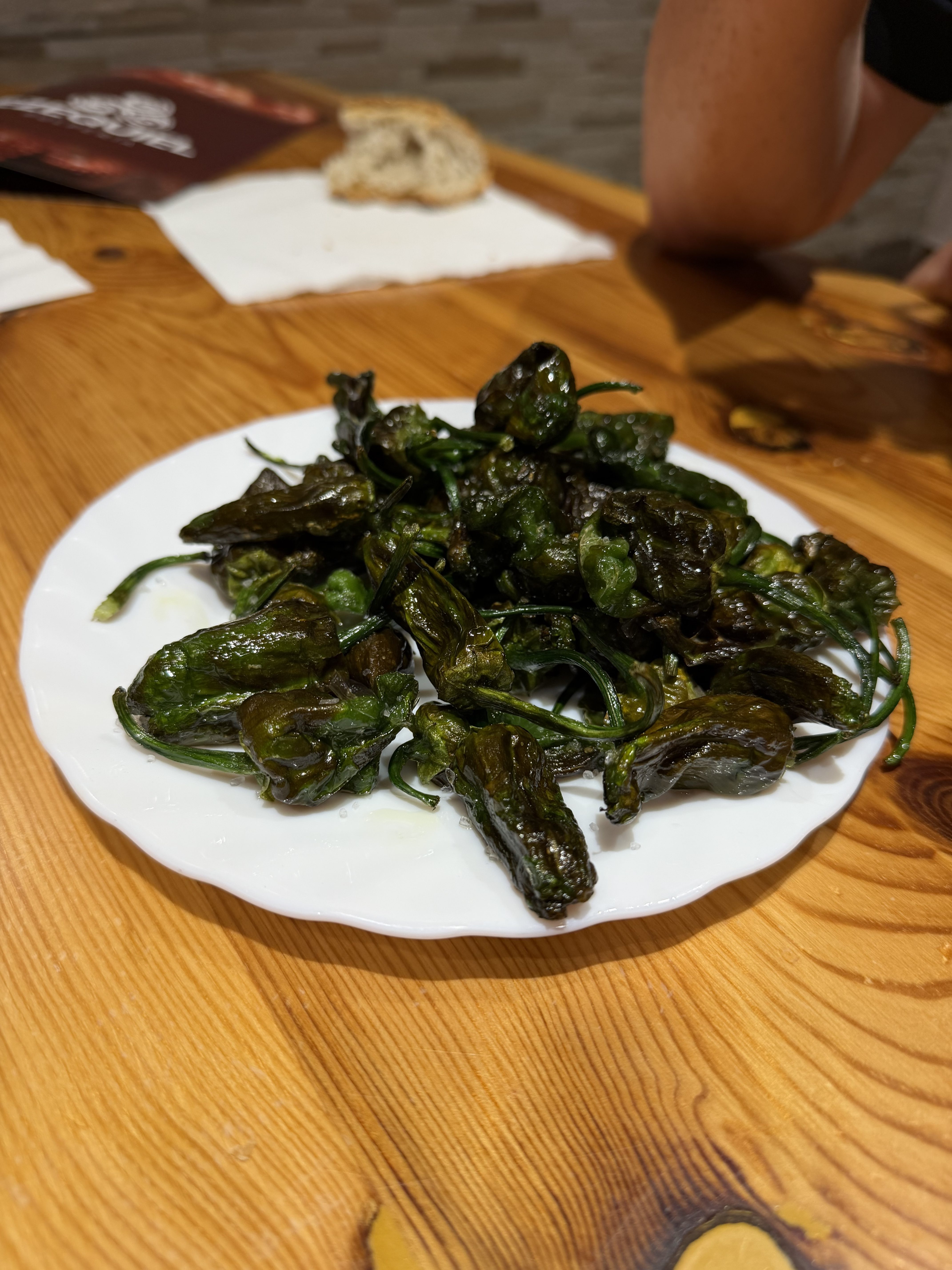
Perhaps this explains why the dish has become inseparable from Galicia itself. Like the stone villages, the Atlantic weather and the eucalyptus forests, pulpo reflects a culture that rarely seeks excess. Quality comes before spectacle.
Sitting at a communal table in Ezequiel, I noticed something that had little to do with food. Pilgrims who had never exchanged a word on the trail suddenly began talking. An American couple with their 2yo kid compared notes with Singaporean walkers. A German cyclist raised a glass with a Portuguese family. Languages remained different, the smiles became identical. Taste for pulpo becomes a universal language
The Camino repeatedly teaches that community rarely needs introduction. Sometimes all it takes is sharing bread, octopus and a glass of chilled Estrella Galicia beer.
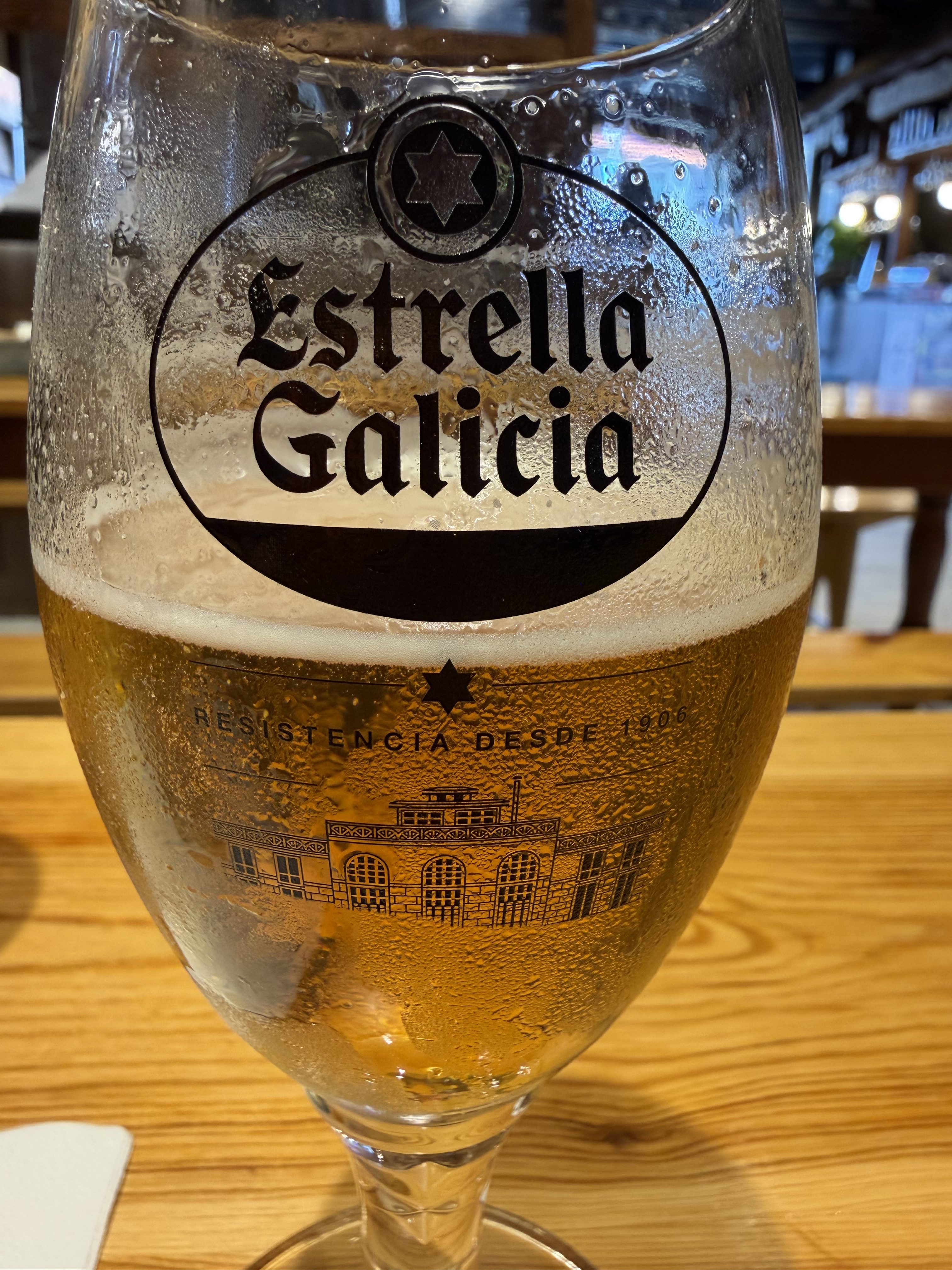
Looking around, I wondered how many thousands of conversations had begun exactly there over the years. How many friendships, romances or future reunions had their first chapter written between slices of octopus dusted with paprika.
Food, after all, is often geography made edible.
Galicia has transformed a humble cephalopod into one of Europe’s most recognisable regional dishes, yet what remains most memorable is not its flavour. It is the humanity surrounding it.
Tomorrow, every pilgrim will continue towards Santiago. Boots will return to the gravel paths, backpacks will settle once more on tired shoulders, and kilometres will replace conversations.
But for an hour in Melide, inside a modest pulpería where copper pots never seem to stop boiling, nobody is simply passing through.
Everyone belongs.
I’m walking the Camino de Santiago with four friends, an experience I’ve been looking forward to for a long time. It’s a journey that needs no justification or explanation, a path into myself before anything else, one step at a time.
Santiago, hold my beer. I’m on my way.

Discover more from THE QUIET REPORT
Subscribe to get the latest posts sent to your email.

Il Cammino. Non l’ho fatto e non era mai stato nella mia “to do list”, ma ho iniziato a pensarci un po’ di tempo fa. Lo farò, quando anche io avrò un sacco di tempo libero da spendere.
Fatti vedere quando torni o quando ripassi di qui, le storie di vita vissuta hanno un sapore diverso quando le racconti dal vivo davanti a un Campari spritz o un onesto rosso.