PRAZA DO OBRADOIRO
Written by Maurizio “Mau” Vagnozzi
There is something profoundly subversive about walking.
In a world that measures our lives by speed, efficiency and productivity, choosing to move at four or five kilometres per hour feels almost like an act of rebellion. That is perhaps the greatest lesson I brought home from the Camino de Santiago.
People often ask me why I decided to spend five days walking across Galicia with four old friends, carrying a backpack under the July sun. They expect an answer involving spirituality, religion, fitness or adventure. The truth is much simpler.
I wanted to slow down time.
Not time on the clock—that keeps flowing with relentless precision—but the time inside us, the one that in everyday life races far faster than our bodies can follow. Somewhere between Ferreiros and the towers of Santiago de Compostela, I discovered that the only way to stretch a day is to fill it with footsteps.
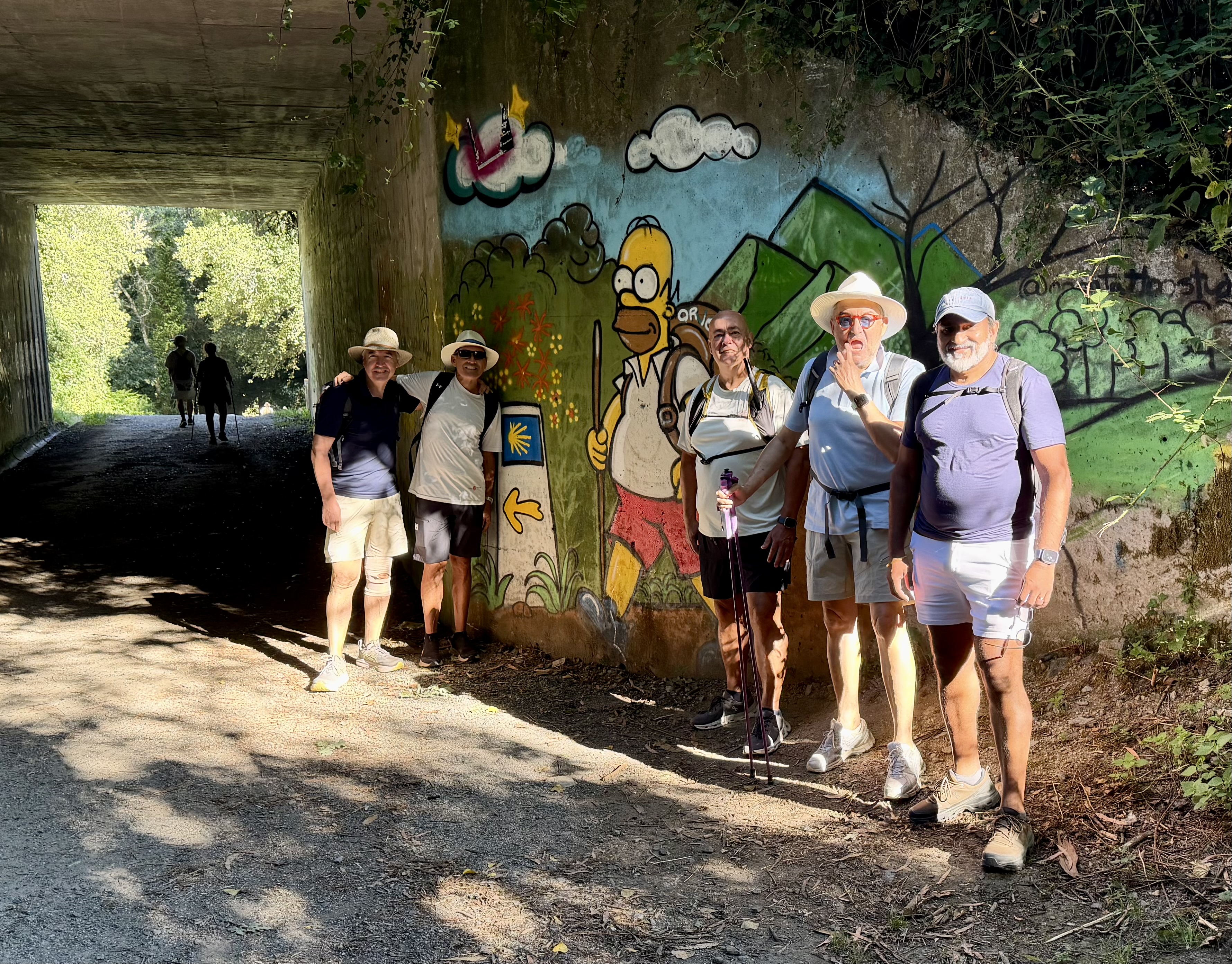
Every morning began with the same ritual. A few comments on the road we would have walked (“almost flat” has become a meme). The tightening of shoes laces. A quick glance at the weather. Then silence. A silence interrupted only by conversations that appeared naturally, disappeared for kilometres, and returned without anyone forcing them.
Walking changes the quality of dialogue.
When two people sit across a table, words often become the centre of attention. Walking side by side, however, removes the obligation to constantly look at each other. Thoughts emerge more honestly. Stories are told without performance. Long pauses no longer feel uncomfortable. Sometimes the most meaningful conversations happen after twenty minutes of complete silence.
My companions were four friends with whom I had shared many years of professional life. We had spent decades solving problems, attending meetings, negotiating contracts and chasing deadlines. Yet it took a pilgrimage to rediscover the simple pleasure of doing absolutely nothing together except placing one foot in front of the other.
Friendship, I realised, does not always need events. Sometimes it simply needs time.
The Camino also teaches another forgotten skill: noticing.
You notice the changing smell of eucalyptus forests after a summer shower. The different texture of ancient granite beneath your feet. The swallows flying low over Galician fields. The old women sweeping the pavement before sunrise. The small vegetable gardens that still feed entire families. A cat sleeping on a stone wall. A church bell echoing across a quiet valley.
None of these moments would deserve a photograph on their own.
Together, however, they become the true landscape of the journey.
And then there are the pilgrims.

Thousands of strangers walking towards the same destination, each carrying invisible luggage far heavier than their backpack. Some walk for faith. Others after retirement. Some after illness, divorce, loss or simply curiosity. Most of their stories remain unknown, yet everyone shares the same language: a smile, a nod, a “Buen Camino.”
It is extraordinary how little we need to feel connected.
In ordinary life we often spend years living next to people without speaking. On the Camino, a brief conversation over coffee can feel like meeting an old friend. Nationalities disappear behind dusty boots. Professions become irrelevant. Nobody asks how much you earn. They ask where you started walking, how your feet are doing and whether today’s stage felt difficult.
Perhaps society would become kinder if we all spent more time walking together.
Galicia itself deserves much of the credit.

Its landscape is not spectacular in the theatrical sense of high mountains or dramatic coastlines. Instead, it reveals itself slowly, rewarding those willing to pay attention. Green forests, shaded paths, small Romanesque churches, stone villages and ancient bridges create a rhythm that matches the pace of human footsteps.
And, of course, there is food.
Walking twenty-and-more kilometres transforms every meal into a celebration.
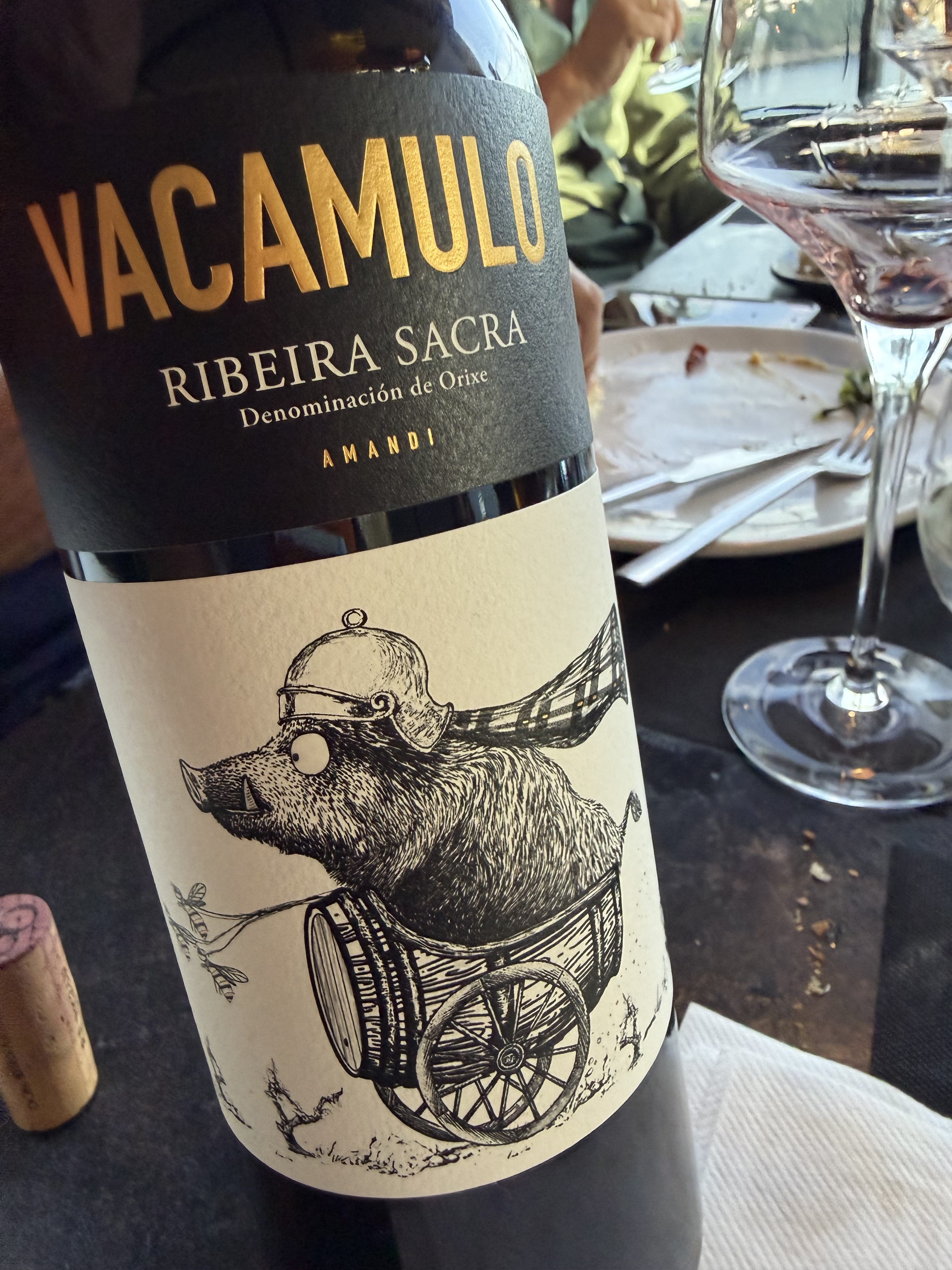
Fresh bread still warm from the bakery. A tortilla that tastes infinitely better after six hours on the trail. Local cheeses. Padrón peppers that may or may not surprise you. A cold Estrella Galicia shared at the end of the afternoon. And, naturally, the unforgettable pulpo a feira, served on wooden plates with olive oil, paprika and coarse salt—a dish that speaks of centuries of Galician tradition with remarkable simplicity.
Eating on the Camino is never just about nutrition.
It becomes gratitude.
Gratitude for the land that produced the ingredients. For the people who prepared them. For the appetite earned one step at a time.

When we finally entered the Praza do Obradoiro and stood before the Cathedral of Santiago, I felt the satisfaction that accompanies every completed journey. But I also knew that the destination had never been the point.
The Camino does not change the world.
It changes the speed at which you look at it.
Perhaps that is why so many pilgrims promise they will return. Not because they need to reach Santiago again, but because they miss the rare privilege of living days measured not by emails answered or meetings attended, but by footsteps taken, conversations shared, forests crossed, meals enjoyed and friendships quietly strengthened.
The Camino reminded me that life was never meant to be rushed.
Some places can only be discovered by walking.
Some friendships can only deepen by sharing the road.
And some versions of ourselves only appear when we finally slow down enough to meet them.

Discover more from VITA VISSUTA
Subscribe to get the latest posts sent to your email.
