Japan has crossed another demographic frontier: for the first time, more than 100,000 people living in the country are at least 100 years old. The number reached 107,677 in September 2026, according to Japan’s Ministry of Health, Labour and Welfare. Almost 88 percent of them are women. In 1963, when the government began keeping these statistics, there were just 153.
It is an extraordinary achievement of medicine, nutrition, public health and perhaps something less measurable: a way of living built around repetition. Walk through an old Osaka shōtengai early in the morning and you can still see it.
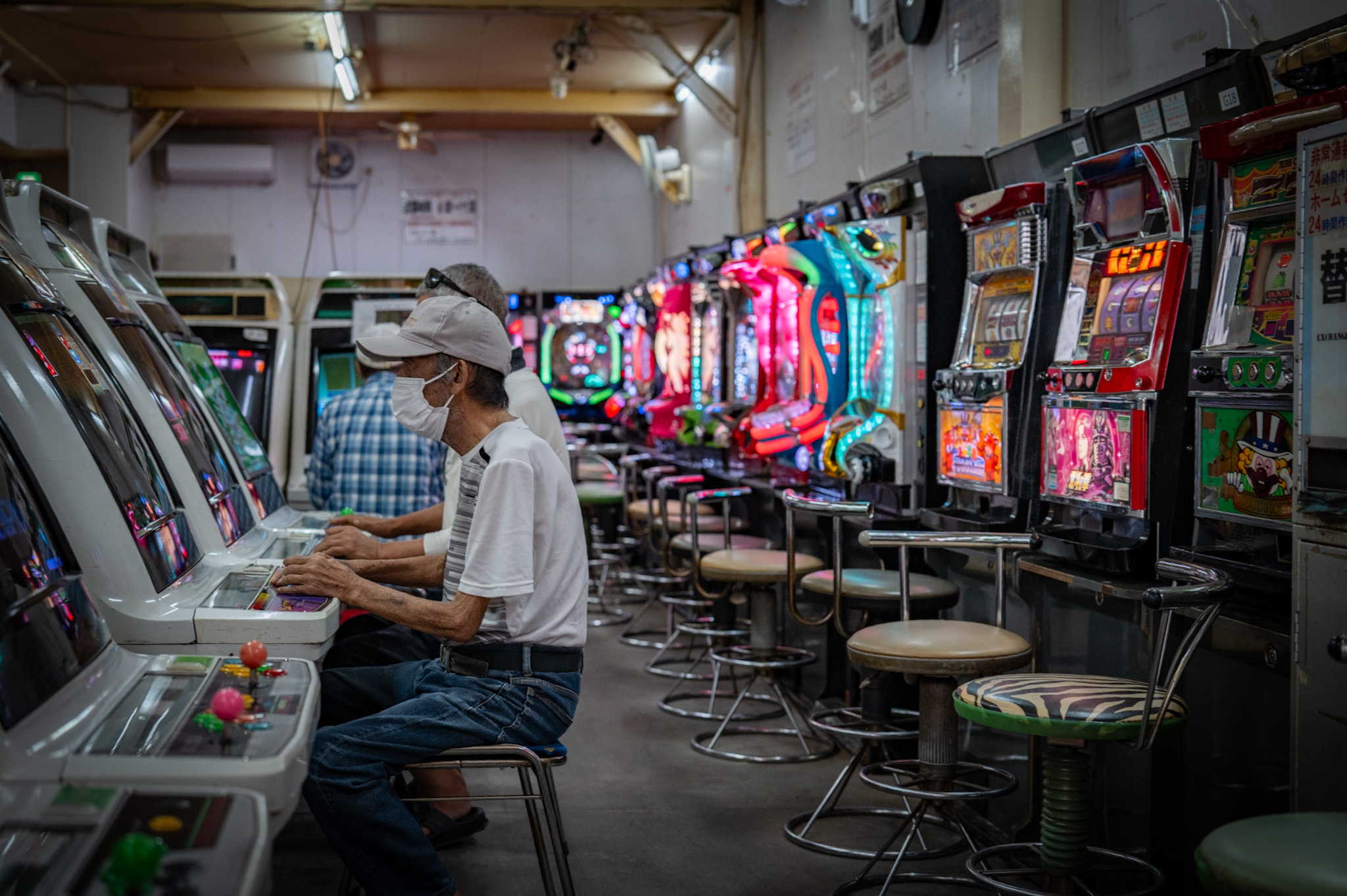
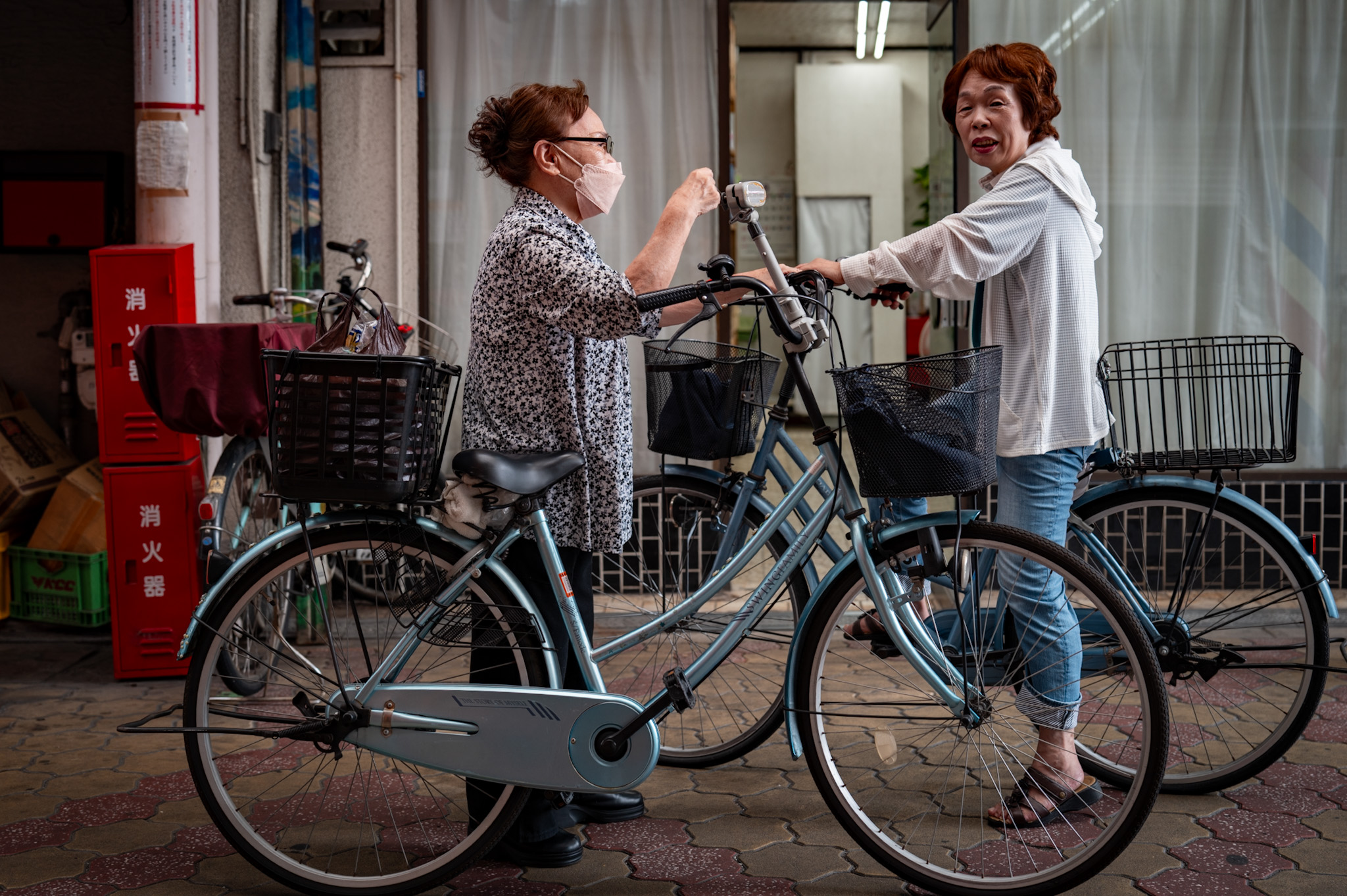
An elderly shopkeeper raises the metal shutter at almost exactly the same hour he did yesterday. A woman carefully arranges vegetables in wooden boxes. Someone sweeps the pavement in front of a tiny restaurant. Tea is prepared. Knives are sharpened. Greetings are exchanged. The movements are economical because they have been repeated thousands of times.
Somewhere inside this generation of centenarians survives the memory of another Japan: childhoods before television, the devastation and scarcity of the war years, reconstruction, the economic miracle and the transformation of Tokyo and Osaka into enormous modern cities.
And now, living beside them, is perhaps the most technologically saturated generation Japan has ever produced.
On a train, the contrast can sometimes fit into a single carriage.
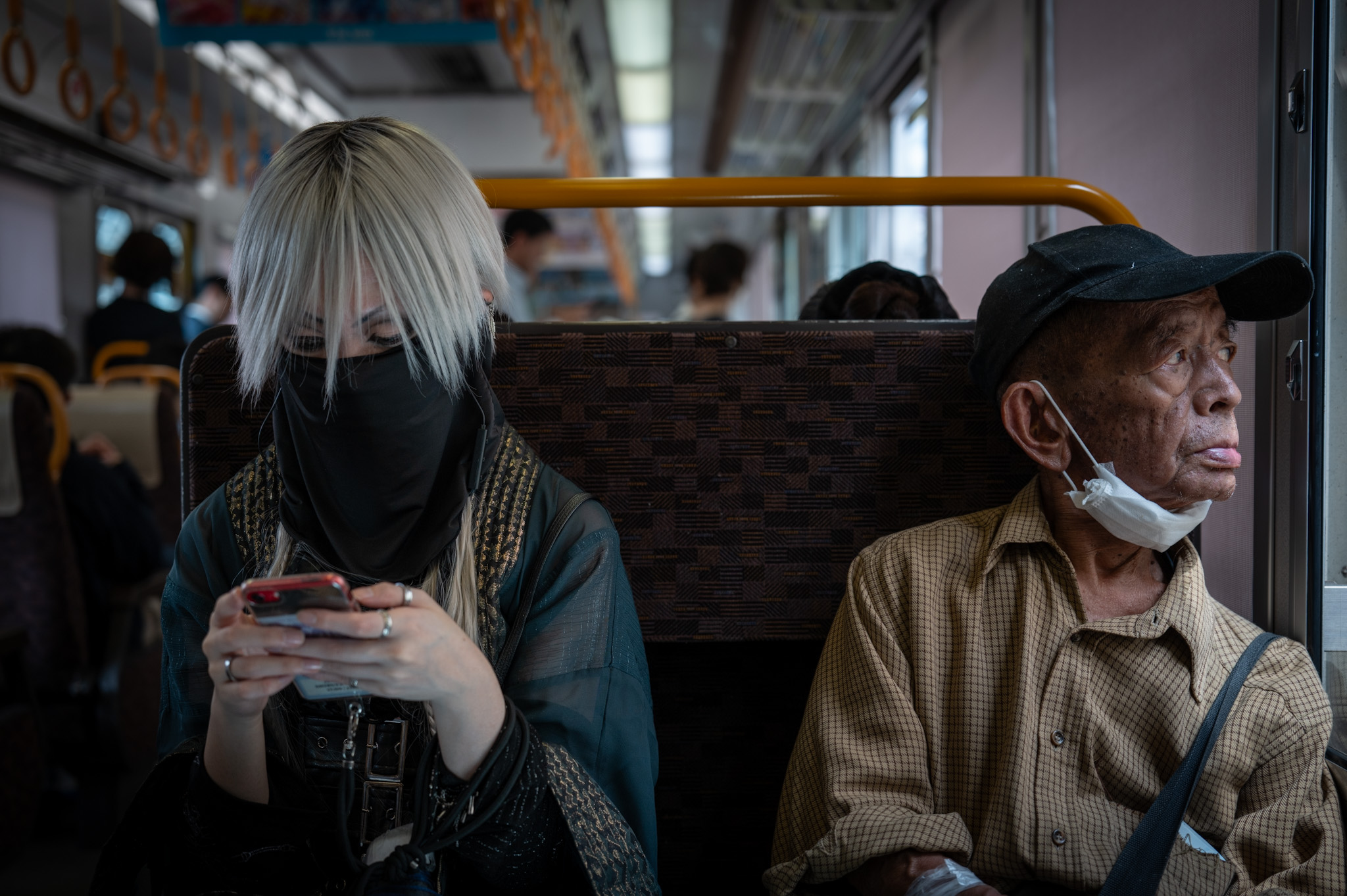
At one end, an elderly woman carries a cloth shopping bag, her hands folded over it. A few seats away, a teenager bends over a smartphone, headphones on, moving between LINE messages, manga, games and short videos. One has lived through a century in which Japan moved from radio to artificial intelligence. The other has never known a world without the internet.
The contrast is tempting to simplify: tradition versus technology, discipline versus entertainment, old Japan versus new Japan, but it is more complicated than that.
Manga itself stretches across generations, and video games are hardly confined to teenagers. Young Japanese still visit shrines, participate in festivals, eat foods their grandparents recognize and observe social rituals that can seem remarkably persistent. Meanwhile, many elderly Japanese use smartphones, travel independently and participate actively in contemporary life.
What has changed most dramatically may not be culture, but time.
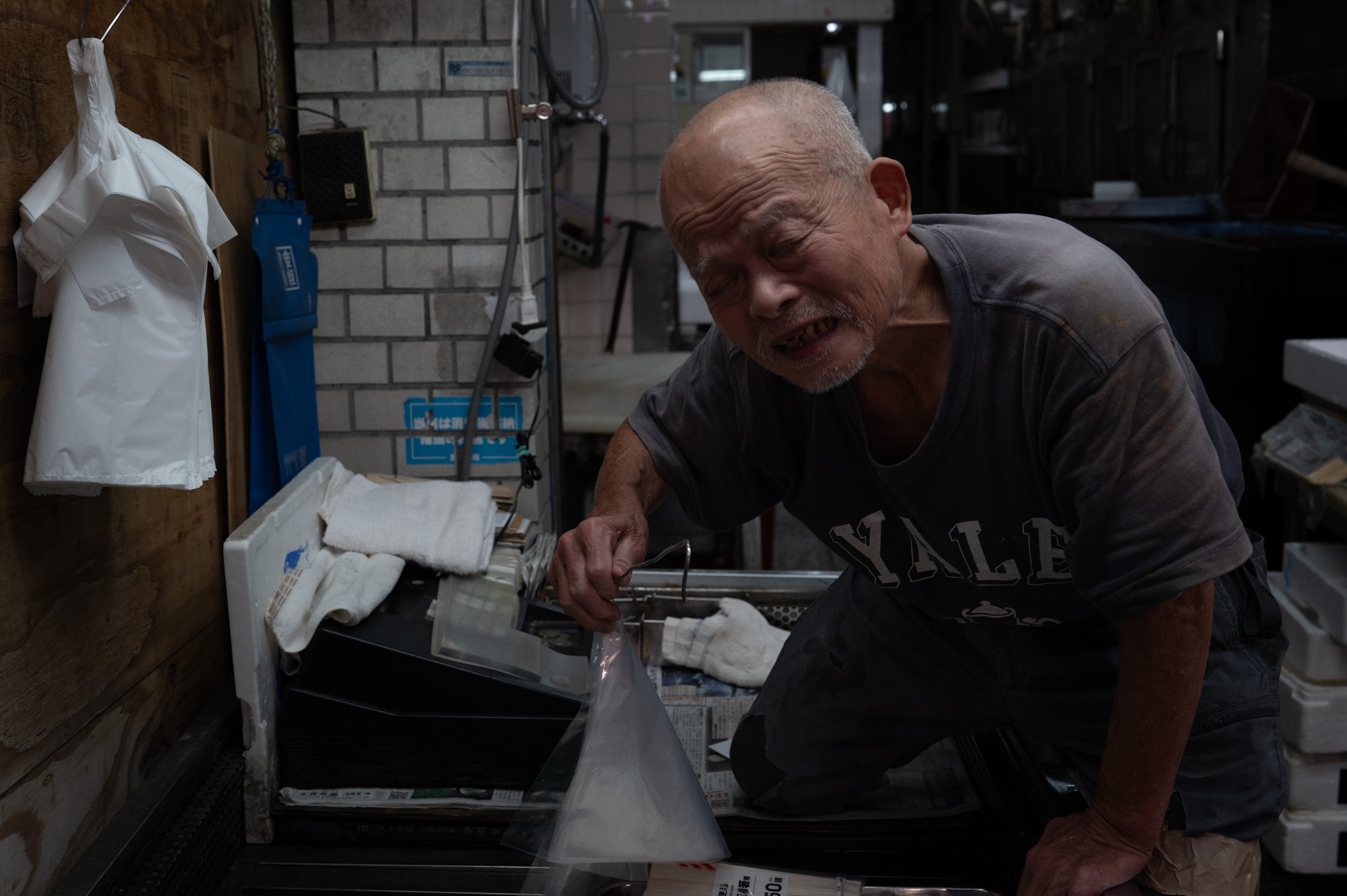
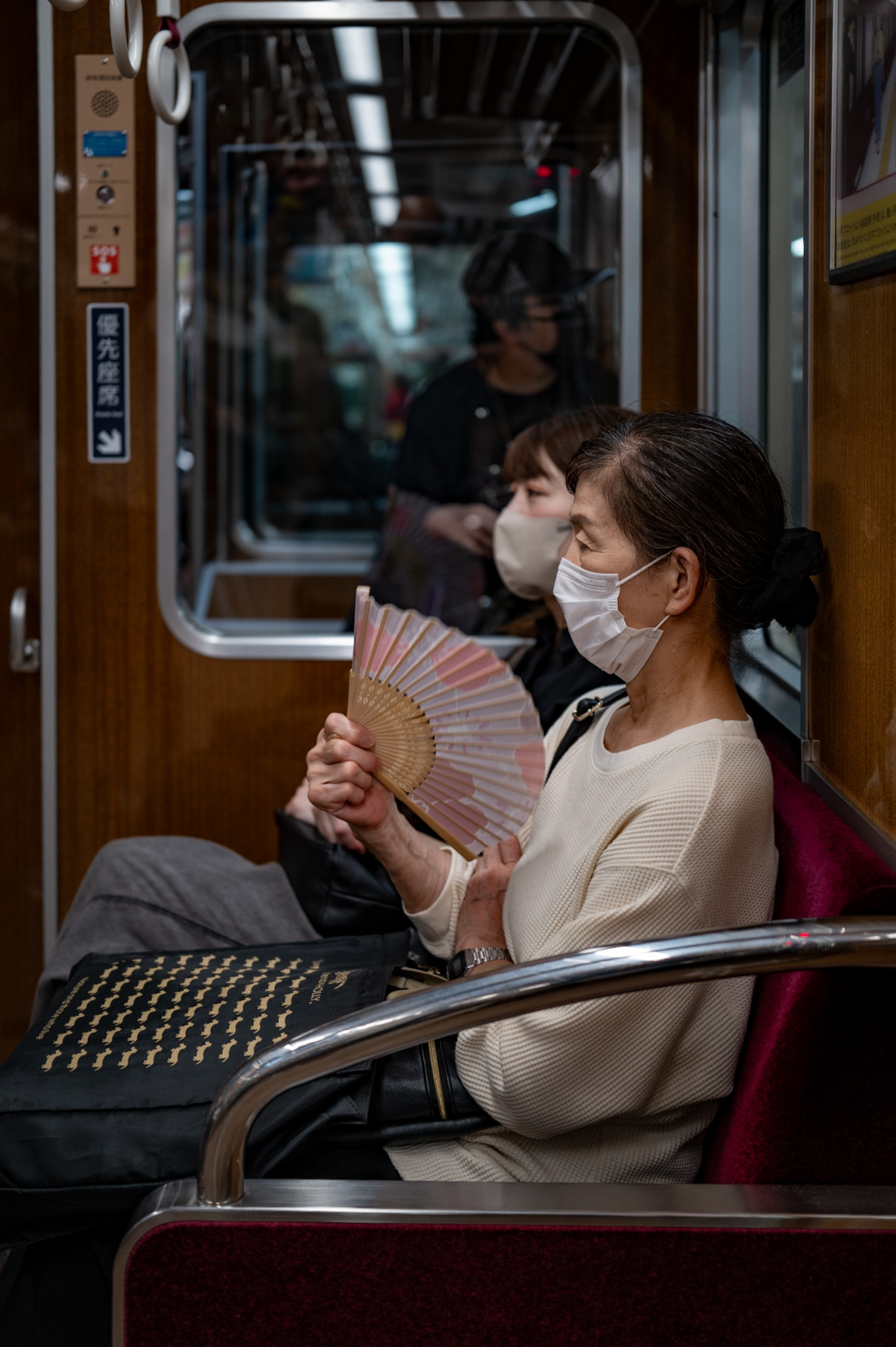
For many of today’s centenarians, life was structured by physical routines: walking to shops, preparing food, maintaining a household, working with the hands, interacting repeatedly with the same neighbourhood.
For younger Japanese, an increasing part of life can take place somewhere without a physical address — inside a screen, a game, a manga universe or an online community, and yet these two Japans are not replacing one another. For the moment, they occupy the same streets.
That may be one of the most fascinating things about photographing Japan today.
You can stand in an Osaka market and photograph a shopkeeper whose gestures belong to another century. Then walk fifty metres, turn a corner, and find teenagers entering a gaming arcade illuminated by a thousand LEDs.
One country. Two rhythms of time, and now, more than 100,000 Japanese have lived long enough to have witnessed both.
Osaka, 18/09/2026, Leica Q3 43
Discover more from THE QUIET REPORT
Subscribe to get the latest posts sent to your email.
