JAGALCHI AJUMMA
Written by Maurizio “Mau” Vagnozzi
Busan moves at a different pace from Seoul. People seem less hurried, conversations last longer, and the streets retain something of the informal character of a working port. In South Korea’s southernmost major city, the sea is not simply a landscape. It is an economy, a tradition, and a way of life.
Nowhere is this more evident than at Jagalchi Fish Market, where, between the disappearing street stalls and the bright yellow counters of a modern market, Busan is negotiating what to preserve of its past.
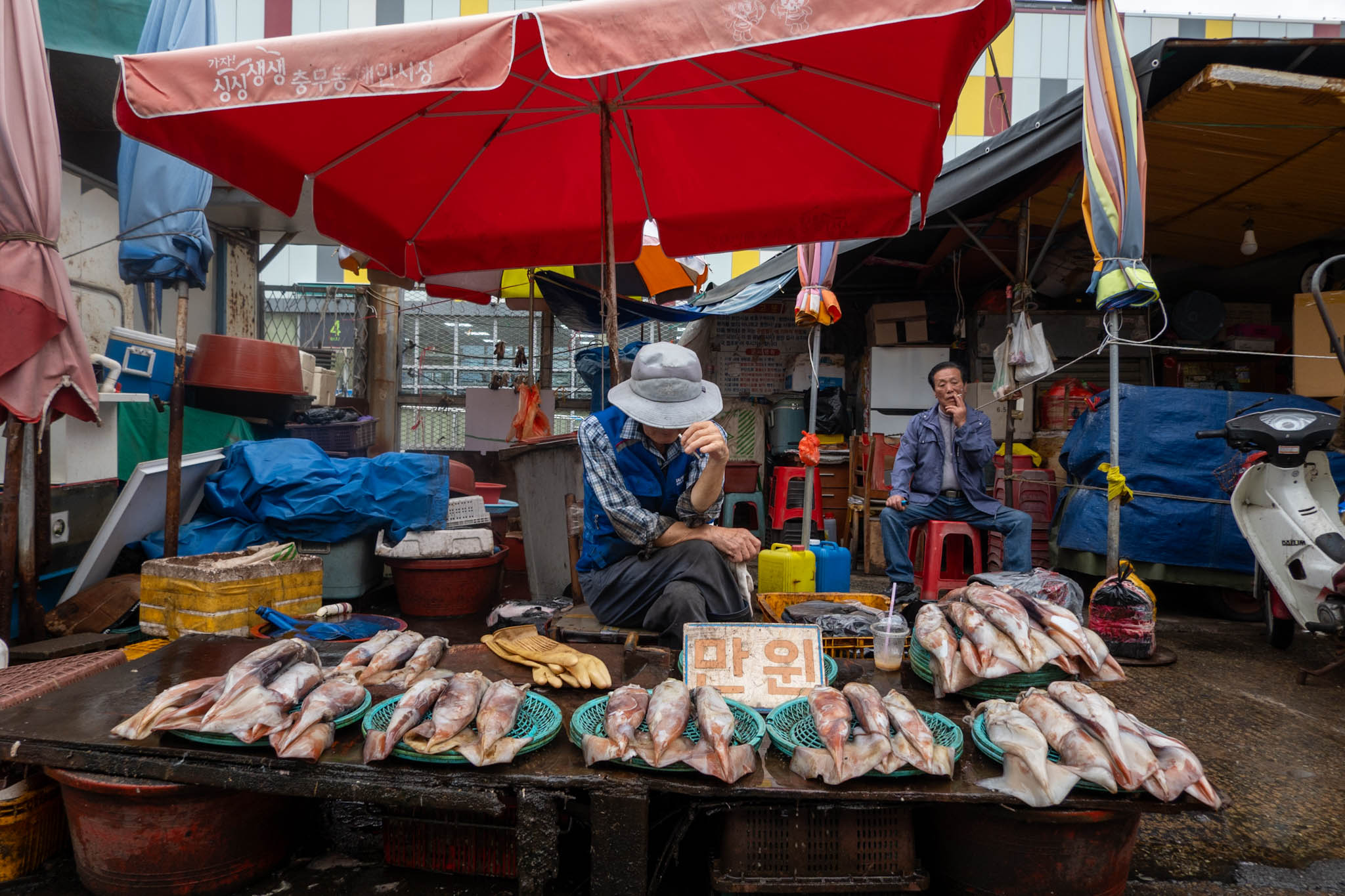
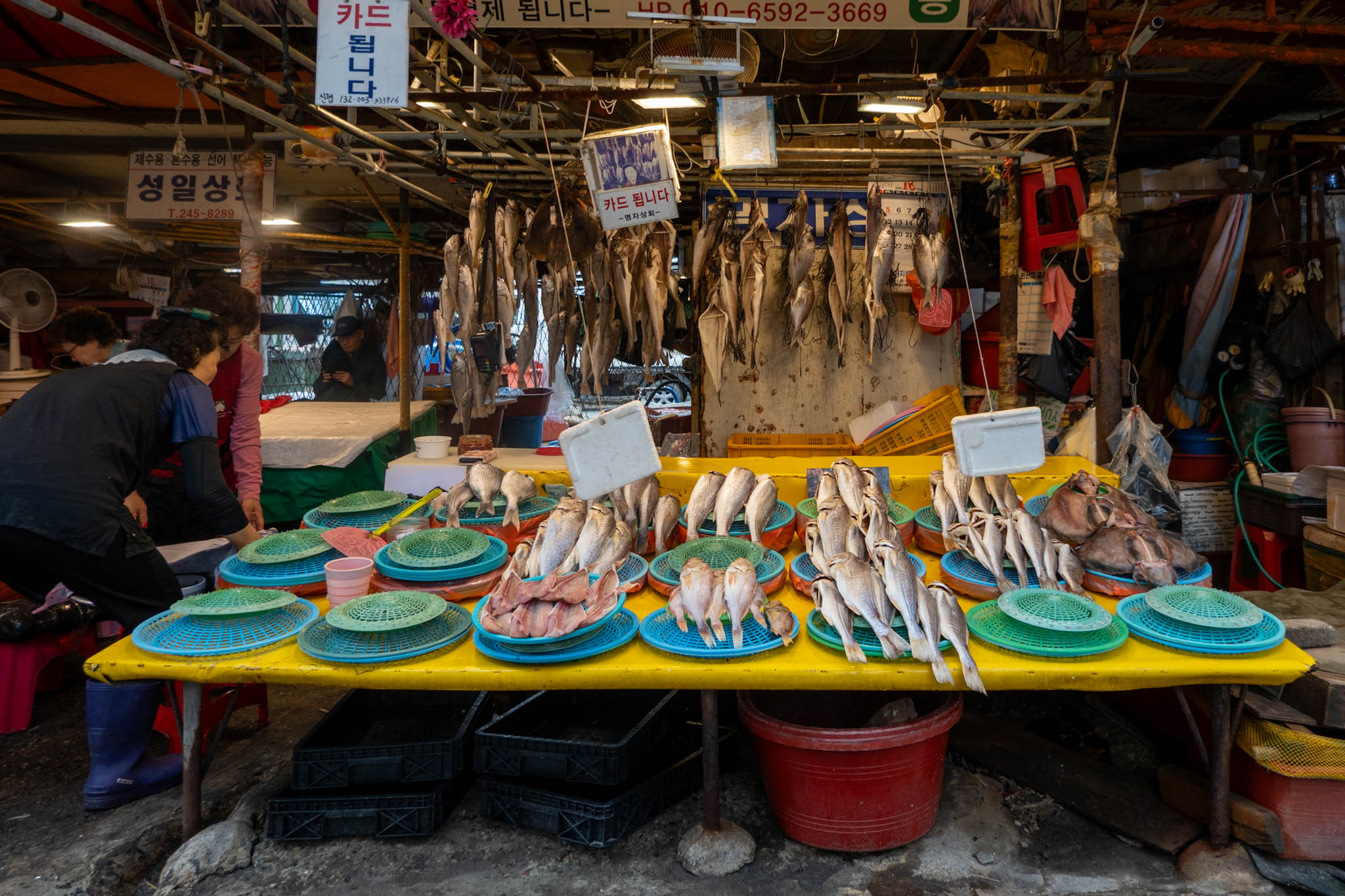
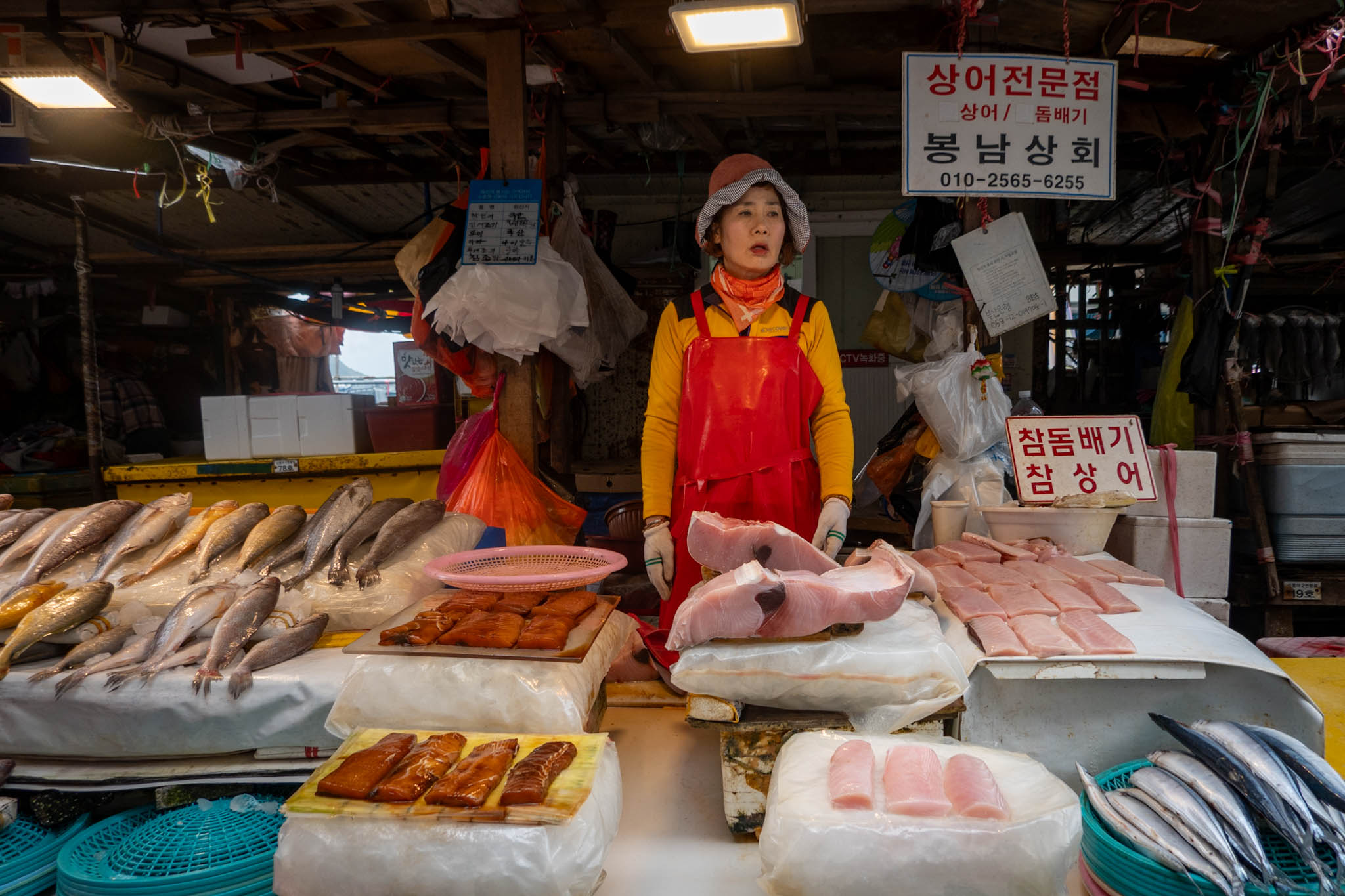
The market’s modern history is closely tied to the Korean War. When North Korean forces invaded the South in 1950, Busan became a refuge for hundreds of thousands fleeing the fighting. Among them were women who began selling fish along the waterfront, building small businesses out of necessity. Many became known as “Jagalchi Ajumma”, the “market women”, whose resilience helped define the city’s commercial identity.
For decades, Jagalchi was a place of improvisation. Fish were displayed in plastic basins, seawater ran across the pavement, and negotiations unfolded between sellers and customers who often knew one another by name. The market was noisy, wet, occasionally chaotic, and unmistakably alive.
Today, that world is changing.
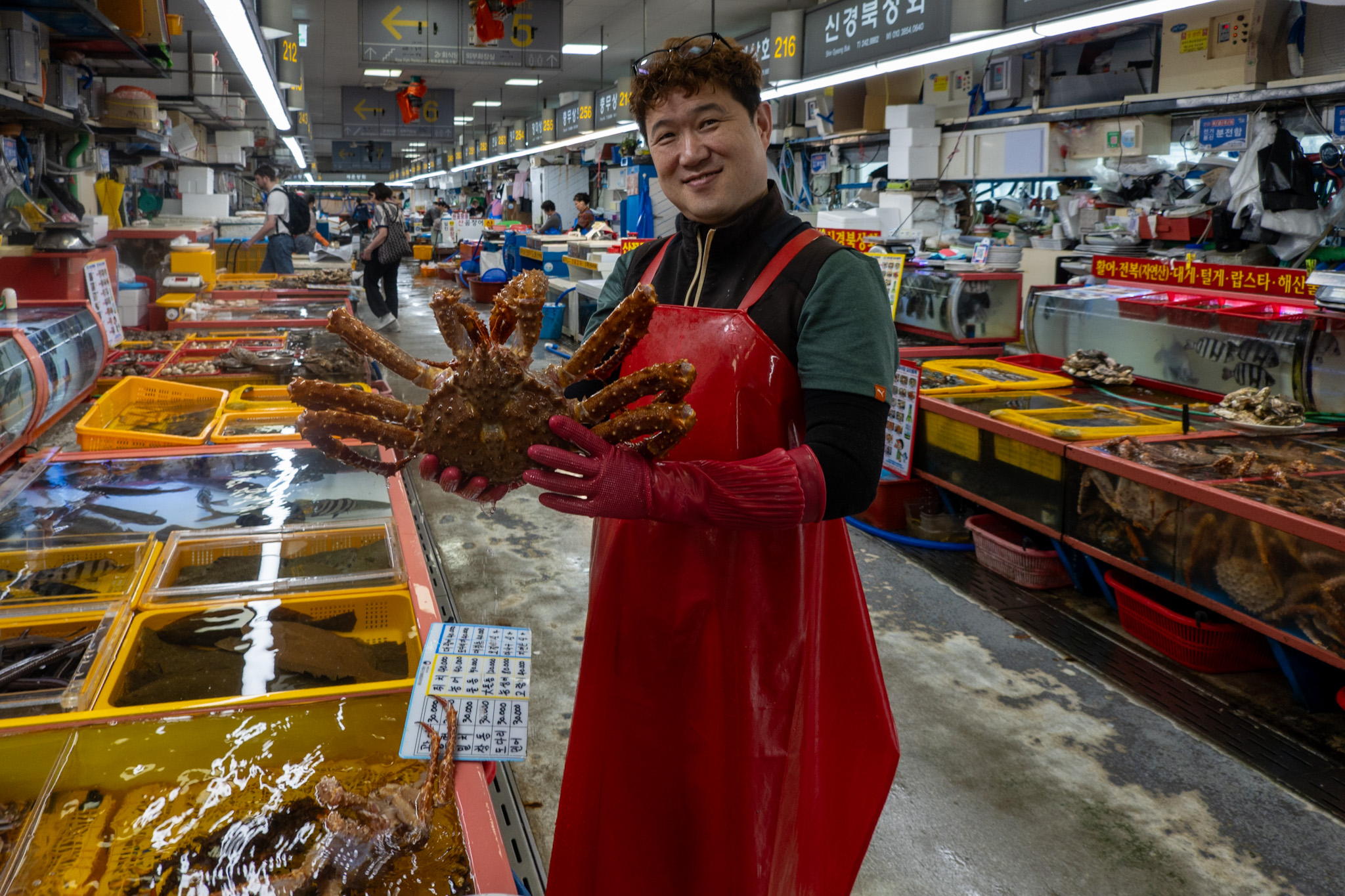
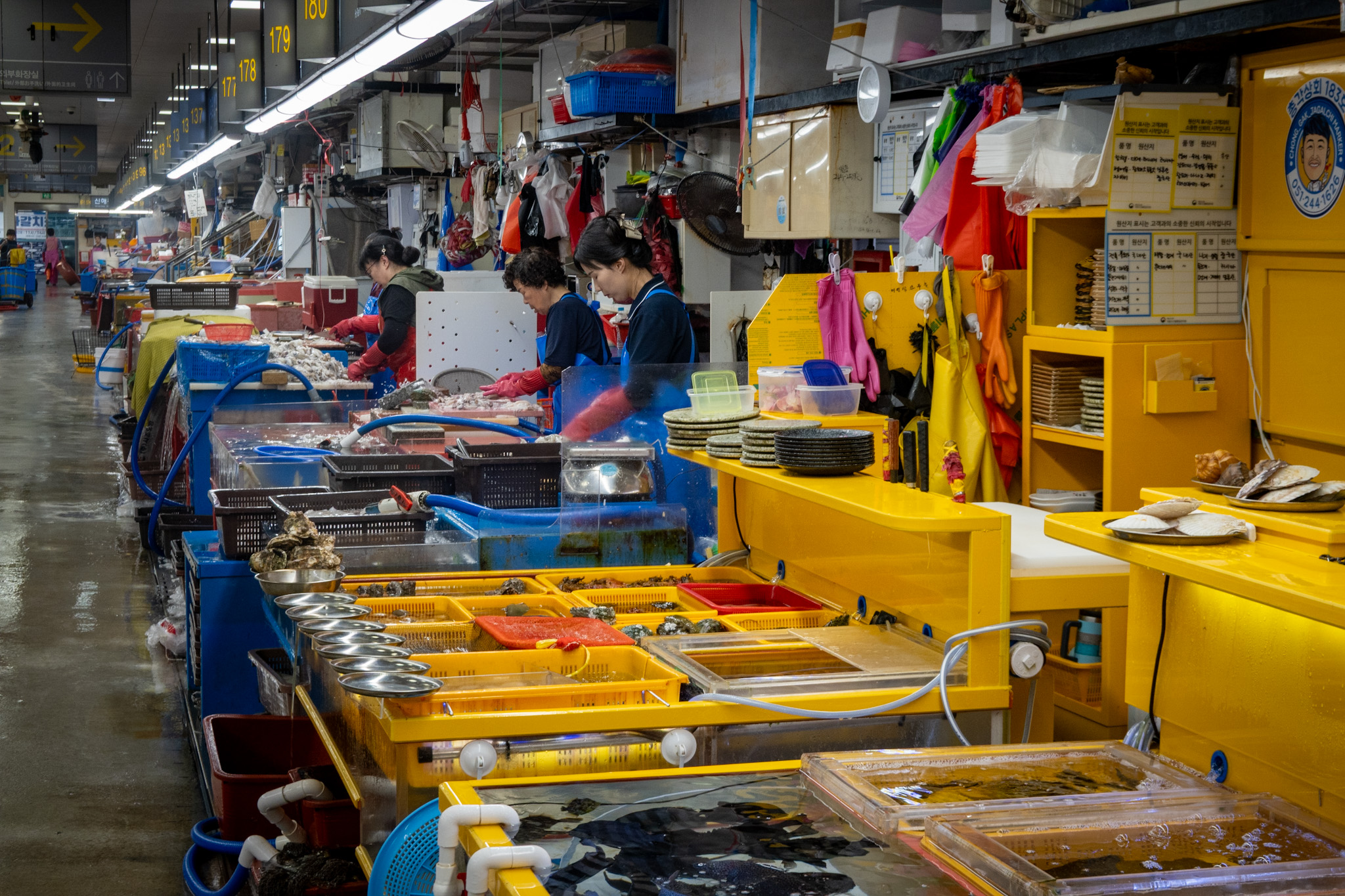
The contrast is particularly striking between the old outdoor stalls and the structured commercial environment of the main market building, opened in 2006. Inside, rows of seafood counters operate under fluorescent lights, with yellow signs and displays dominating the visual landscape. The fish are meticulously arranged, the tanks carefully maintained, and the business of selling seafood follows a more organised rhythm.
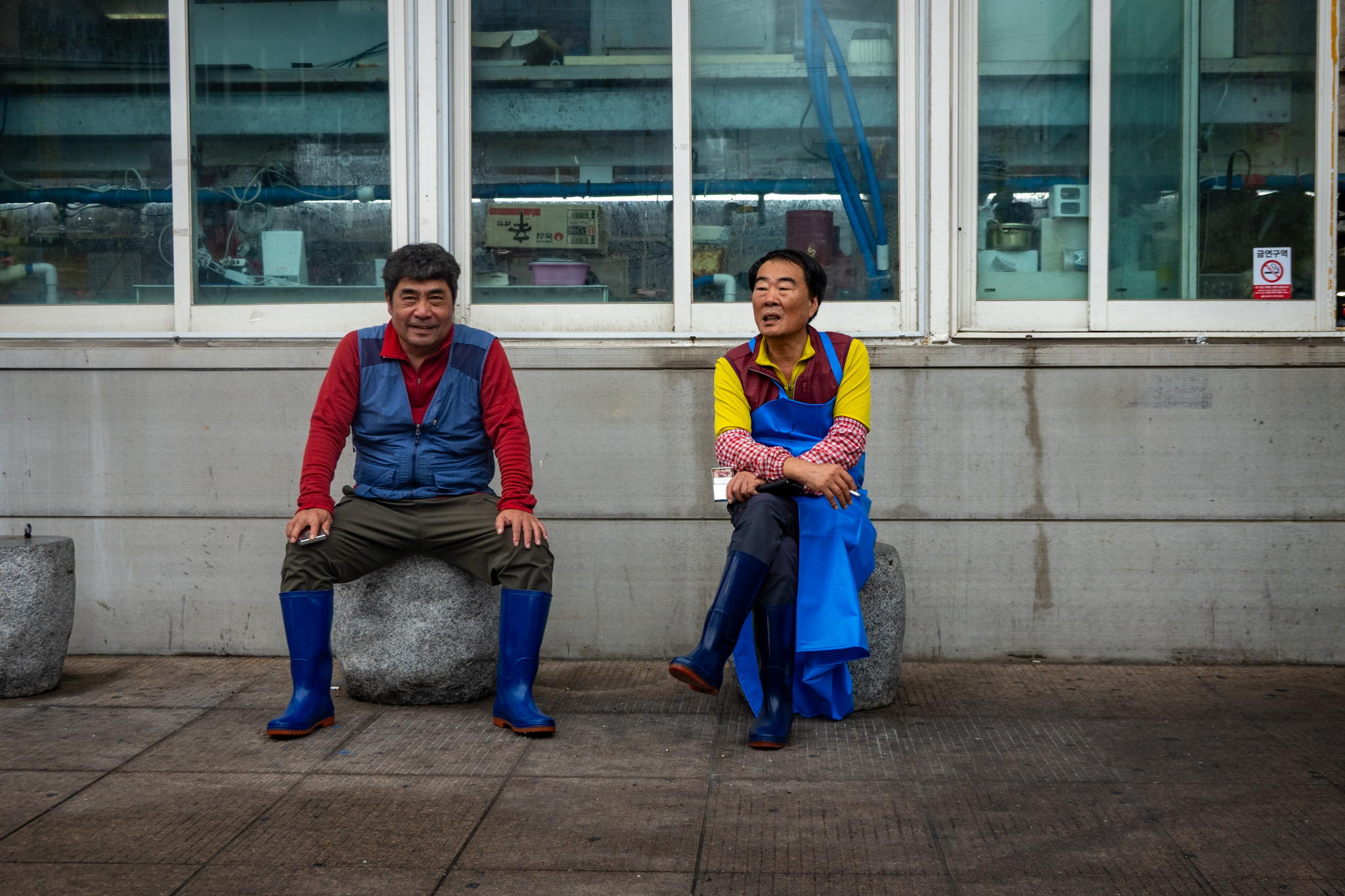
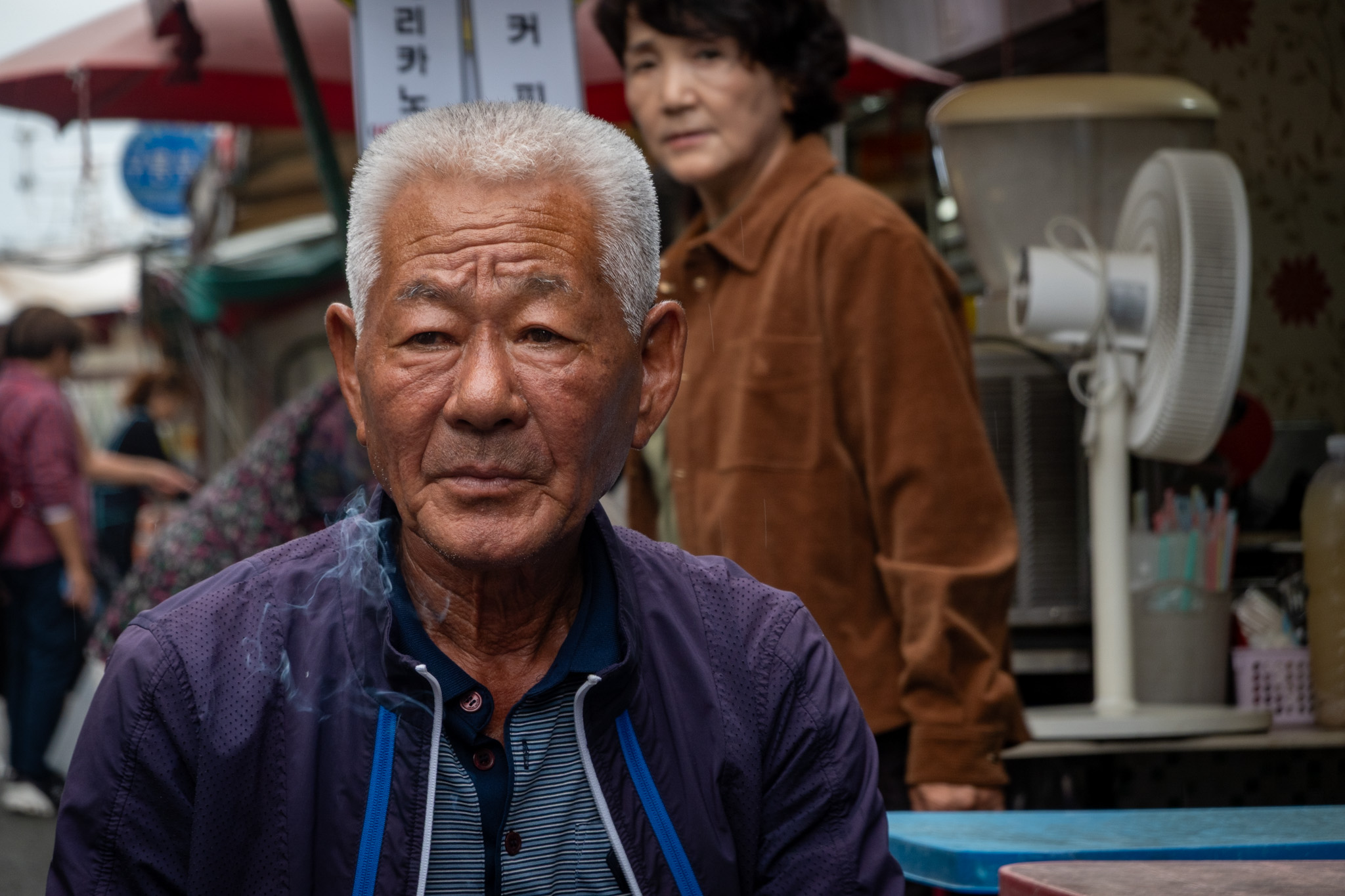
Outside, the remaining traditional stalls tell another story. Their improvised arrangements, elderly vendors and close contact with the street belong to a form of commerce increasingly vulnerable to redevelopment, regulation and generational change.
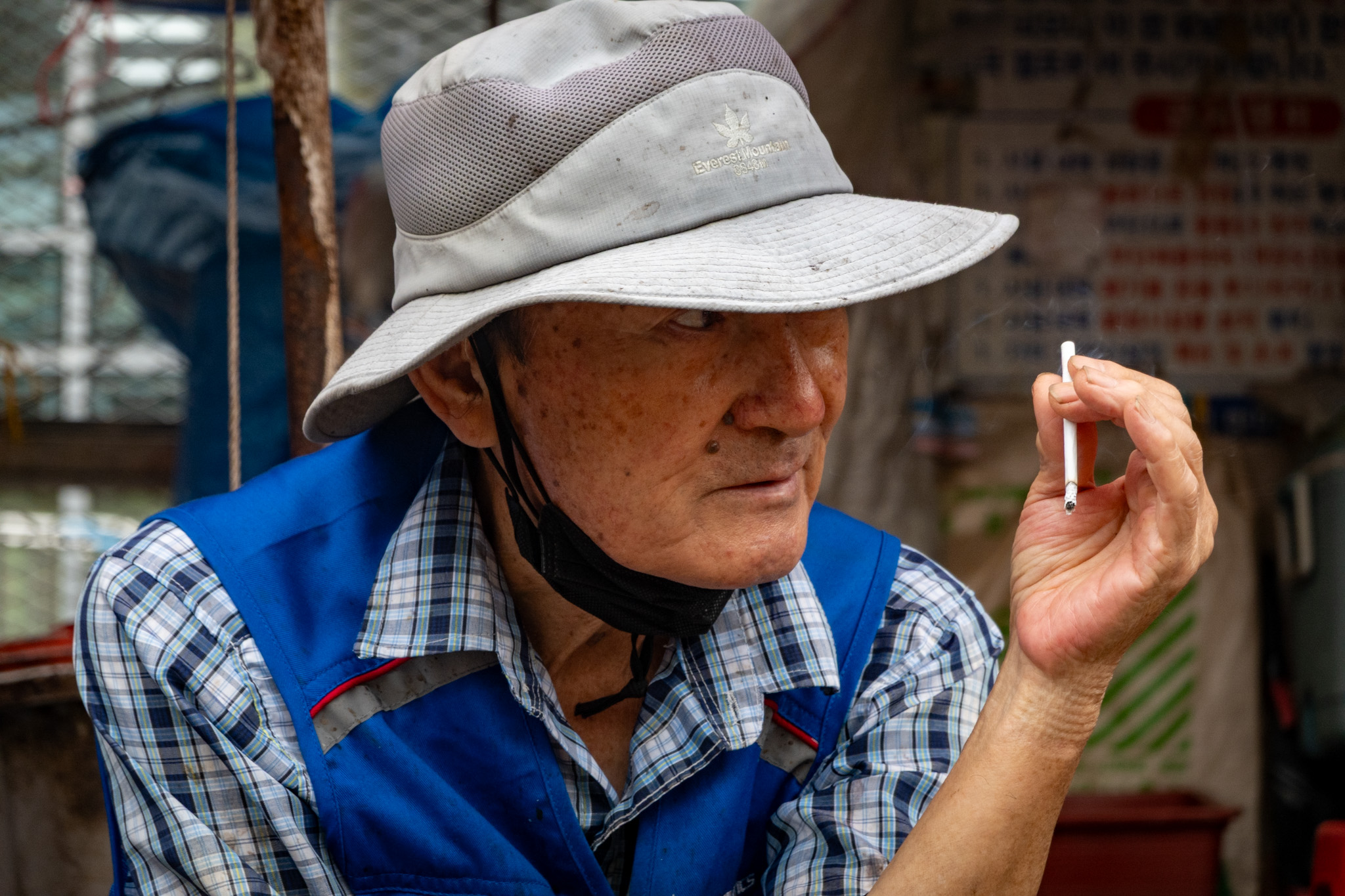
Modernisation brings obvious advantages: better hygiene, improved facilities and a more comfortable environment for customers. But it also raises a familiar question across Asia’s traditional markets: what disappears when informal commerce is replaced by orderly infrastructure?
The answer is not simply architectural. It concerns the relationships between people, the small rituals of buying and selling, and the accumulated knowledge of vendors who have spent their lives working beside the sea.
Upstairs, however, Jagalchi reveals another dimension of its character.
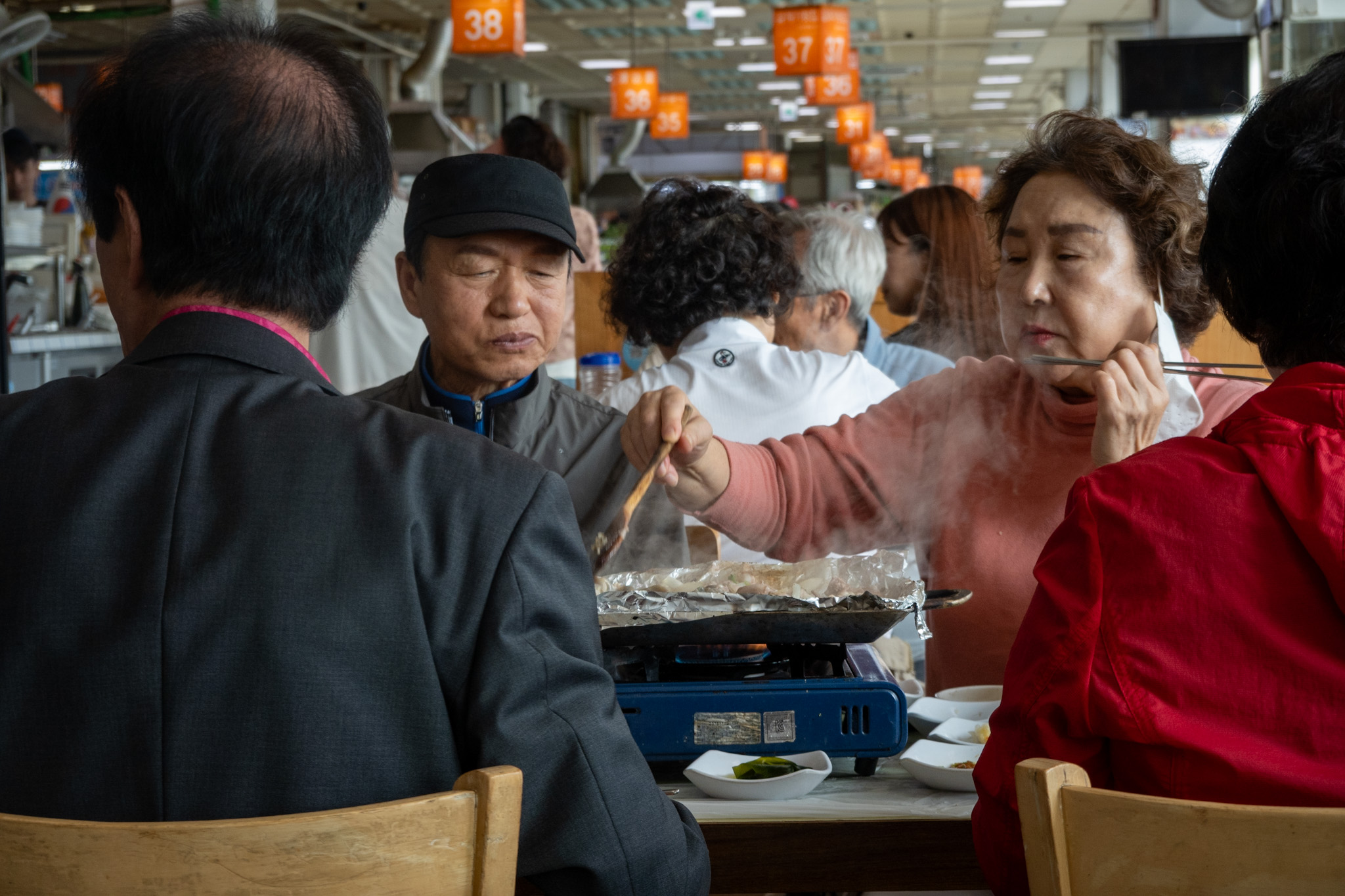
The second floor is crowded with local people eating seafood, often around tables shared by families, friends and colleagues. The atmosphere is relaxed and convivial, far removed from the hurried efficiency of Seoul’s business districts.
And then there is the crab.
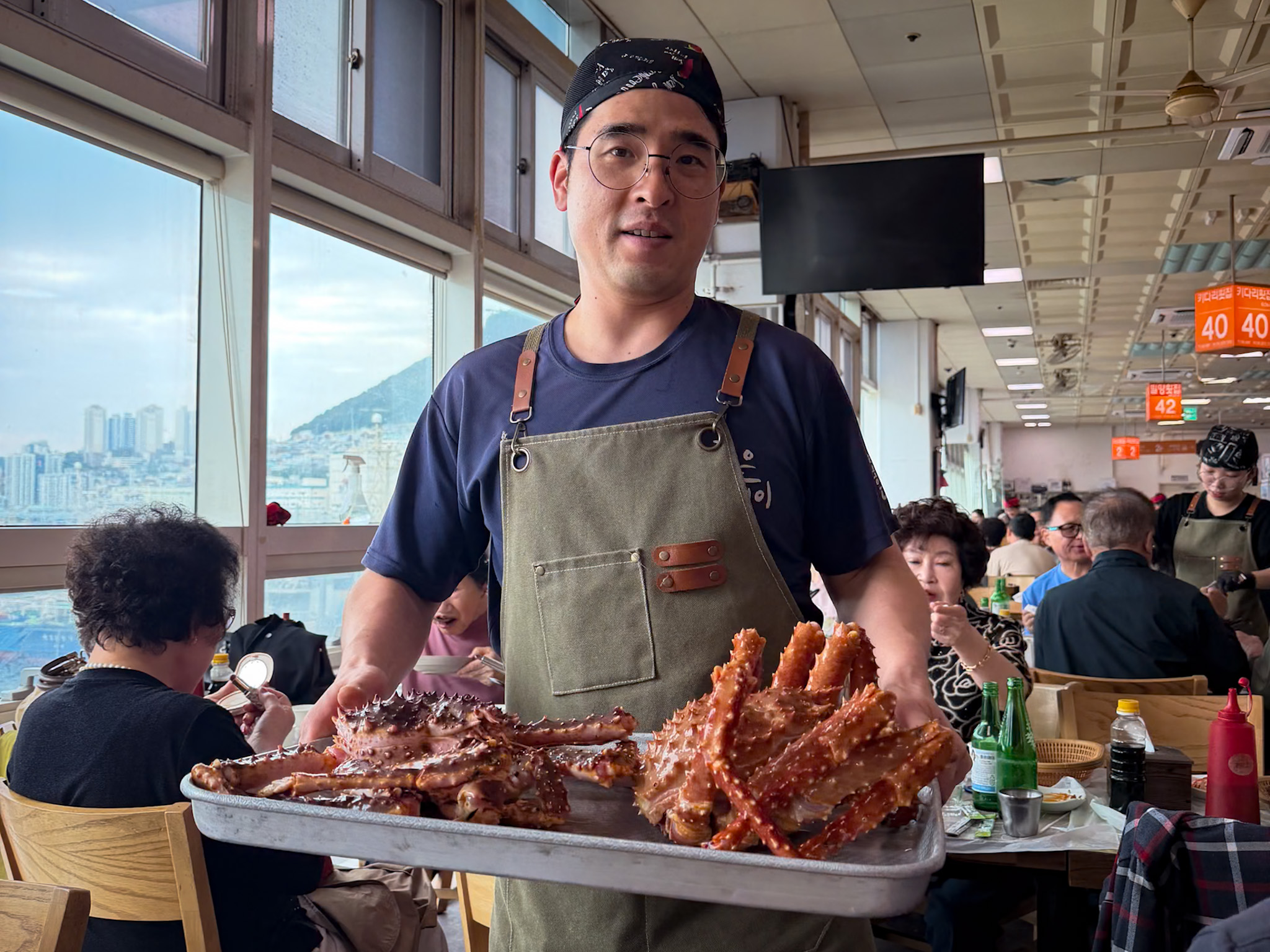
A prehistoric creature arrives at the table, steamed and served with little ceremony. Its sweet, delicate meat requires patience, a little effort and considerable enthusiasm. Around me, diners seem entirely comfortable spending time over their meals. Eating here is not merely about satisfying hunger. It is a social occasion, one that follows its own unhurried rhythm.
This is the Busan I keep discovering.
A city shaped by war, migration, maritime trade and hard physical labour, yet somehow less formal and more approachable than the capital. Its people appear more willing to linger, to talk, to enjoy the ordinary pleasures of daily life.
Jagalchi captures both sides of that identity: the disciplined modern market and the fading improvisation of the street, the commercial efficiency downstairs and the pleasure of eating together upstairs. The old stalls may gradually disappear, and the yellow counters may become the dominant image, but for now, the market remains more than a place to buy fish.
It is a living record of Busan’s history, and a reminder that the spirit of a city often survives in the simplest of transactions.
Discover more from THE QUIET REPORT
Subscribe to get the latest posts sent to your email.
