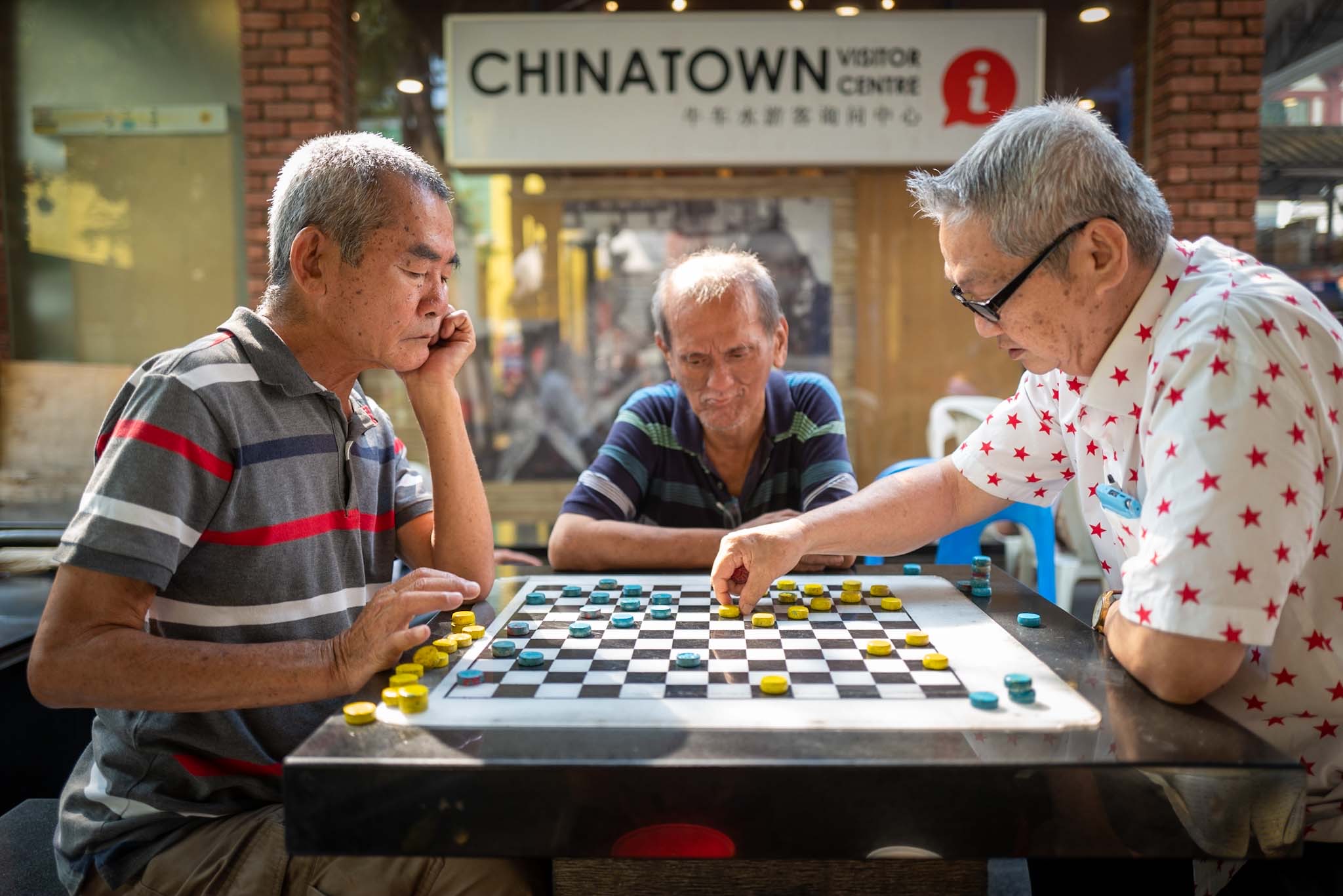
There is a corner of Singapore where time seems to move at a different pace. Just across from the imposing Buddha Tooth Relic Temple, in the heart of Chinatown, elderly Chinese men gather around small tables, their attention absorbed by games that have been played for generations. Some lean forward, studying the board with extraordinary concentration. Others sit back, cigarettes between their fingers, waiting patiently for their opponent’s next move. Plastic chairs, paper cups, the occasional spectator offering an unsolicited opinion: everything contributes to a scene that feels wonderfully distant from the polished image Singapore usually presents to the world.
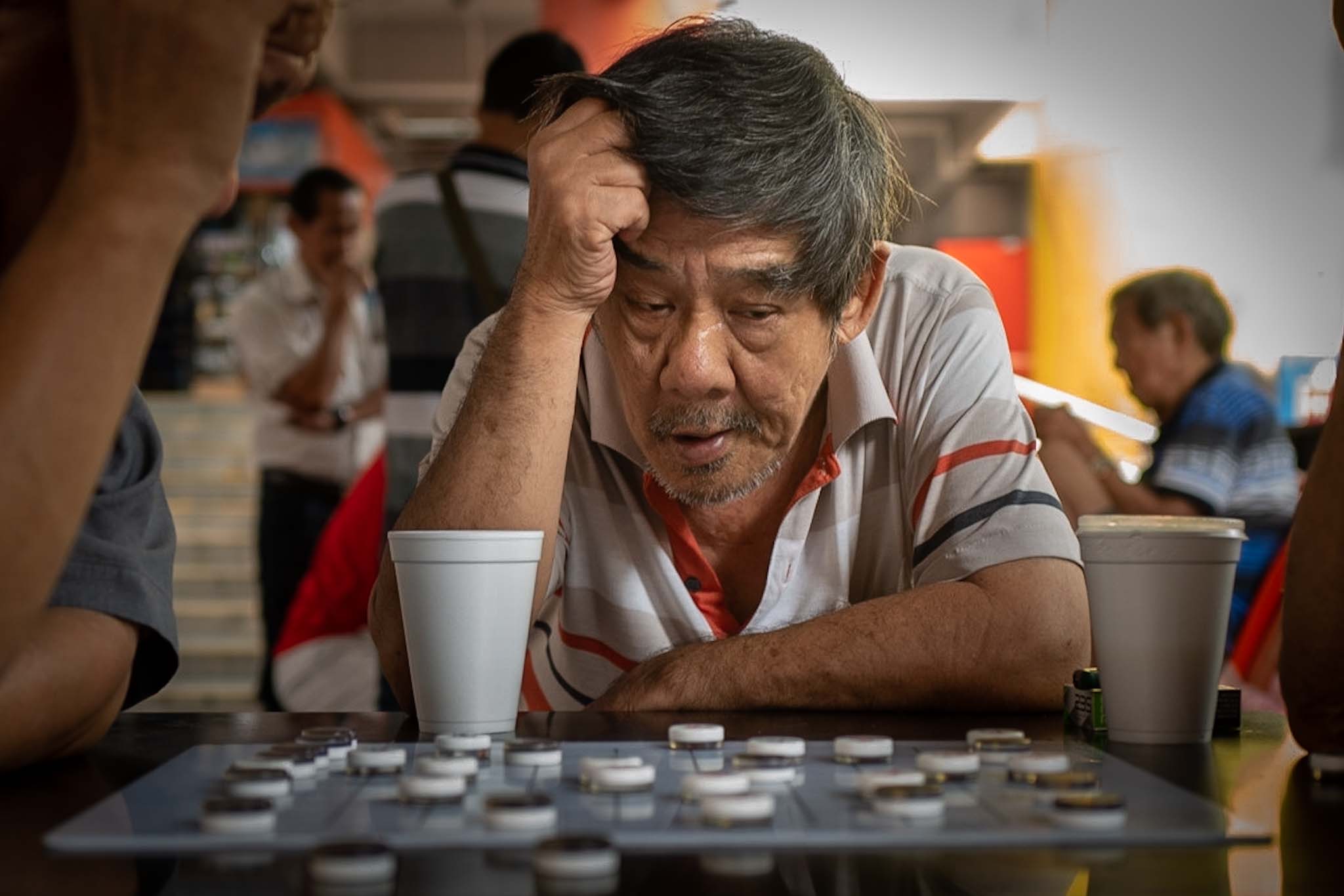
I know this neighbourhood particularly well. For several years, I lived just a few minutes’ walk away, on Mosque Street, one of the narrow roads that cut through the historic heart of Chinatown. Those were years when walking through these streets became part of my daily routine, and when I gradually discovered that behind Singapore’s immaculate efficiency there was another city, older, more spontaneous and considerably more human. I would pass the traditional shophouses, small restaurants preparing their morning deliveries, elderly residents sitting outside, and the familiar gatherings of men playing Chinese chess or checkers. It was a neighbourhood that never needed to impress anyone. Its charm came precisely from the ordinary life unfolding on its pavements.
Returning here with my camera brings back those memories. The surroundings have changed, as they inevitably do in Singapore, where urban transformation seems almost a permanent national occupation. Some businesses have disappeared, others have been renovated, and the tourist economy has gradually claimed more space. Yet these players remain, occupying their familiar tables with an almost reassuring indifference to everything happening around them.
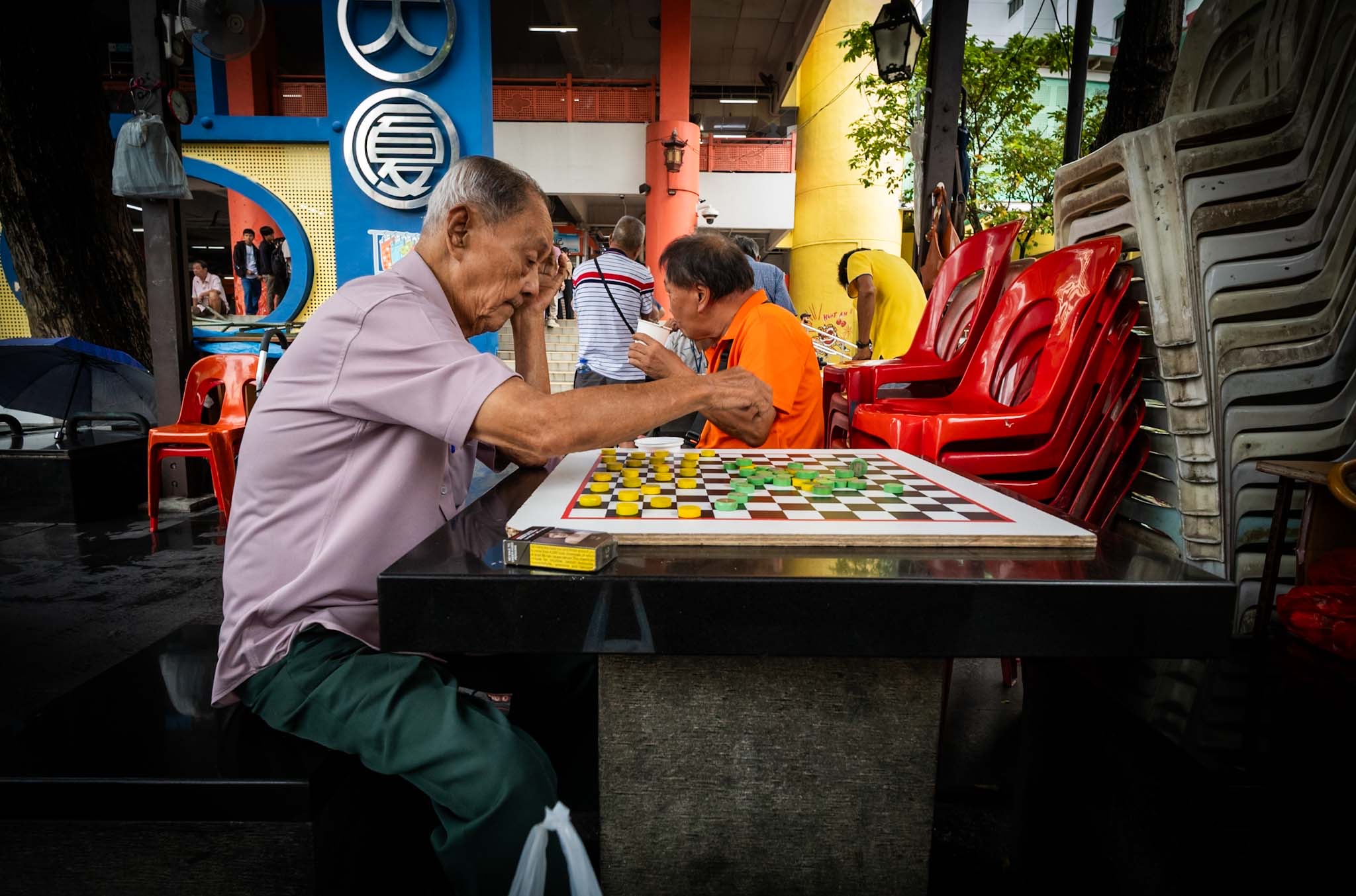
What fascinates me most is the intensity of their concentration. In one photograph, an elderly man rests his forehead against his hand, his eyes fixed on the board as though the next move might determine something far more consequential than the outcome of an afternoon game. In another, a player reaches forward to move a piece while his opponent watches in silence. Their faces tell stories that I can only imagine: decades of work, families raised, a city transformed beyond recognition. I know nothing about their individual lives, and perhaps that is part of the beauty of street photography. A fleeting encounter can reveal something meaningful without requiring an explanation.
The games themselves are part of a long Chinese tradition of public social life. Chinese chess, known as xiangqi, has been played for centuries, and throughout Chinese communities in Asia, games of strategy have provided a reason for people, particularly older men, to gather, compete, argue and simply spend time together. The board is important, of course, but so is everything surrounding it: the conversation, the familiar faces, the quiet companionship of belonging somewhere.
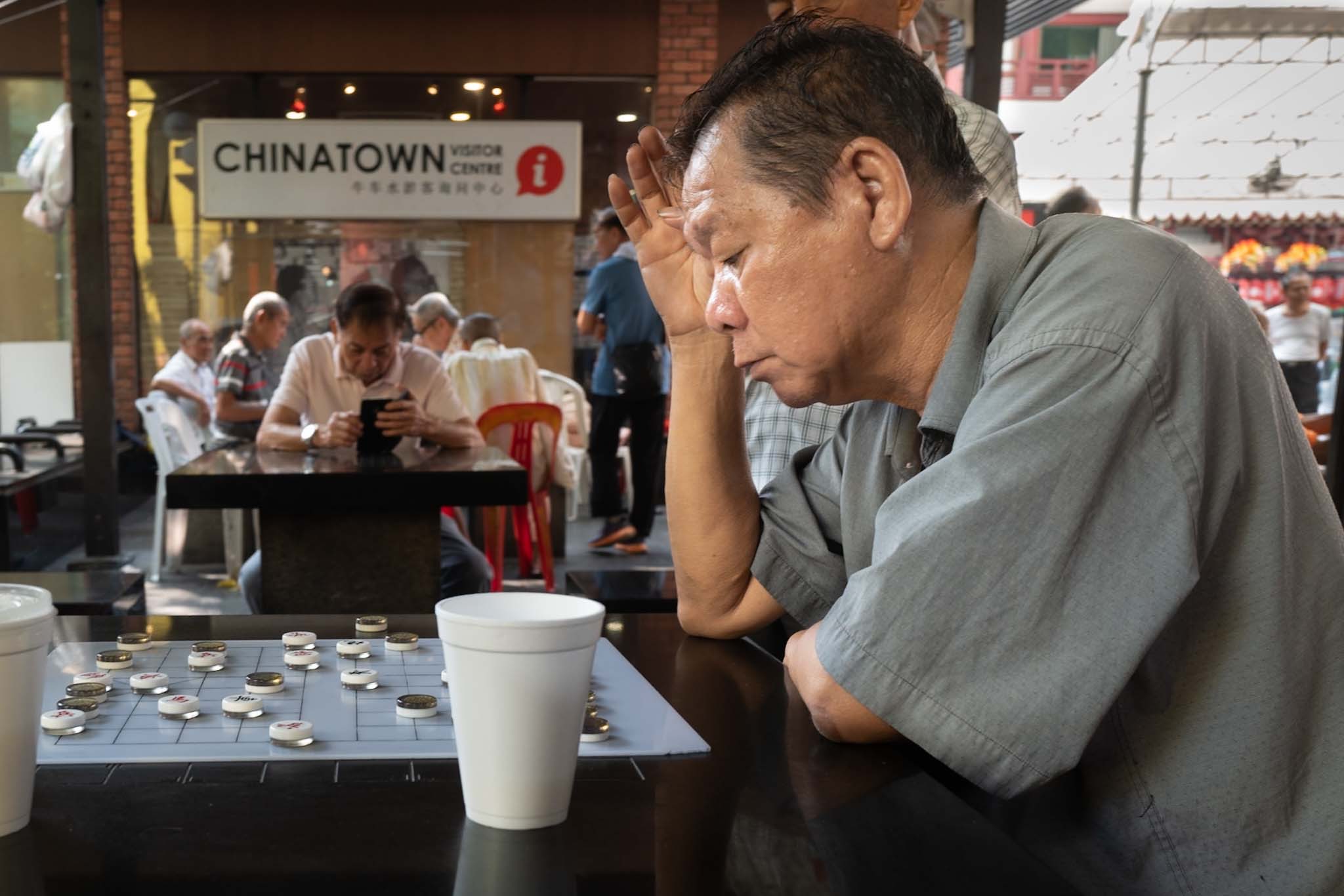
There is something particularly striking about this scene in Singapore. Few cities have embraced modernity with such determination. Glass towers, luxury shopping malls, sophisticated infrastructure and meticulously organised public spaces define much of its international reputation. Yet here, within walking distance of the financial district, another rhythm survives. Nobody appears to be in a hurry. There is no obvious commercial purpose to the gathering, no experience being packaged for visitors, no need to transform an ordinary afternoon into something productive.
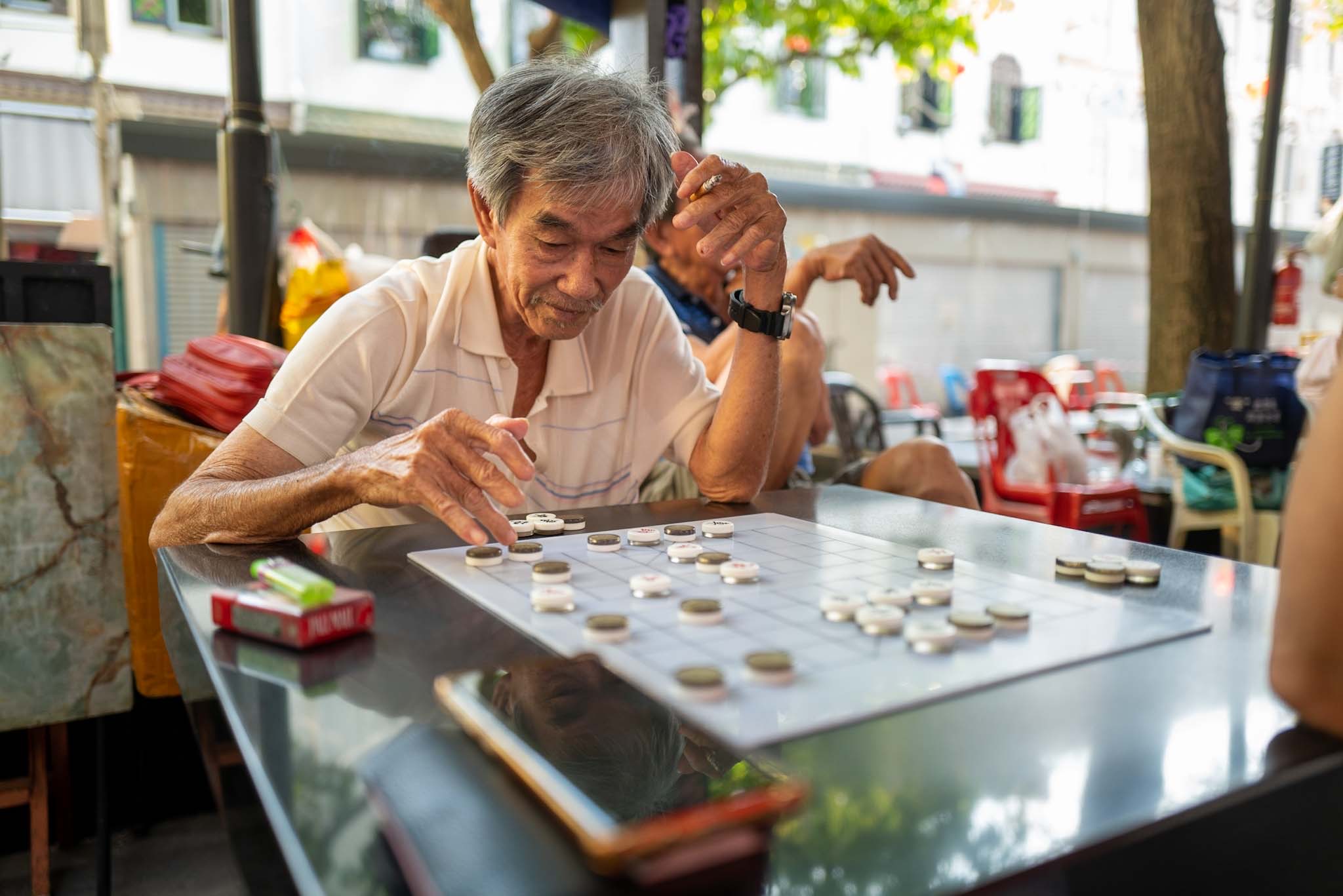
And this is precisely the Singapore I remember most fondly from my years on Mosque Street. Not the spectacular skyline of Marina Bay or the carefully designed attractions that have made the city famous, but the small details of everyday life: the noise of dishes from a nearby coffee shop, the smell of food drifting through the narrow streets, the conversations in languages I could not always understand, and the remarkable coexistence of different generations and traditions within a few city blocks.
Chinatown is not a museum, even if parts of it increasingly resemble a carefully preserved heritage district. Its real character emerges in moments like these, when the neighbourhood belongs once again to the people who inhabit it rather than those who come to photograph it. There is an authenticity here that cannot be manufactured through restoration projects or cultural marketing campaigns. It exists because people continue to use these spaces in ways that have meaning to them.

Looking at these elderly players, I also find myself thinking about ageing and the importance of having somewhere to belong. In societies where loneliness among older people has become an increasingly visible concern, these modest gatherings offer a simple reminder of the value of companionship. The men may exchange only a few words during a game, but their presence around the same tables creates a small community, one sustained by familiarity and repetition rather than formal organisation.
I spent quite some time photographing them, fascinated by their gestures, their expressions and the almost theatrical tension of an apparently ordinary game. What I wanted to capture was not simply a group of elderly men playing chess, but something of the atmosphere that has always made this part of Singapore special to me.
Eventually, I put my camera down and continued walking through Chinatown, along streets that still felt remarkably familiar. The city around them will undoubtedly continue to change. New buildings will rise, businesses will come and go, and another generation of visitors will discover the colourful streets surrounding the Buddha Tooth Relic Temple, but I hope these tables remain occupied for many years to come.
Discover more from THE QUIET REPORT
Subscribe to get the latest posts sent to your email.
