Marionette e rivoluzione
Written by Maurizio “Mau” Vagnozzi
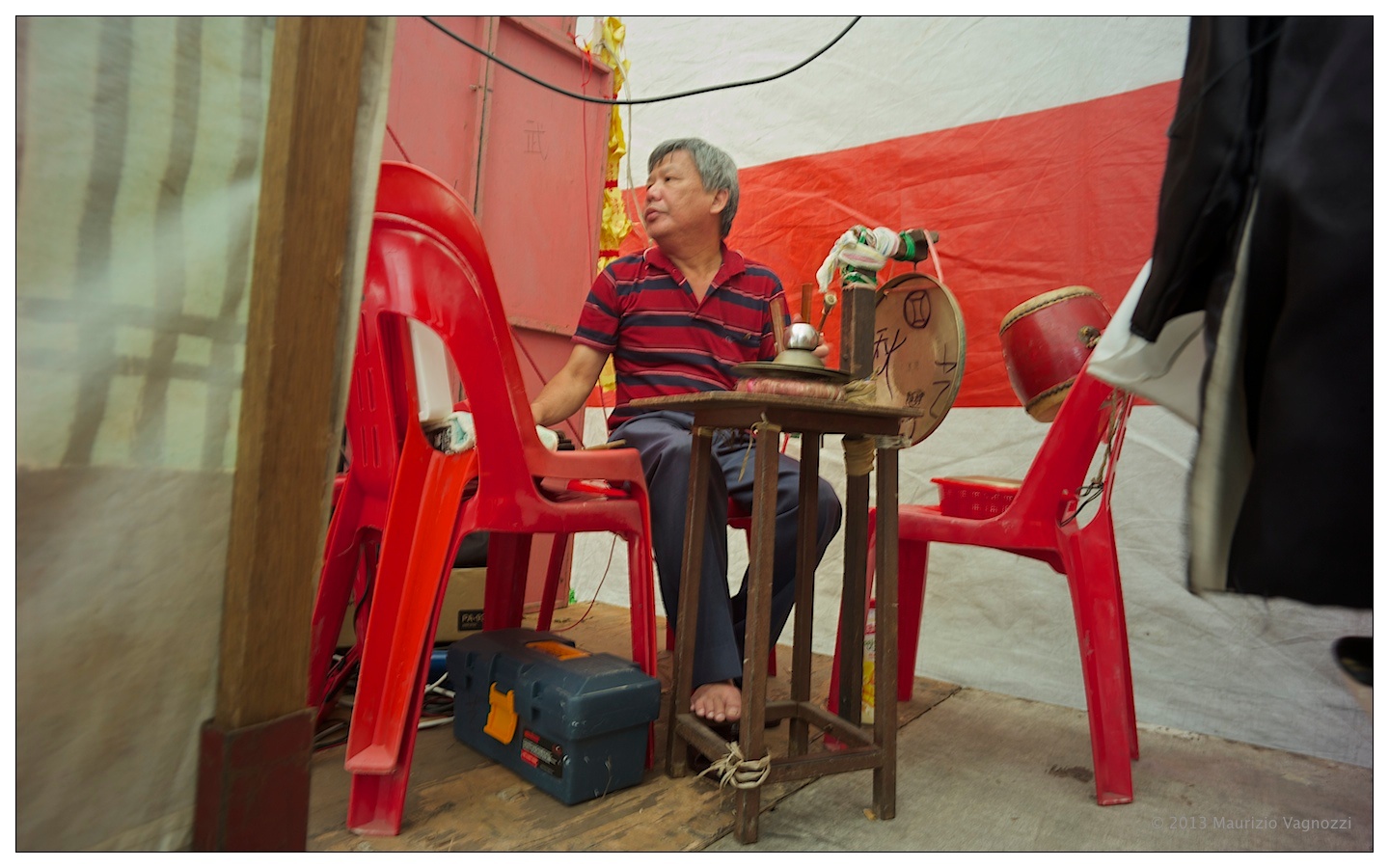
Il palcoscenico è accanto al tempio, come spesso succede: quando passo non c’è nemmeno l’ombra di un pedone nella strada, e di spettatori manco se ne parla. Chiedo ,a gesti, se posso fare qualche fotografia: il mio cinese è più simile ad un riflusso gastrico che a una pronuncia corretta. Mi invitano a salire con loro tra le quinte, mentre continuano la performance e mi lasciano muovere e scattare le mie immagini, in totale libertà e con assoluta naturalezza.
Mi sono incontrato spesso in Asia con il teatro delle marionette: è una tradizione che si pensa abbia avuto origine intorno al 4,000bC, e della quale si sono incontrati reperti in tombe Sumere dal 2,500bC. Riferimenti ai “personaggi coi fili” si trovano nel Mahabharata, poema epico in lingua Tamil, e anche opere quali Natya Shastra e il Kamasutra ne fanno menzione. Tutt’ora è una forma di spettacolo estremamente diffusa in tutta l’Asia rurale, e ha dato origine a varie scuole tra le quali possiamo anche menzionare il teatro delle ombre Chinese e Giapponese.
Solitamente, sia in India che in China, lo spettacolo è accompagnato da alcuni strumenti musicali che sottolineano l’enfasi della recitazione spesso monocorde: percussioni e strumenti a corda sono quelli più frequentemente usati, normalmente ai lati dell’area del palcoscenico destinata allo scenario di sfondo.
Merita una menzione l’utilizzo del teatro delle marionette come strumento di comunicazione e di propaganda sia in Indonesia, durante la guerra di indipendenza combattuta contro i colonialisti Olandesi che controllavano radio e giornali, sia in China durante la rivoluzione Comunista, sia anche in Viet-Nam durante le Guerre di Indocina, e nella più recente VietNam War degli anni’60.
“Vietcong troupes in South Vietnam have been using itiner ant puppet ensembles. This they may have learned from their allies in China, where after 1949 the communist regime seized upon the puppet theatre, as it also seized upon all other forms of folk tradition, as means of spreading its message of the class struggle. The Chinese puppet theatre and its repertoire, traditionally based upon folk tales, were revitalizd and reconstructed along communist . In North Vietnam the beautiful and unusual form of puppet theatre on the water is likewise being exploited to support a communist regime. In the ponds of Hanoi, the Vietnamese children may see enemy planes crash in flames, shot down by the heroic men of the Peoples’ Army to the accompaniment of fire crackers. The ancient theme of the dragon and the phoenix now reoccurs in modern garb, defeating enemy soldiers and sending them underground, i.e., under water” [Inge C. Orr – Puppet Theatre in Asia]
Qualche scatto, ovvio, del teatro delle marionette a Geylang …


Discover more from THE QUIET REPORT
Subscribe to get the latest posts sent to your email.
