KUROMON BEFORE THE CROWD
Written by Maurizio “Mau” Vagnozzi
Osaka: At eight in the morning, Kuromon Market has not yet become Kuromon Market, or at least not the one that appears in guidebooks.
The rain has been falling since dawn, quietly but persistently, washing the streets of Nipponbashi and following people beneath the covered arcade on umbrellas that continue dripping long after they have been folded. The floor shines beneath the fluorescent lights. Water gathers around plastic crates. Somewhere, a metal shutter rises with a violent rattle.
The market is waking up.
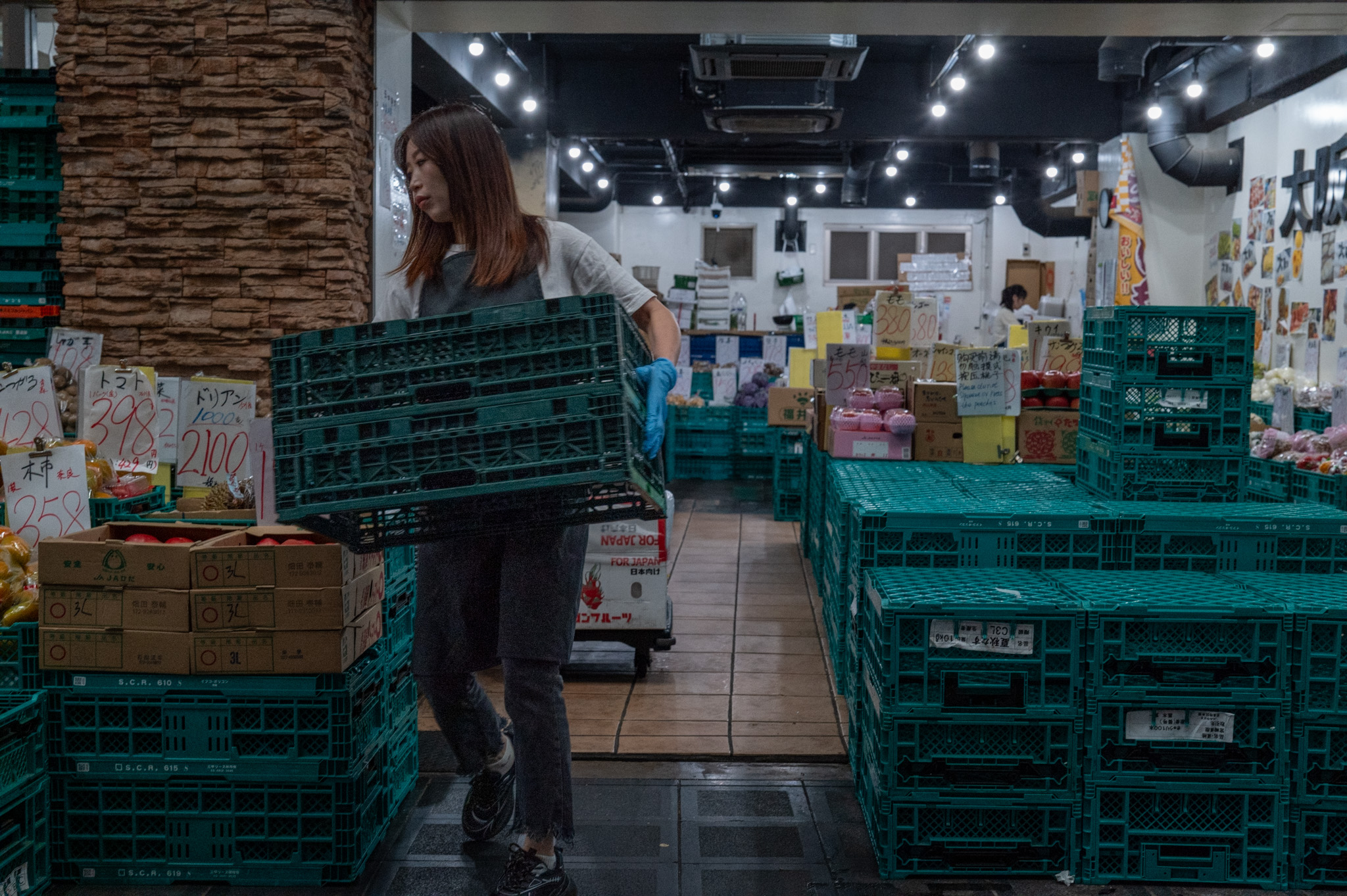
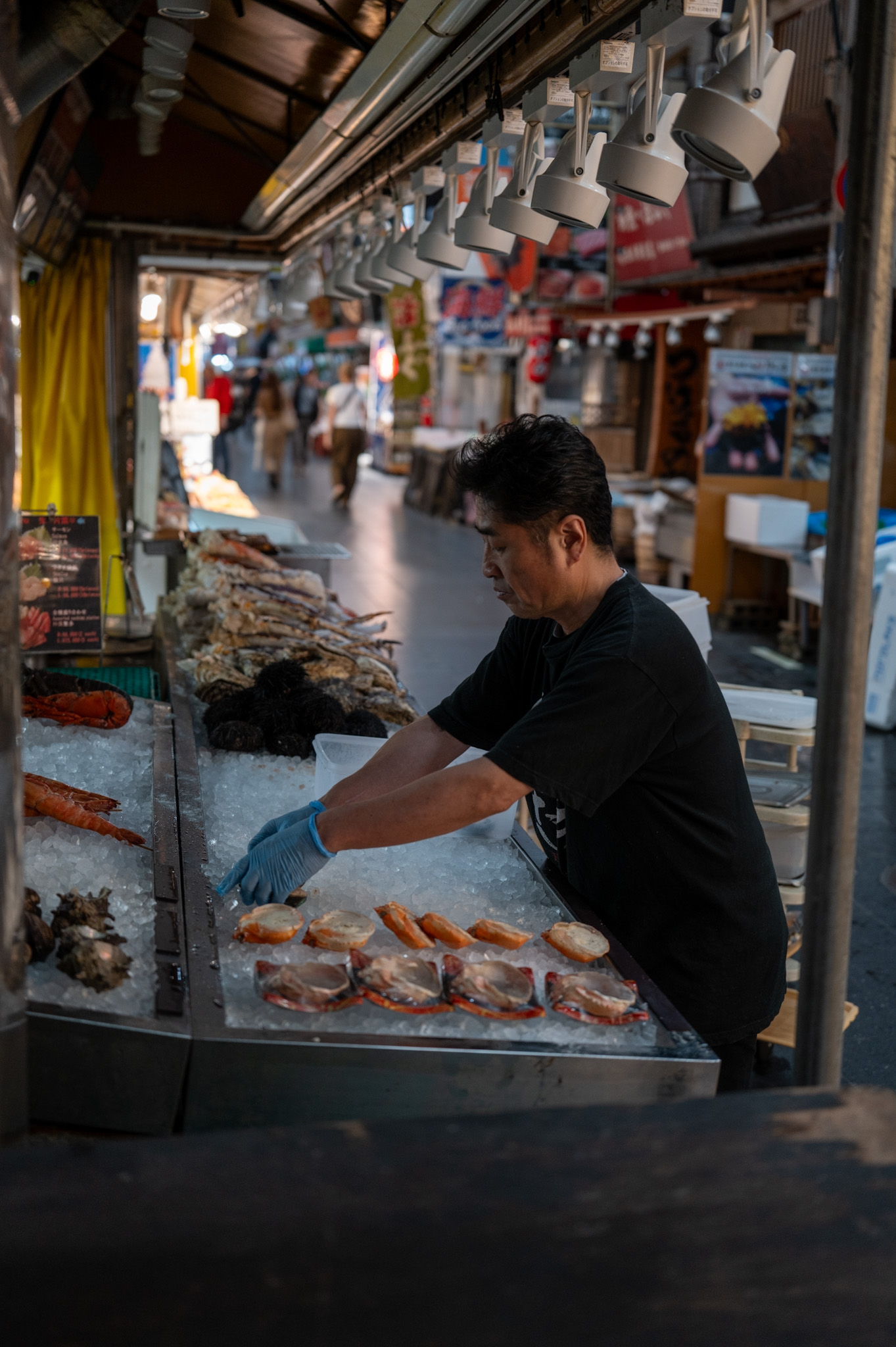
There are no queues yet for wagyu skewers, no phones held above heads, no tourists negotiating the narrow passage in search of tuna, sea urchin or strawberries. The signs are illuminated, but many counters are still empty.
Men in rubber boots drag boxes of fish across the wet floor. A woman arranges vegetables with the concentration of someone assembling a still life. Knives are sharpened. Ice is broken apart and spread across stainless-steel counters.
For the moment, nobody is performing.
Kuromon has been feeding Osaka since the early 19th century. Long before it became a destination, it was a working market, a place where restaurant cooks came in the morning to inspect fish and residents bought what would become dinner, and you can still see that Kuromon if you arrive early enough.
Near one seafood stall, an old man is preparing oysters.
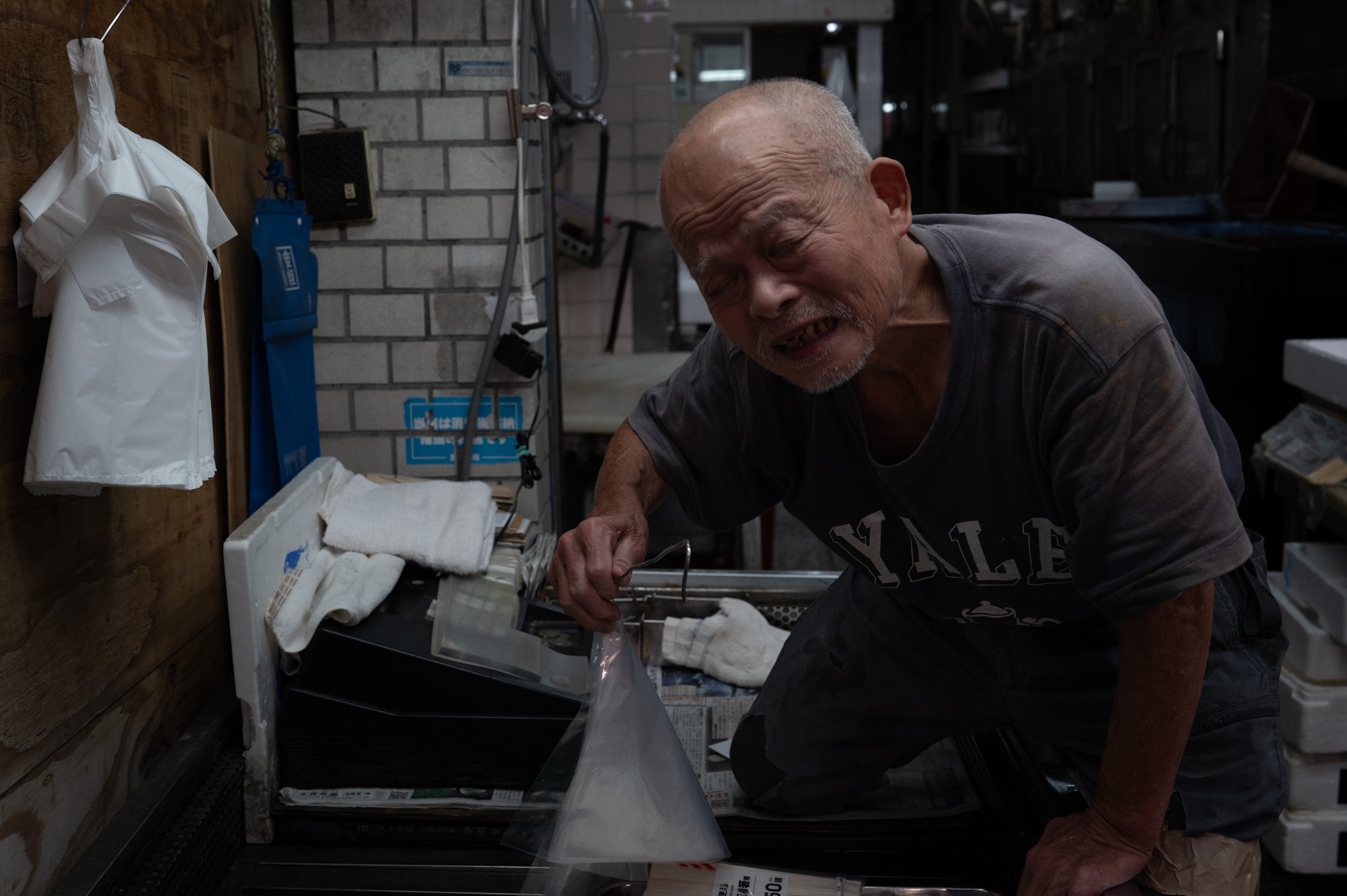
He is small and profoundly bent forward, his back curved by age, or perhaps by decades spent leaning over the same counter. It is impossible to know where one ends and the other begins. He works slowly but without hesitation.
He takes an oyster in one hand and the knife in the other. Twist. Pressure. Open.
Then another.
There is something hypnotic in the repetition.
Around him are polystyrene boxes, crushed ice and seawater. His apron is stained from work. His hands look disproportionately large, the fingers thick and marked by years of cold mornings, shells and knives.
We do not speak. I raise my camera once, then lower it. Crossing his eyes, I share my respect, and I fix the image of my eyes also on the Leica sensor.
Some photographs need permission even when nobody asks for it.
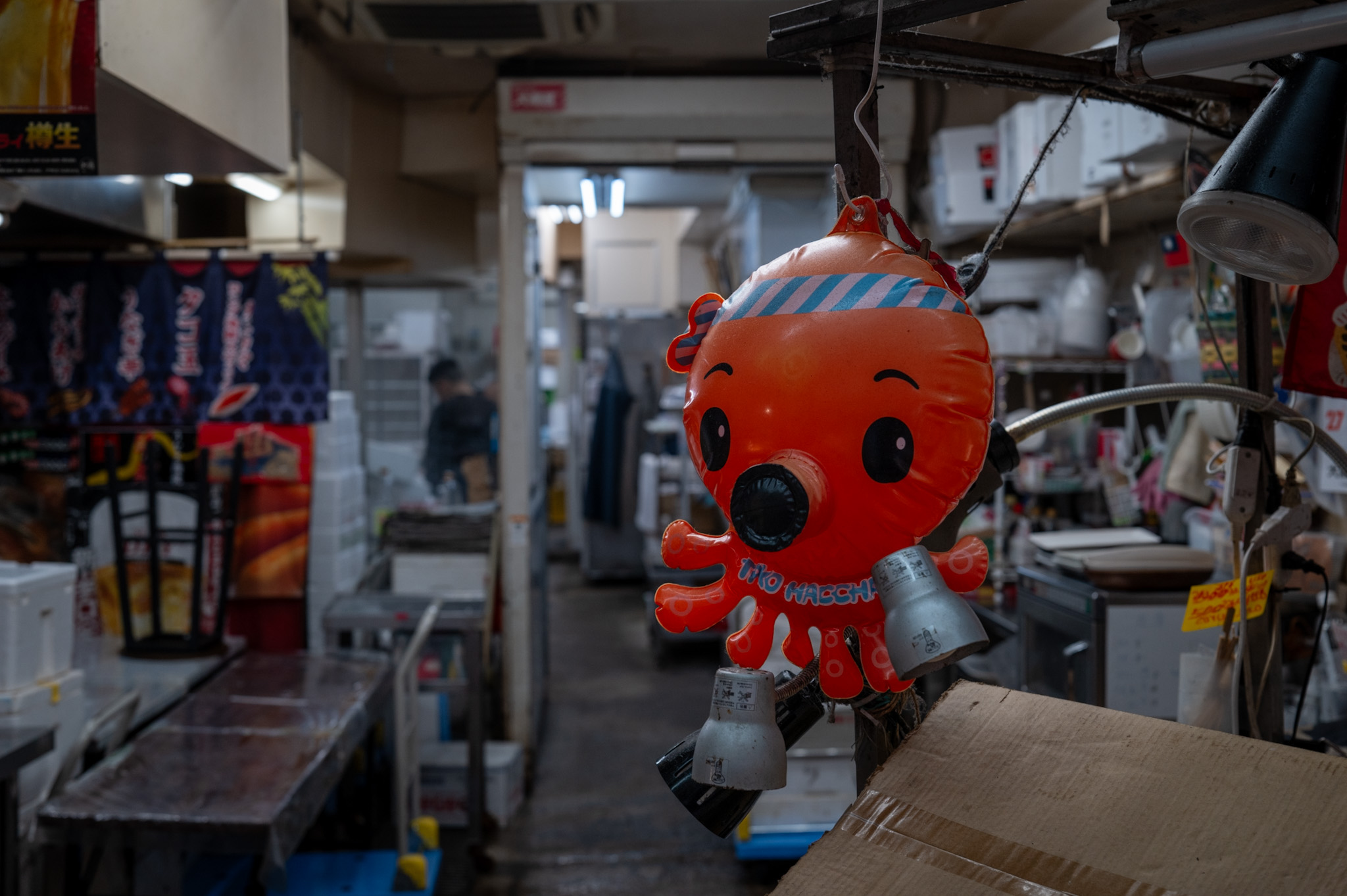
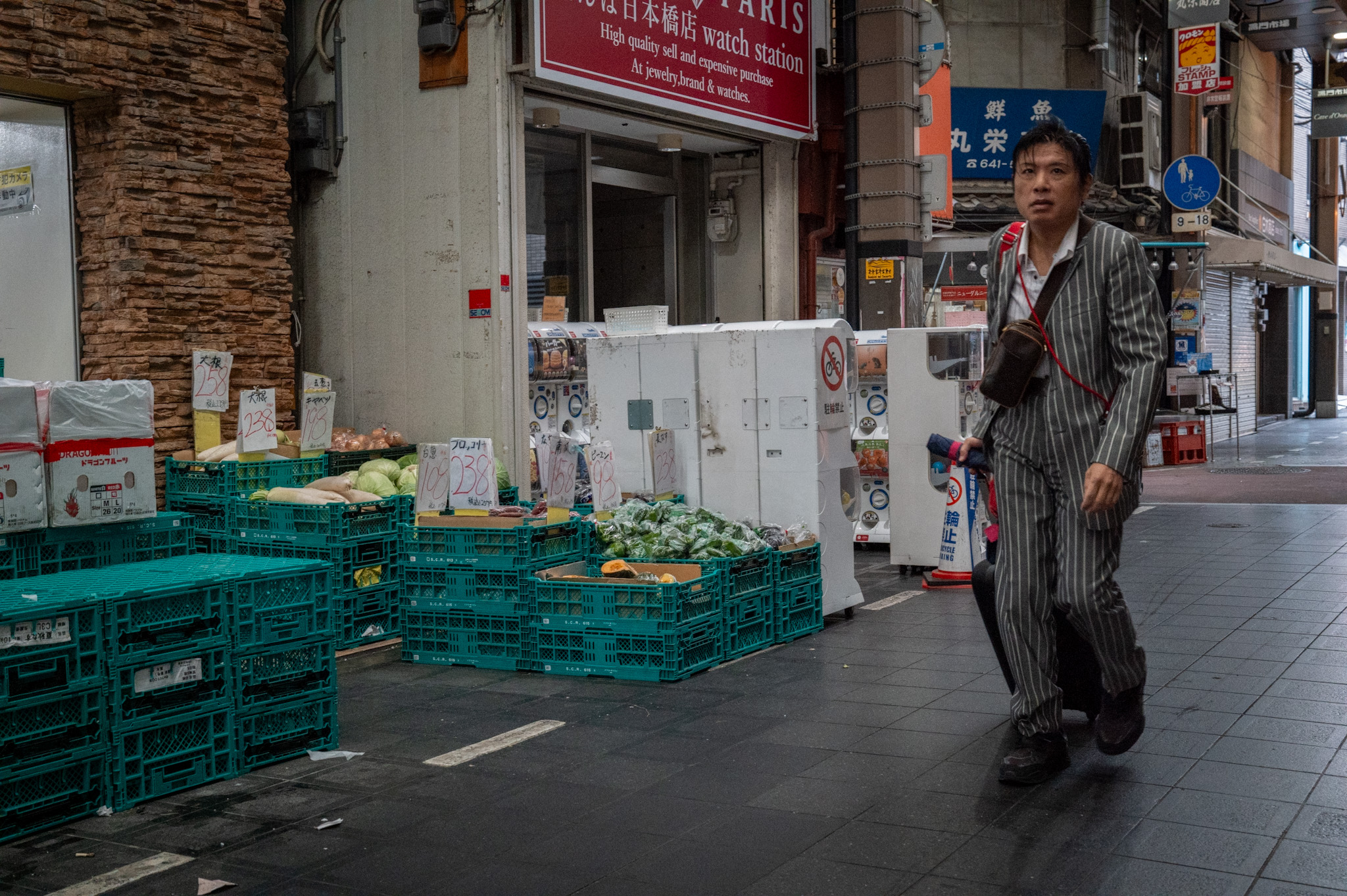
Outside the arcade, rain continues to fall. You can hear it hitting the plastic awnings at the entrances, a soft percussion behind the metallic sounds of the market being assembled. Soon, Kuromon will change.
The first groups will arrive from Namba. Suitcases will roll over the wet pavement. Cameras will appear. Oysters will be photographed before being eaten. Everything will be digested on socials. The smell of grilled scallops and beef will fill the arcade.
The market will become louder, faster, more profitable. Perhaps also less intimate.
But not yet, early in the morning, Kuromon seems to be about something else. It is about work. About repetition. About bodies shaped by professions practiced for decades, andabout the brief hour when a famous market belongs again to the people who open it every morning.
The rain keeps falling.
Kuromon is ready for the day.
Discover more from THE QUIET REPORT
Subscribe to get the latest posts sent to your email.
