OSAKA EATS OUT
Written by Maurizio “Mau” Vagnozzi
In a city famous for its appetite, eating out is not necessarily an occasion. It is often simply how everyday life happens.
Osaka, at six in the evening, the city begins to change. Under the railway tracks near Tenma, stools fill one by one. Office workers loosen their collars and squeeze themselves behind narrow counters. Somewhere in Namba, a cook turns takoyaki with two metal picks, moving almost without looking. In a tiny restaurant with room for perhaps eight customers, a man sits alone in front of a bowl of noodles, his briefcase resting against his leg.
Nobody seems to be celebrating anything. They are simply having dinner.
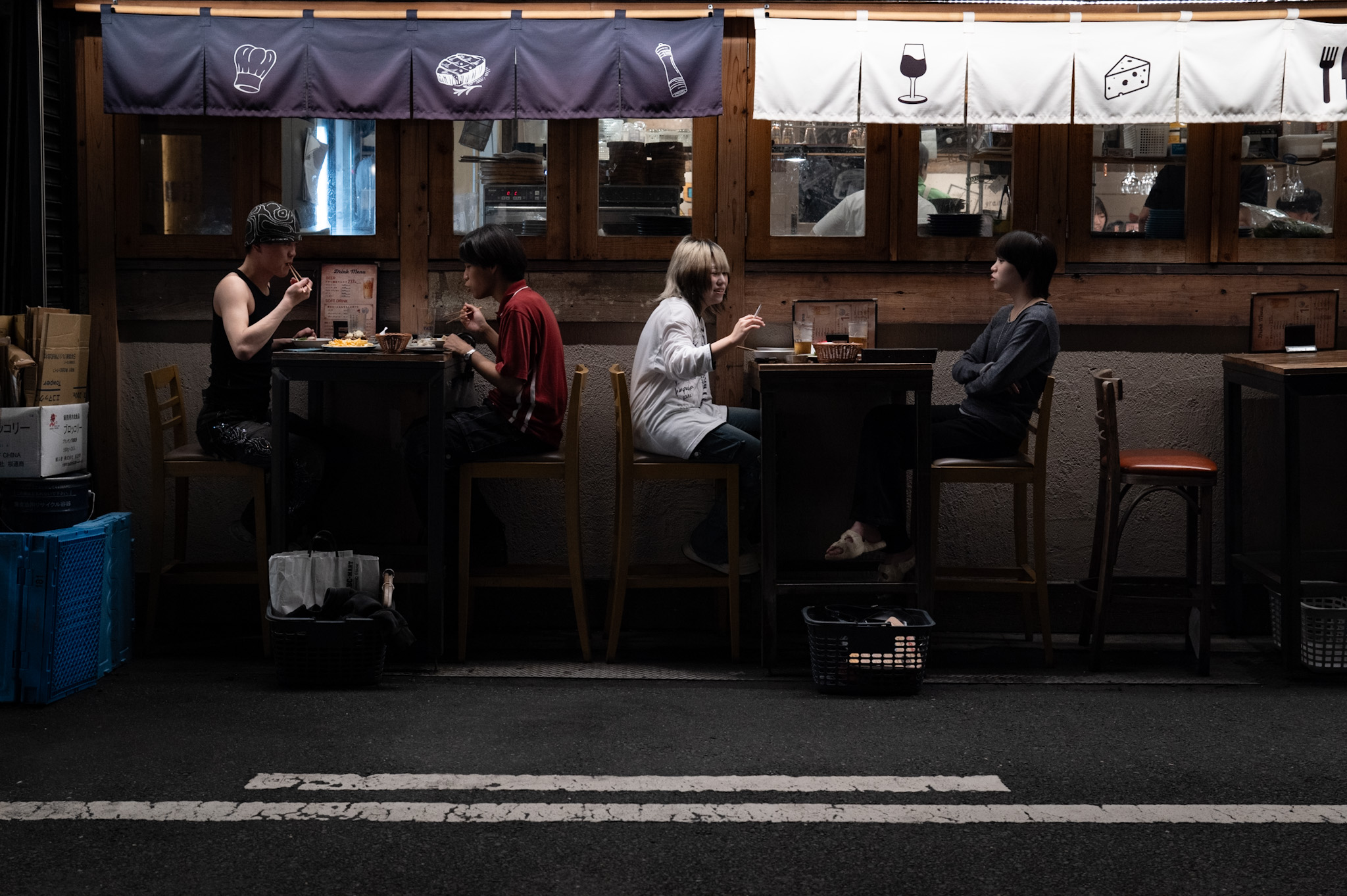
Walk through Osaka in the early evening and one of the first impressions is how much of the city appears to eat outside the home. Not necessarily in restaurants in the Western sense of the word, with reservations, waiters and carefully constructed evenings, but in an enormous ecosystem of ramen shops, udon counters, standing bars, yakitori joints, kissaten, izakaya and family-run places occupying spaces sometimes barely wider than their kitchens.
Eating out here often feels less like entertainment than infrastructure.
Perhaps this is one reason Osaka can be misunderstood by visitors. Tourists tend to concentrate around Dotonbori, where food has become spectacle: giant illuminated crabs, mechanical octopuses, queues for takoyaki and phones held above plates before anyone takes the first bite.
But move a few streets away and another Osaka appears.
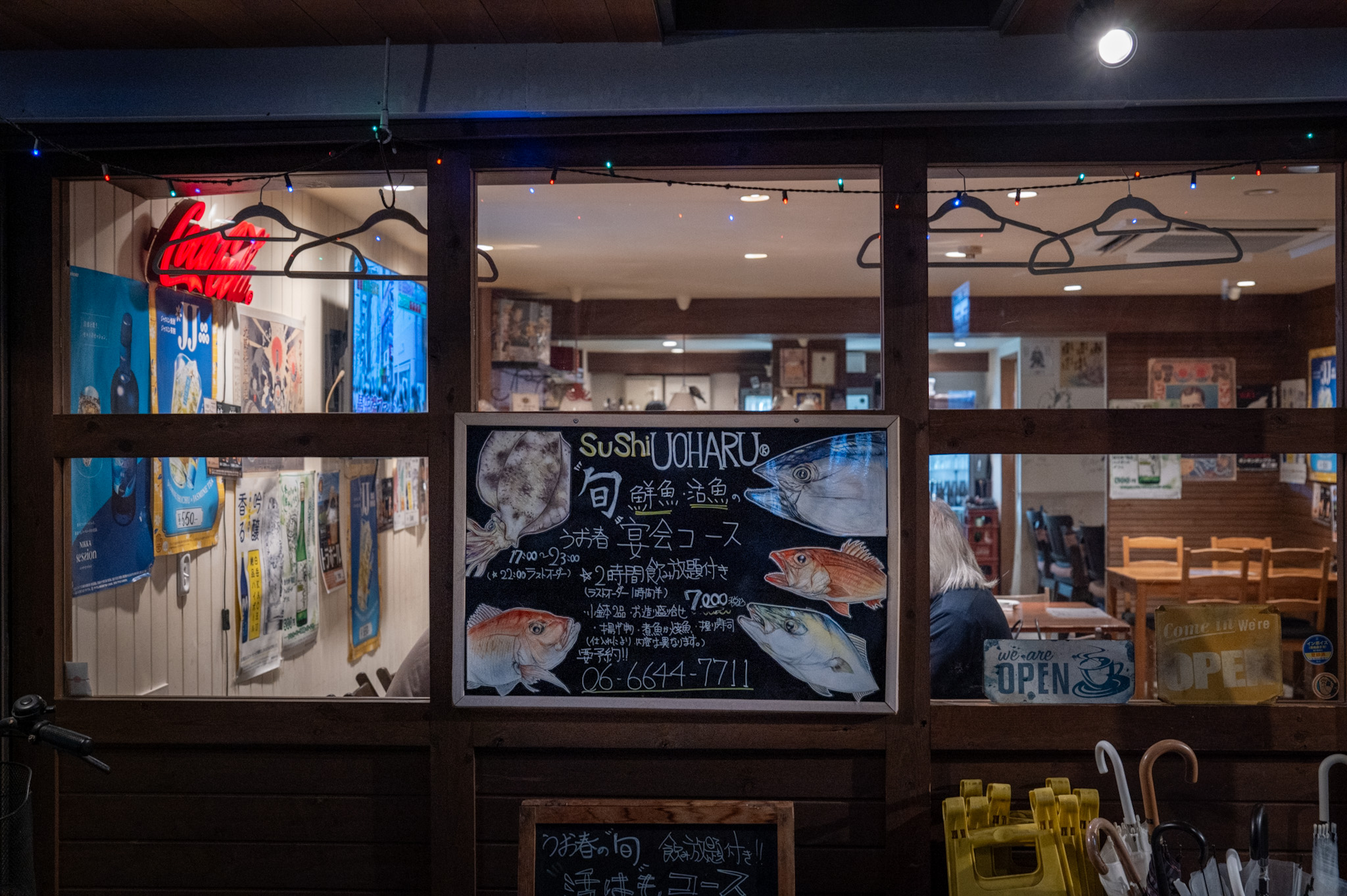
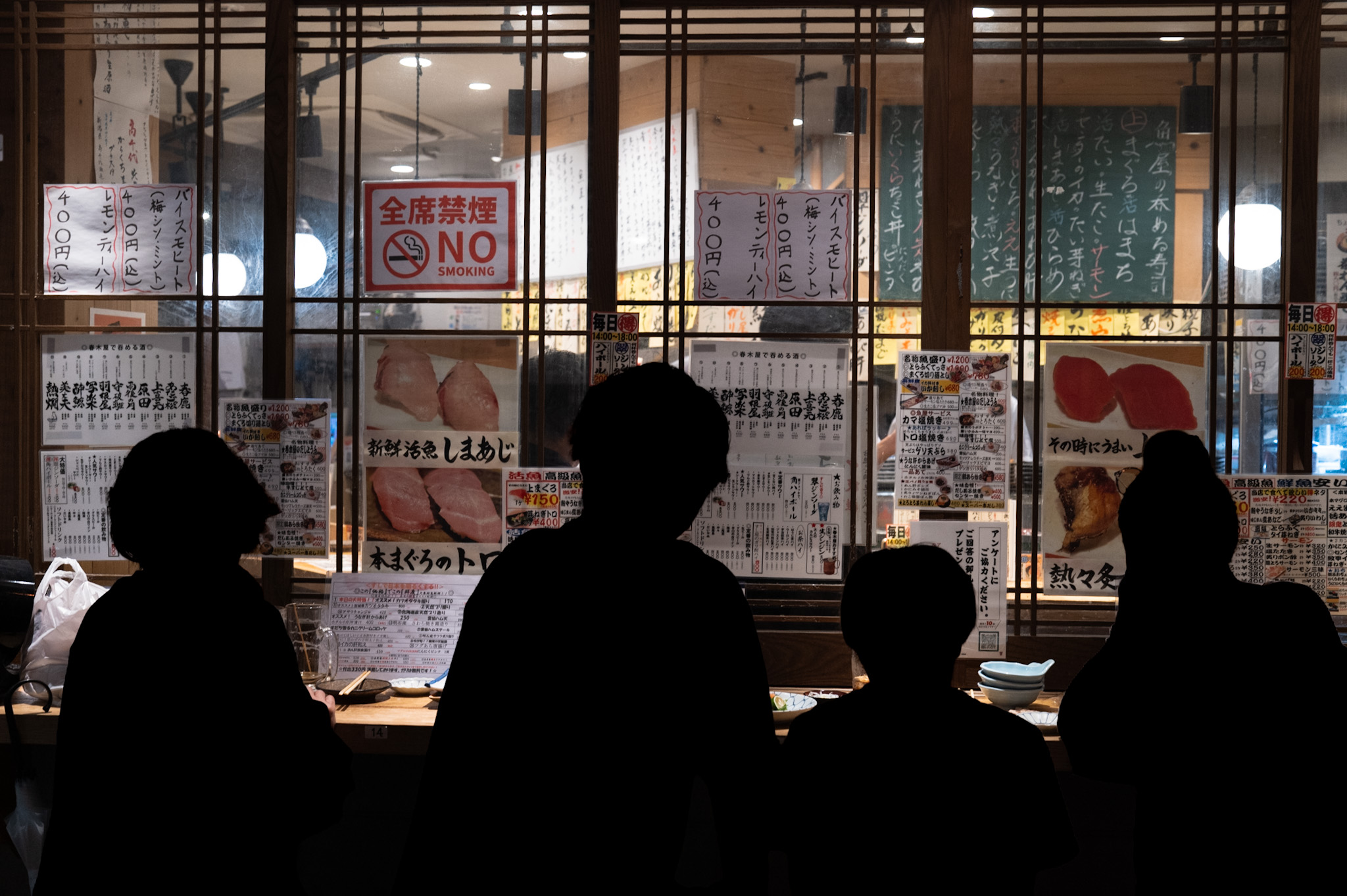
There is an elderly woman eating udon alone. Two construction workers sharing grilled chicken and beer. A salaryman reading his phone over a plate of curry. Three women talking loudly around dishes that arrive whenever the cook has finished preparing them.
The distinction between eating and social life becomes difficult to identify.
Osaka has long cultivated a particular relationship with food. The old expression kuidaore, commonly understood as eating oneself into financial ruin, is routinely attached to the city. It is partly cliché, certainly useful for tourism marketing, but clichés sometimes survive because they contain a recognizable truth. Osaka likes to eat. More importantly, Osaka likes food without requiring it to become precious.
That may explain the extraordinary density of small places serving one thing particularly well. A counter selling kushikatsu does not need to become a lifestyle concept. An udon shop does not require an elaborate interior. A neighborhood izakaya can survive on fluorescent lights, handwritten menus and the familiarity of customers who know where to sit before anyone asks.
There is an efficiency to it that feels deeply urban.
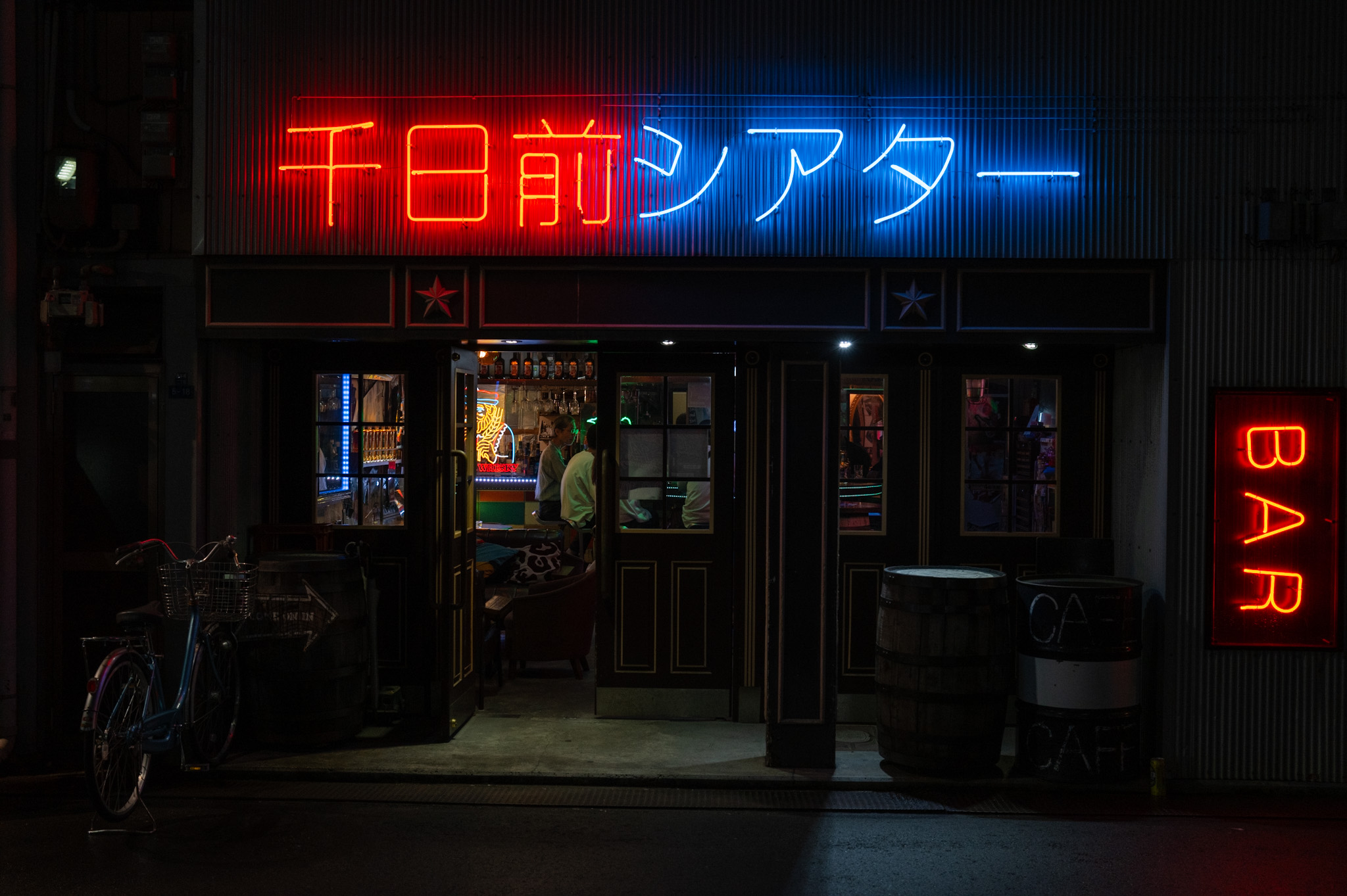
For people living alone, workers returning home late, or friends wanting an inexpensive hour together before catching the train, the small restaurant becomes an extension of the domestic space. You enter, eat, perhaps drink, exchange a few words and leave. The city provides the dining room, and Osaka is particularly good at providing small dining rooms.
Last evening I watched a narrow counter slowly fill with customers. There were perhaps ten seats. The cook worked behind them, separated from his customers by little more than the width of the plates. He poured beer, grilled meat, washed dishes and occasionally joined the conversation.
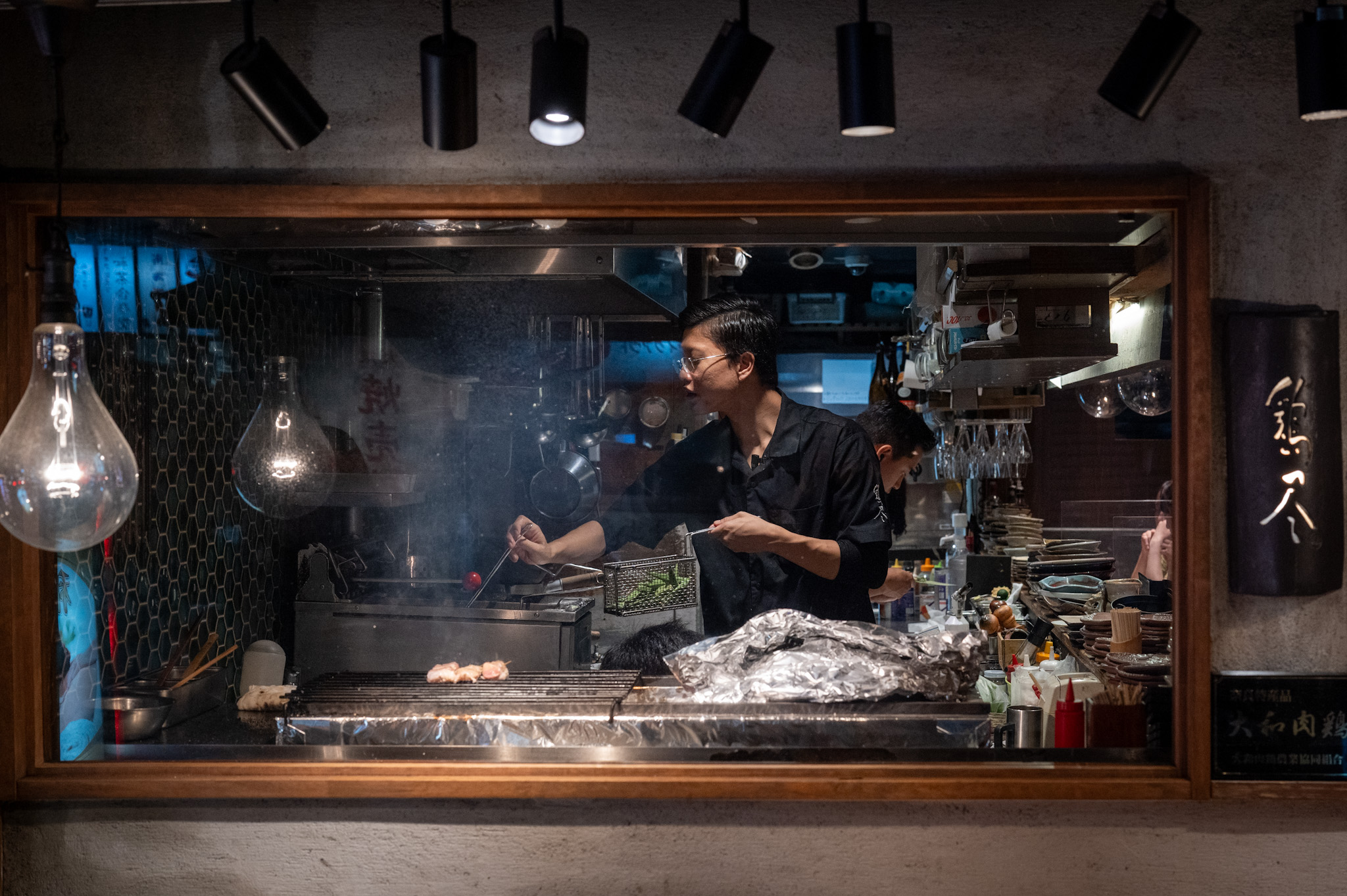
A man entered alone. There was no table available because there were, in fact, no tables. He took the remaining stool. Within minutes, he was eating. A little later he exchanged a few words with the person beside him. Nothing dramatic happened. Nobody became friends. Nobody needed to. Yet for half an hour they occupied the same tiny world.
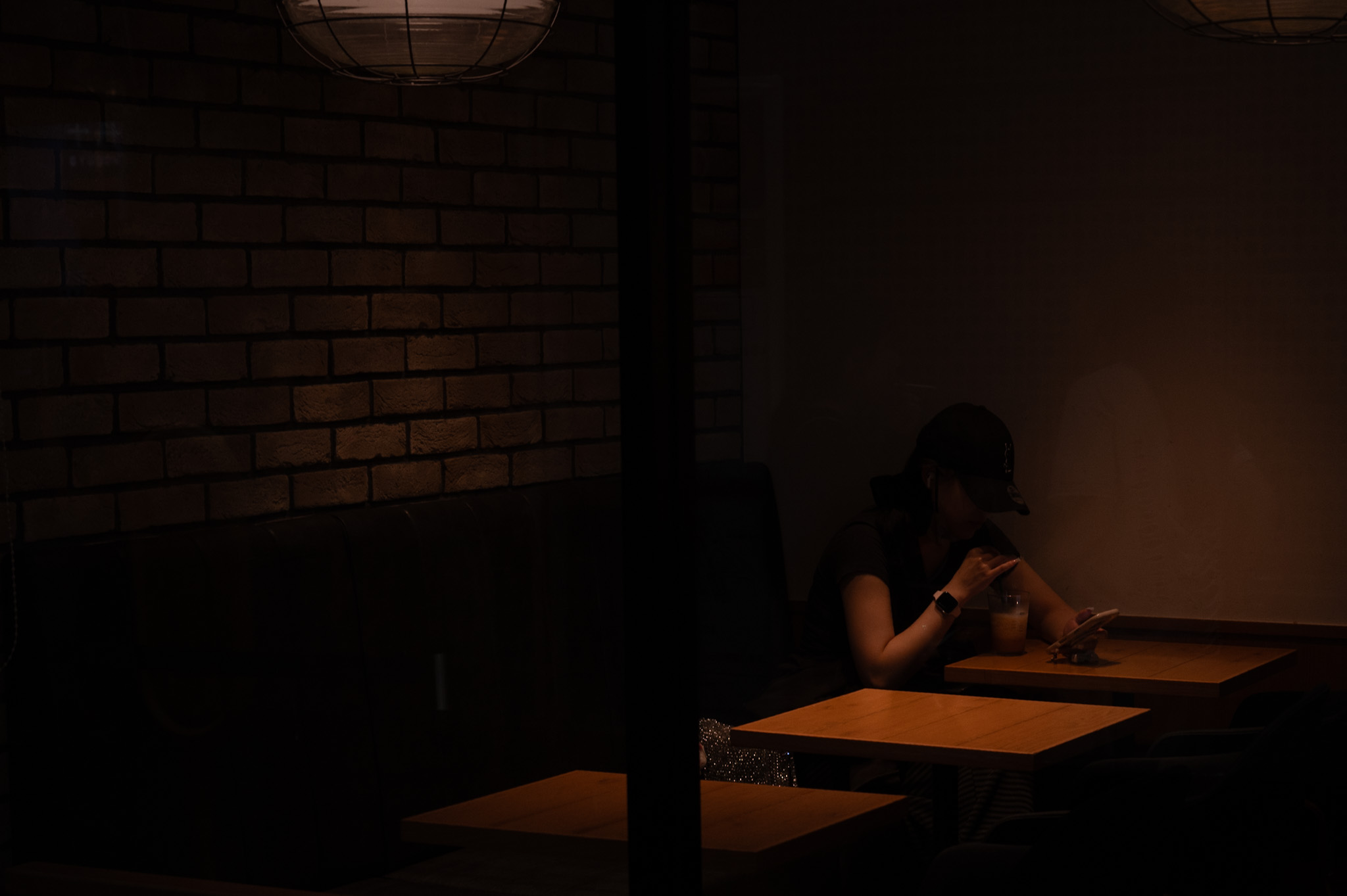
This may be one of the overlooked functions of eating out in a large Japanese city. It creates temporary communities in a society where many people live alone and where working days can be long. The counter removes some of the formality of social interaction. You can arrive alone without appearing lonely. You can speak to someone without having arranged to meet them, or you can say nothing at all.
There is also a practical explanation. Osaka’s urban fabric makes small restaurants remarkably accessible. Around railway stations and beneath elevated tracks, commercial spaces have accumulated over decades. Food is available almost everywhere, often quickly and at prices that make an ordinary dinner outside the home possible without turning it into a special event.
Economics explains only part of what happens after dark. There is pleasure here, too.
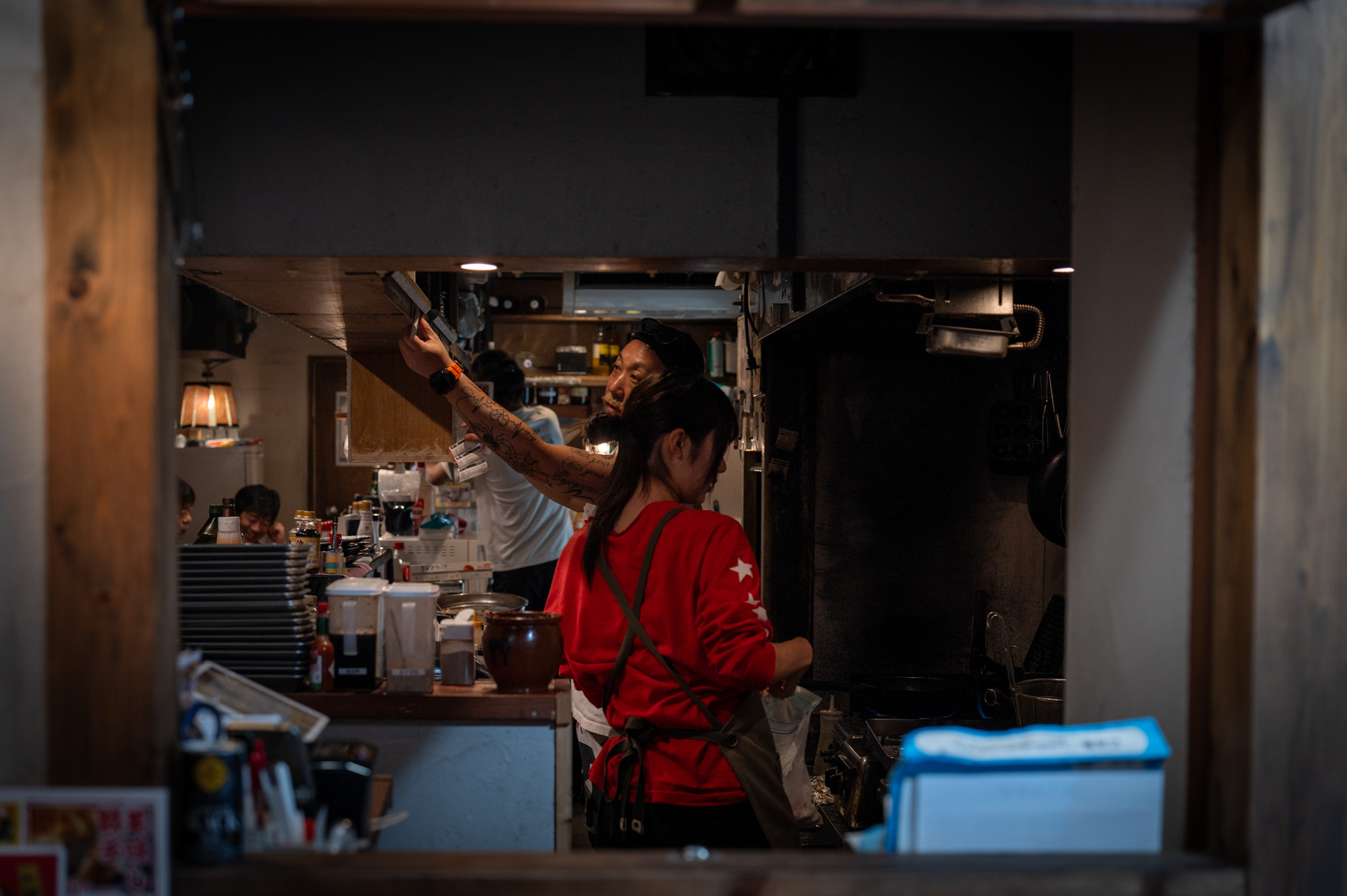
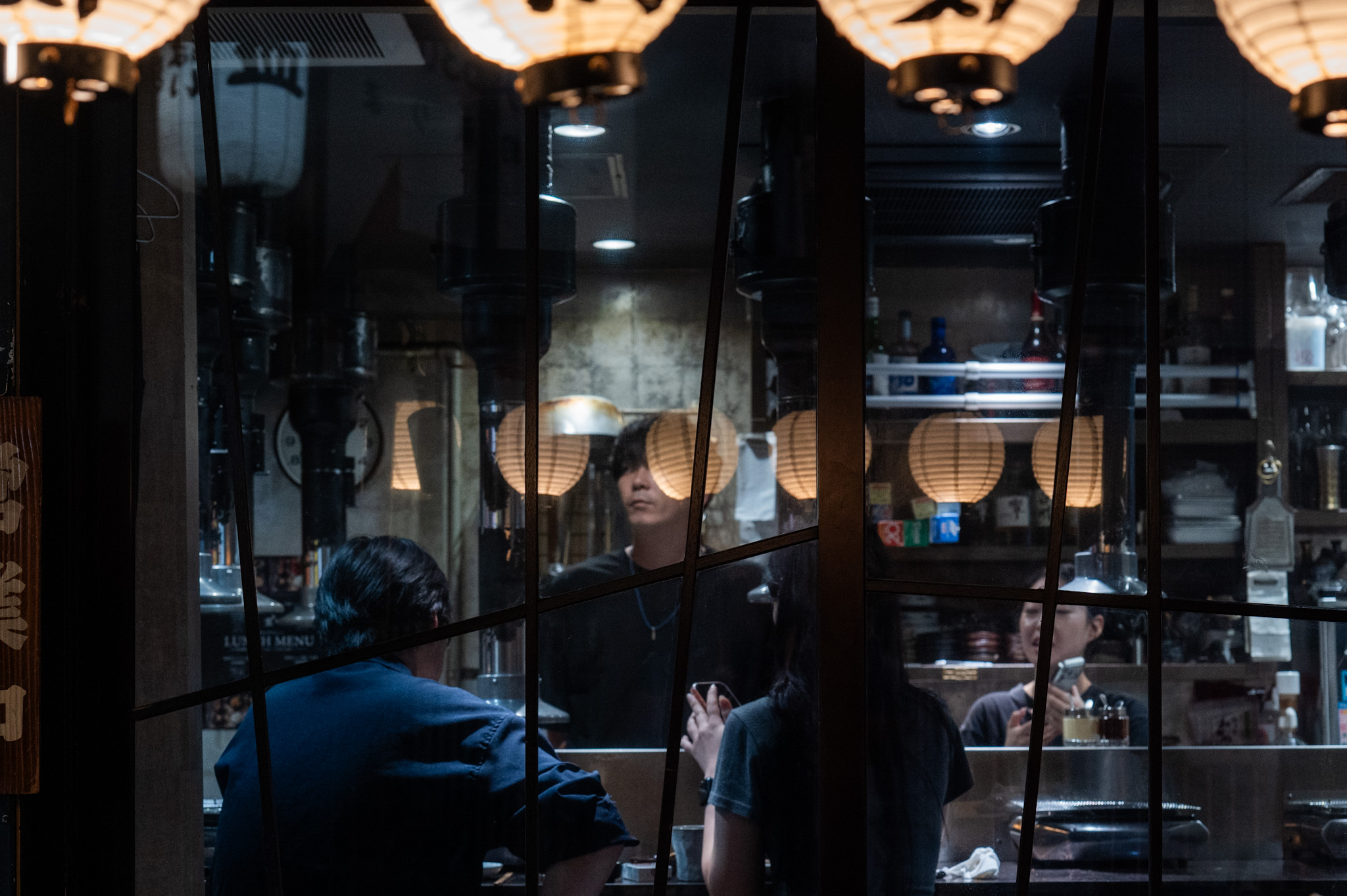
Osaka has always struck me as less concerned with performing refinement than some other Japanese cities. Its relationship with food can feel louder, warmer and more physical. Steam rises from kitchens. Cooks shout greetings. Beer glasses hit counters. Oil crackles behind curtains. People bend over bowls. The city eats with remarkably little ceremony.
Later, walking back through the smaller streets behind the neon of Namba, I passed another restaurant. Through the window I could see five people sitting shoulder to shoulder. Outside, the street was wet from the rain. Inside, a cook placed another plate on the counter.
For a moment, it occurred to me that perhaps asking why people in Osaka eat out so much misses something. They had not really gone out for dinner. They had simply gone somewhere else in the city that, for an hour or so, felt a little like home.
Discover more from THE QUIET REPORT
Subscribe to get the latest posts sent to your email.
