BETWEEN STATIONS
Written by Maurizio “Mau” Vagnozzi
The first photograph is crowded almost to its edges. Arms reach for the overhead straps; a man in a white shirt looks directly towards my camera while the passengers around him seem occupied by their own thoughts. I made the picture with a wide lens, but there is hardly any room left in the frame. That is how the carriage felt.
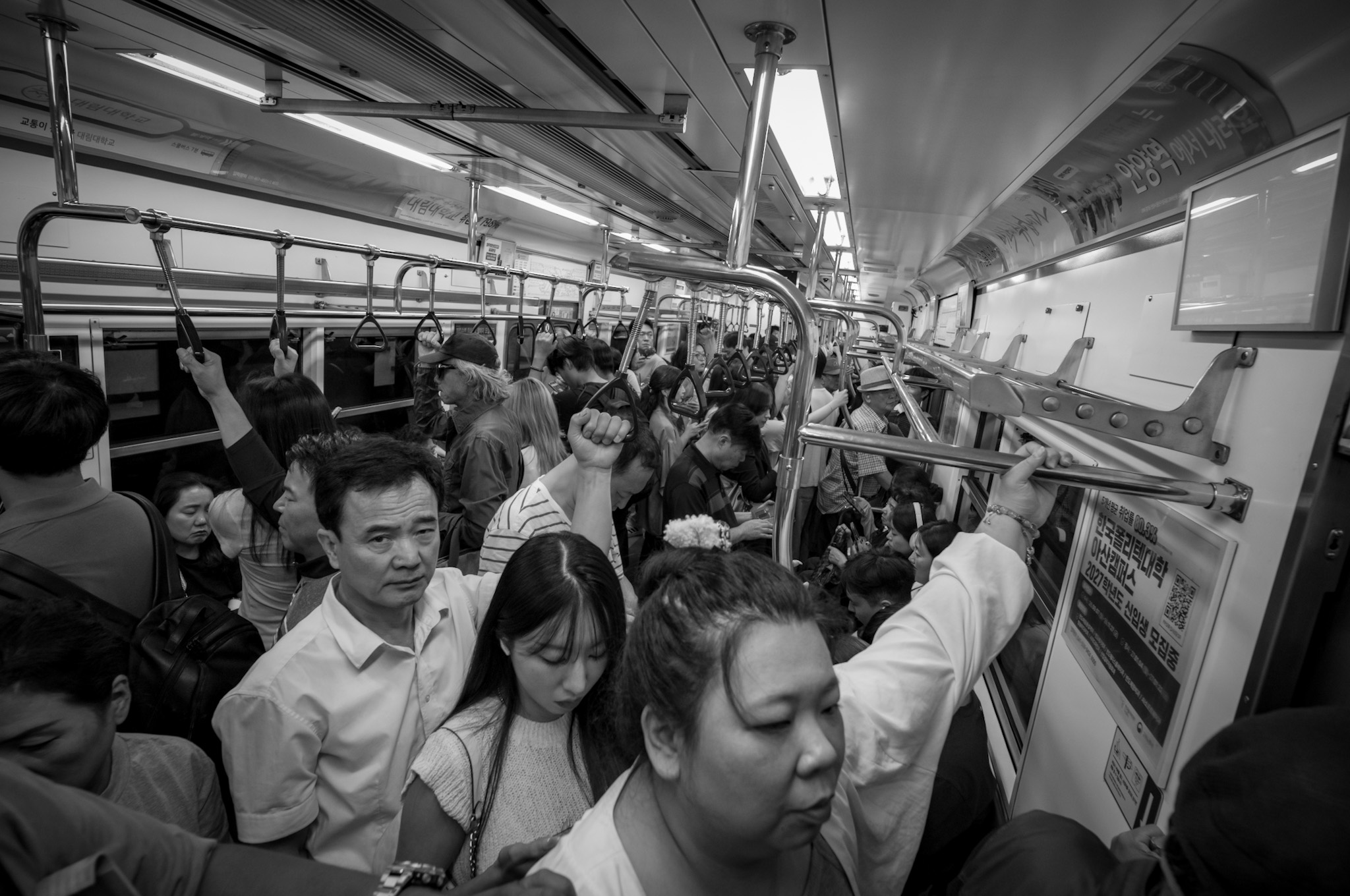
Seoul’s subway began with a single section between Seoul Station and Cheongnyangni, opened on 15 August 1974. It has since grown into a network that carries people across the city and far beyond it. In 2025, Lines 1–8 carried an average of about 6.69 million passengers a day.
Numbers like that are easier to understand from inside a train. Each person in my photograph has somewhere to be; for a few stops, they must negotiate the same small space. Then the doors open and the arrangement disappears.
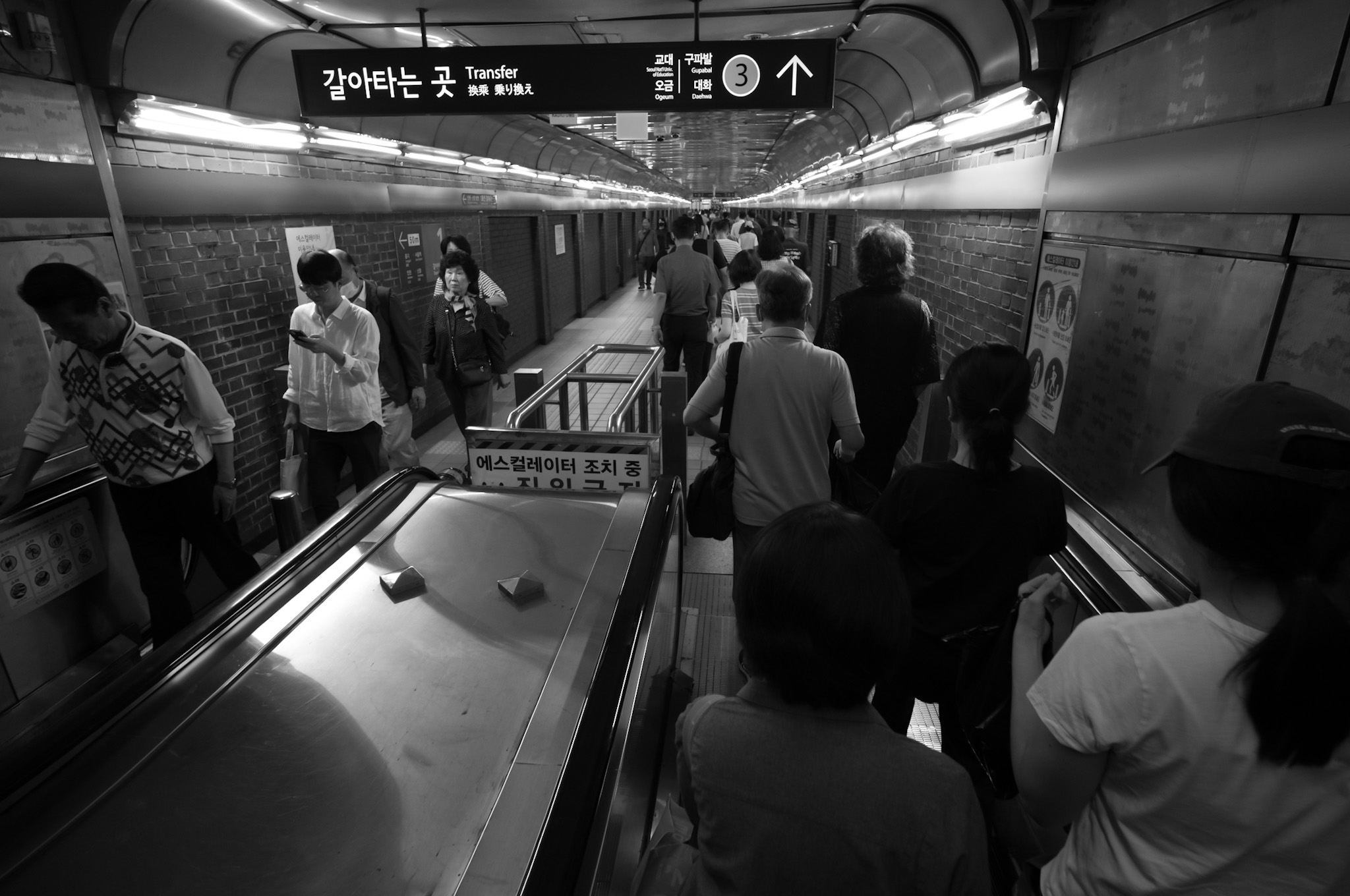
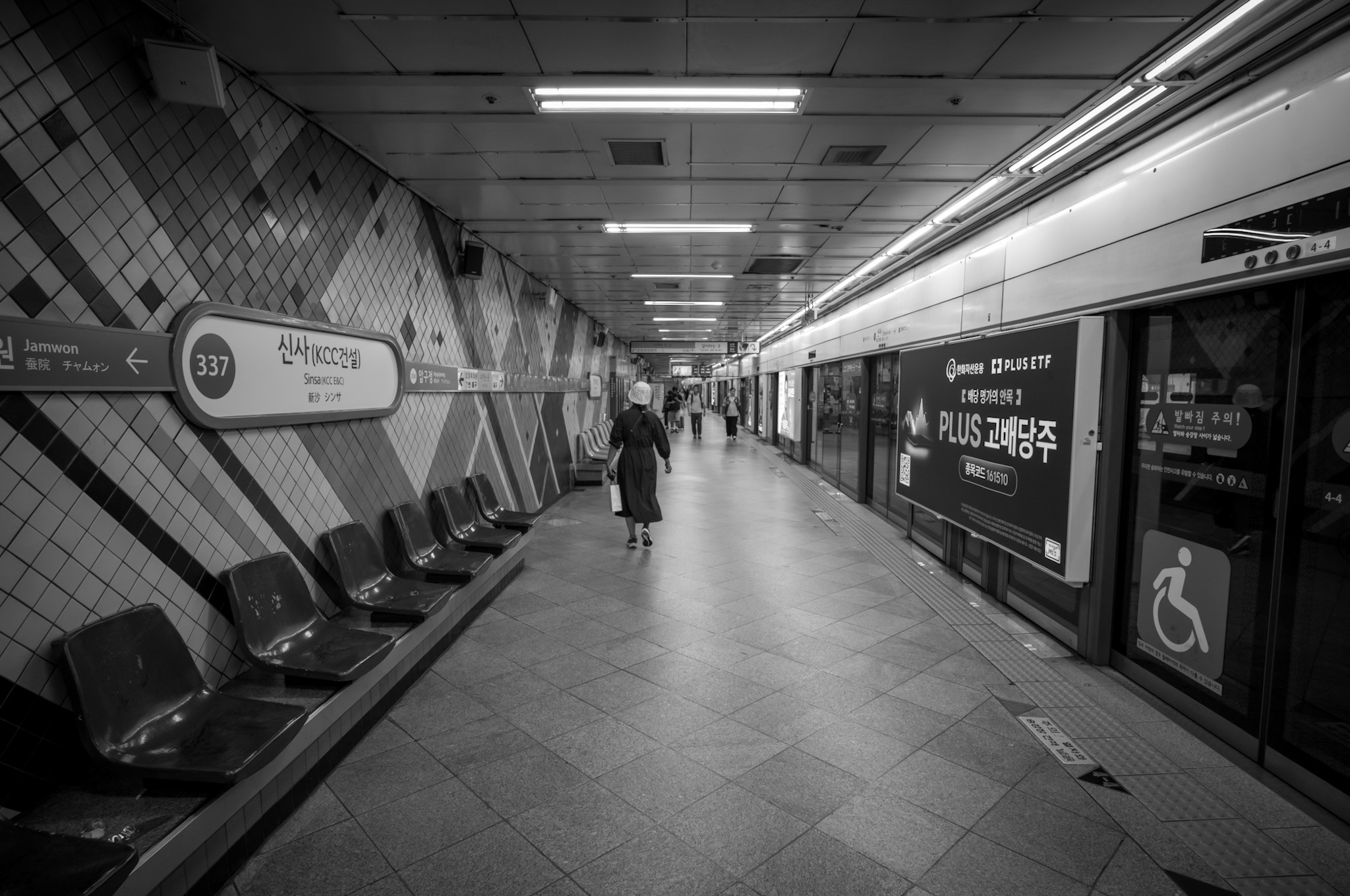
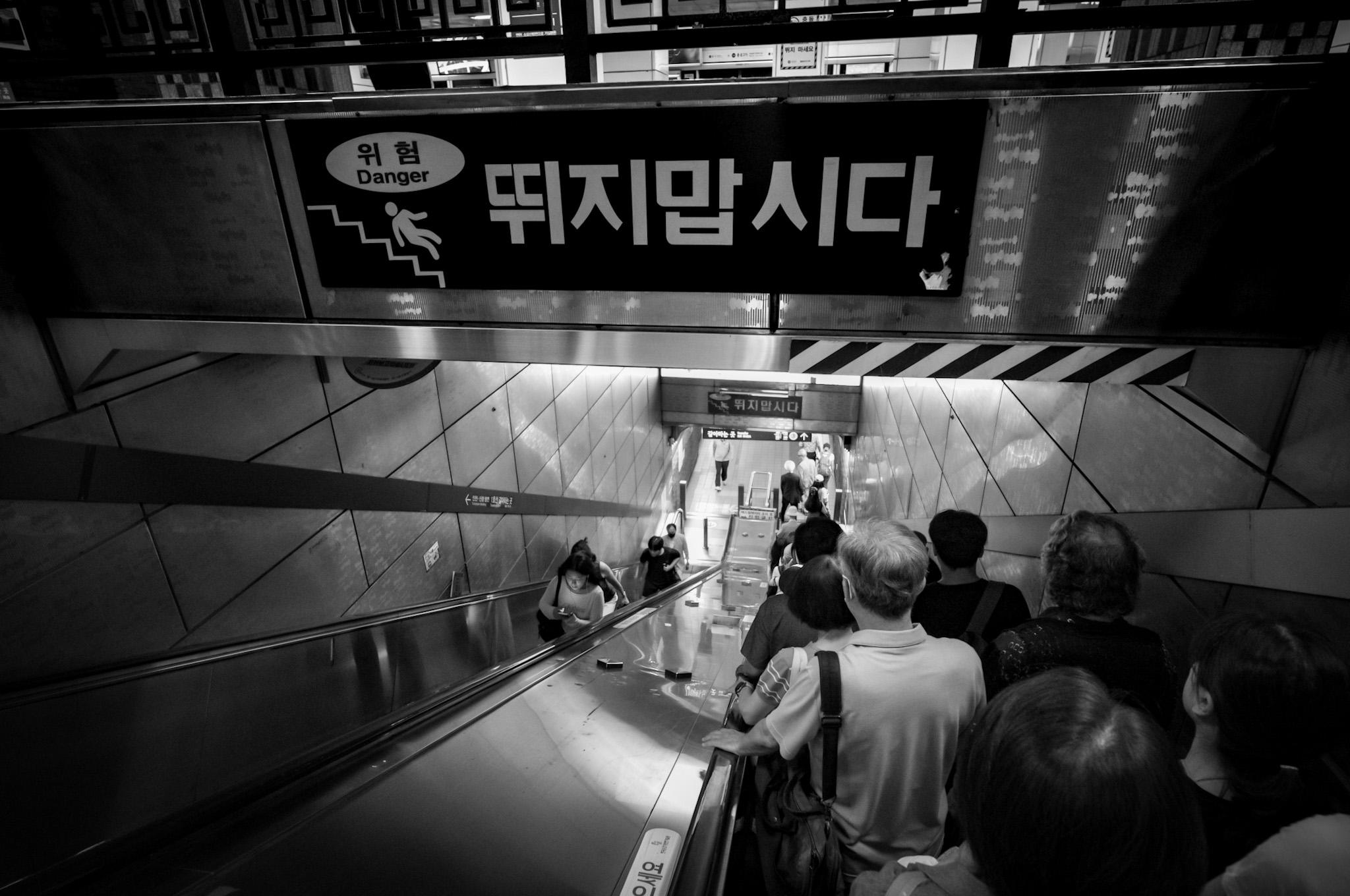
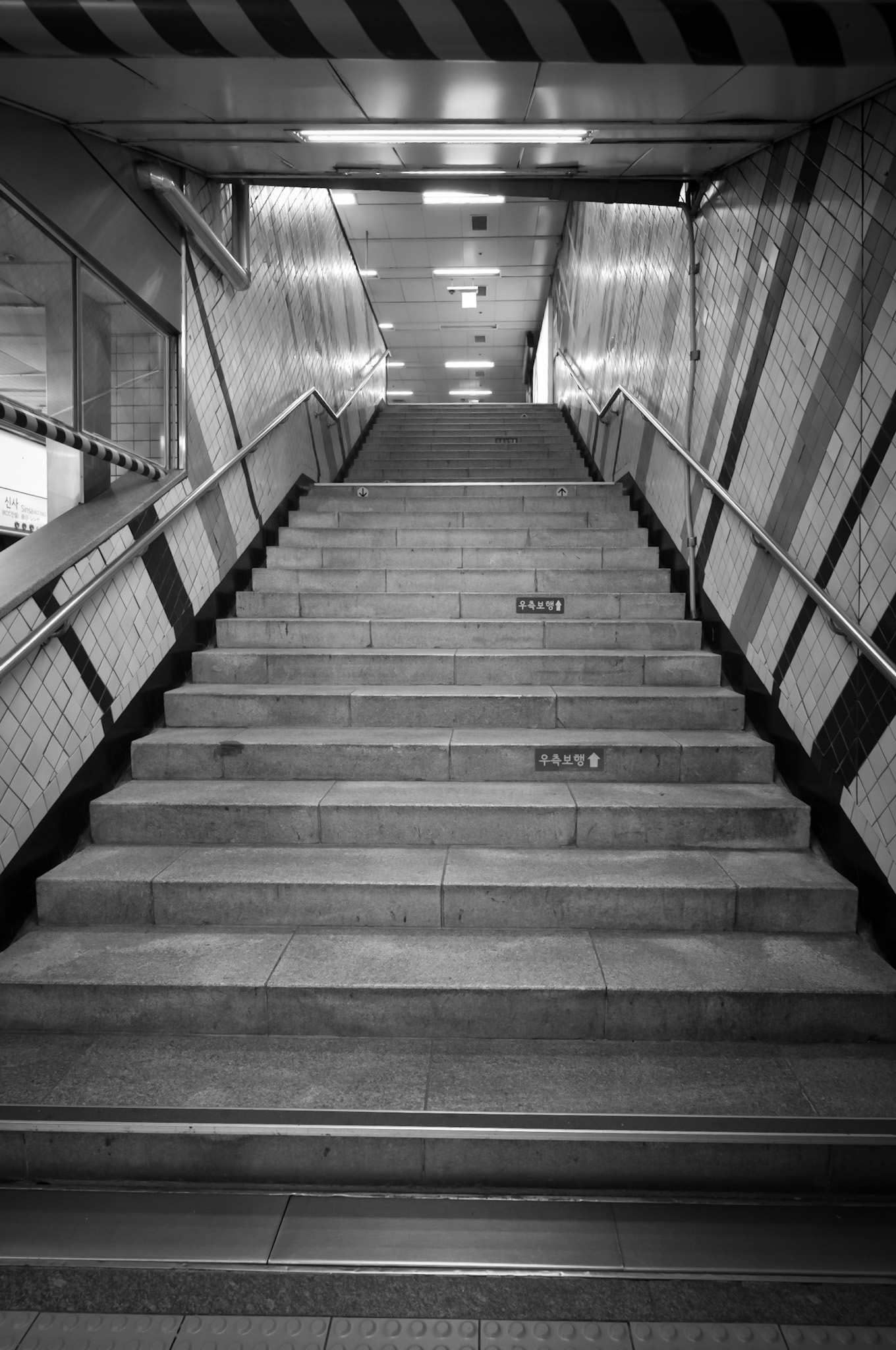
At Sinsa station, I followed the flow down an escalator. People were going in both directions beneath tiled walls and fluorescent lights. A warning sign above them said, simply, “Don’t run.” Later, on the platform, I photographed a woman walking past a row of empty seats. The station had room to breathe for a moment. Even the stairs were briefly empty.
These are the intervals I like in Seoul’s metro: the full carriage and the vacant platform, the rush to change trains and the seconds when nobody is on the staircase. Above ground, I walk in search of the older, everyday city. Underground, it travels past me.
Seoul, 24.09.26, Leica M11 Monochrom
Discover more from THE QUIET REPORT
Subscribe to get the latest posts sent to your email.
