GWANGJANG
Written by Maurizio “Mau” Vagnozzi
There is a particular moment in Gwangjang Market when Seoul seems to compress itself into a few metres.
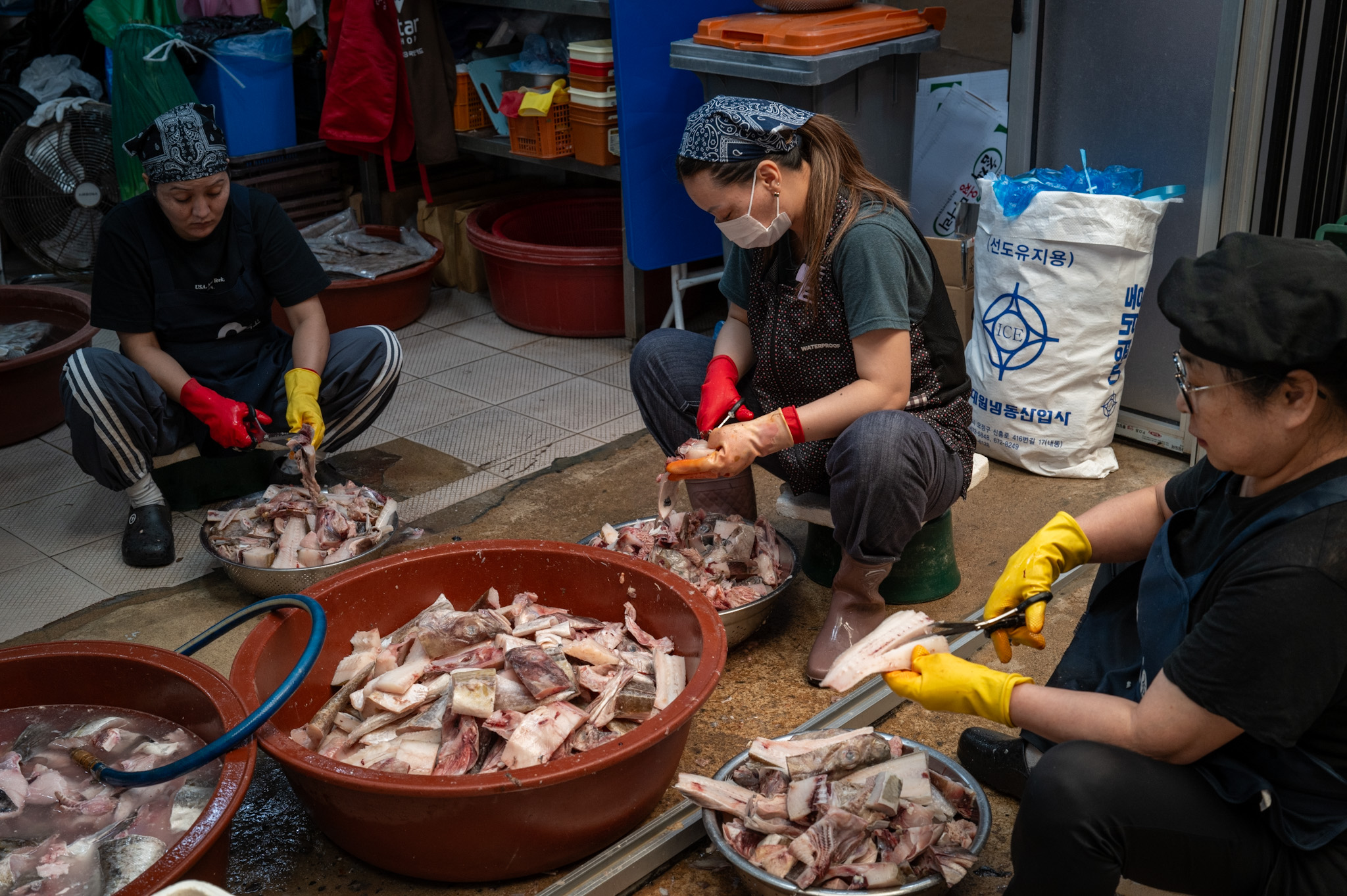
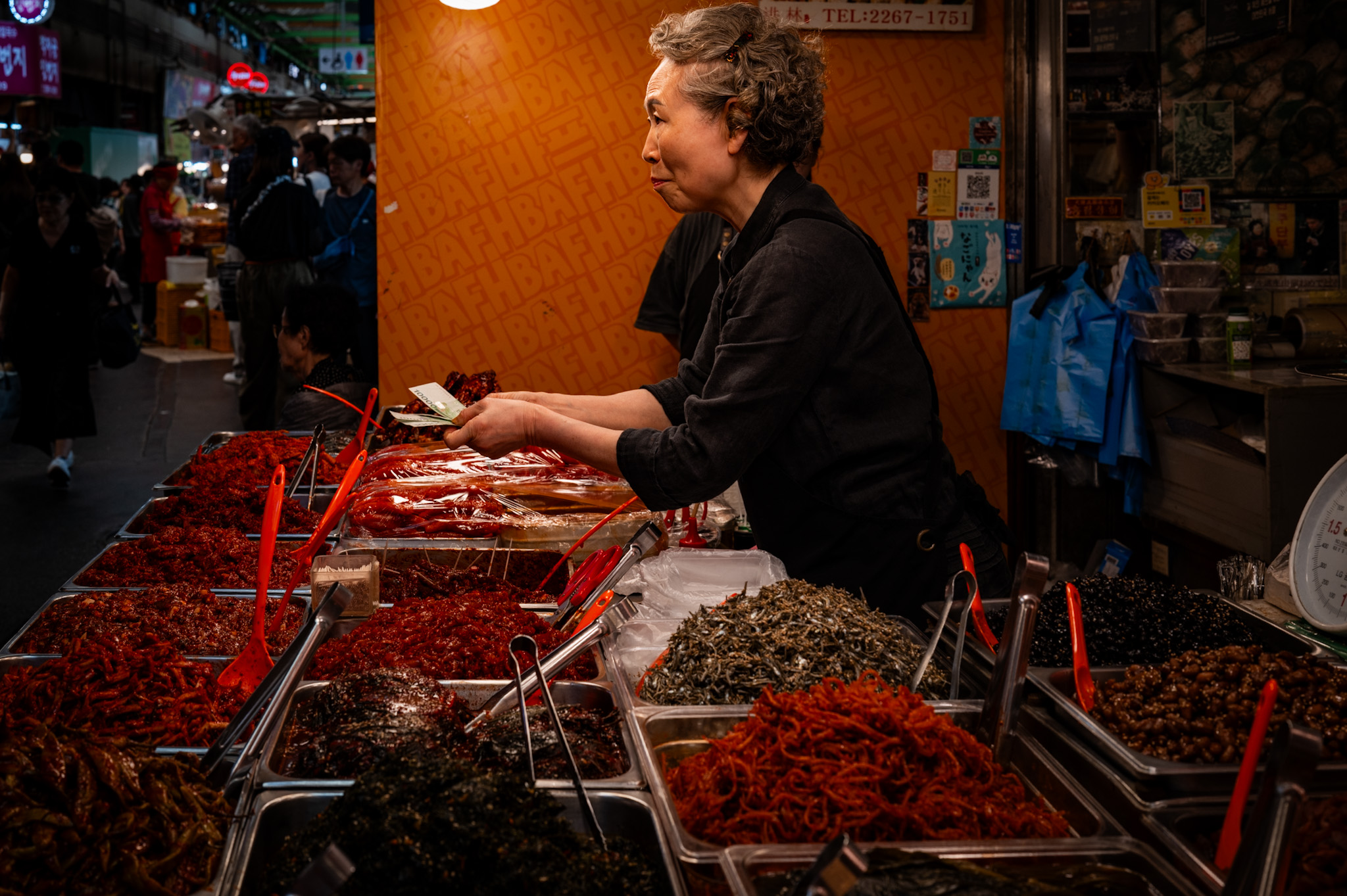
Oil crackles in shallow pans. Someone drags a trolley through a passage barely wide enough for two people. A woman cuts fish with heavy scissors, her hands protected by yellow rubber gloves. Another arranges trays of brilliant red banchan under warm lamps. Bowls are filled, emptied, washed and filled again.
And everywhere, people are working.
This is the Gwangjang Market I found most interesting. Not simply the famous Seoul food destination, but a place where the old city is still performing its daily routines in full view.
My photographs from the market are mostly about those routines.
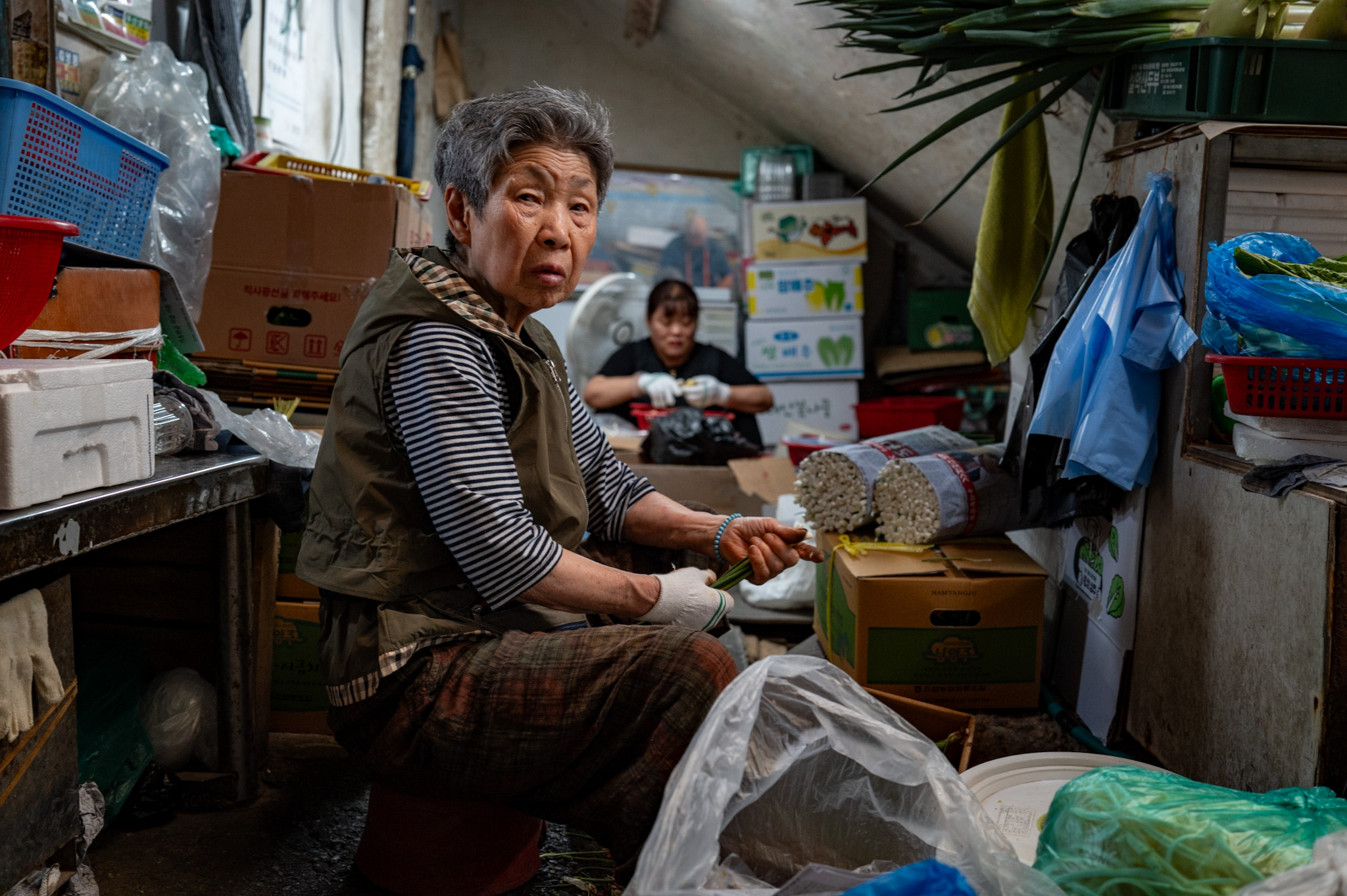
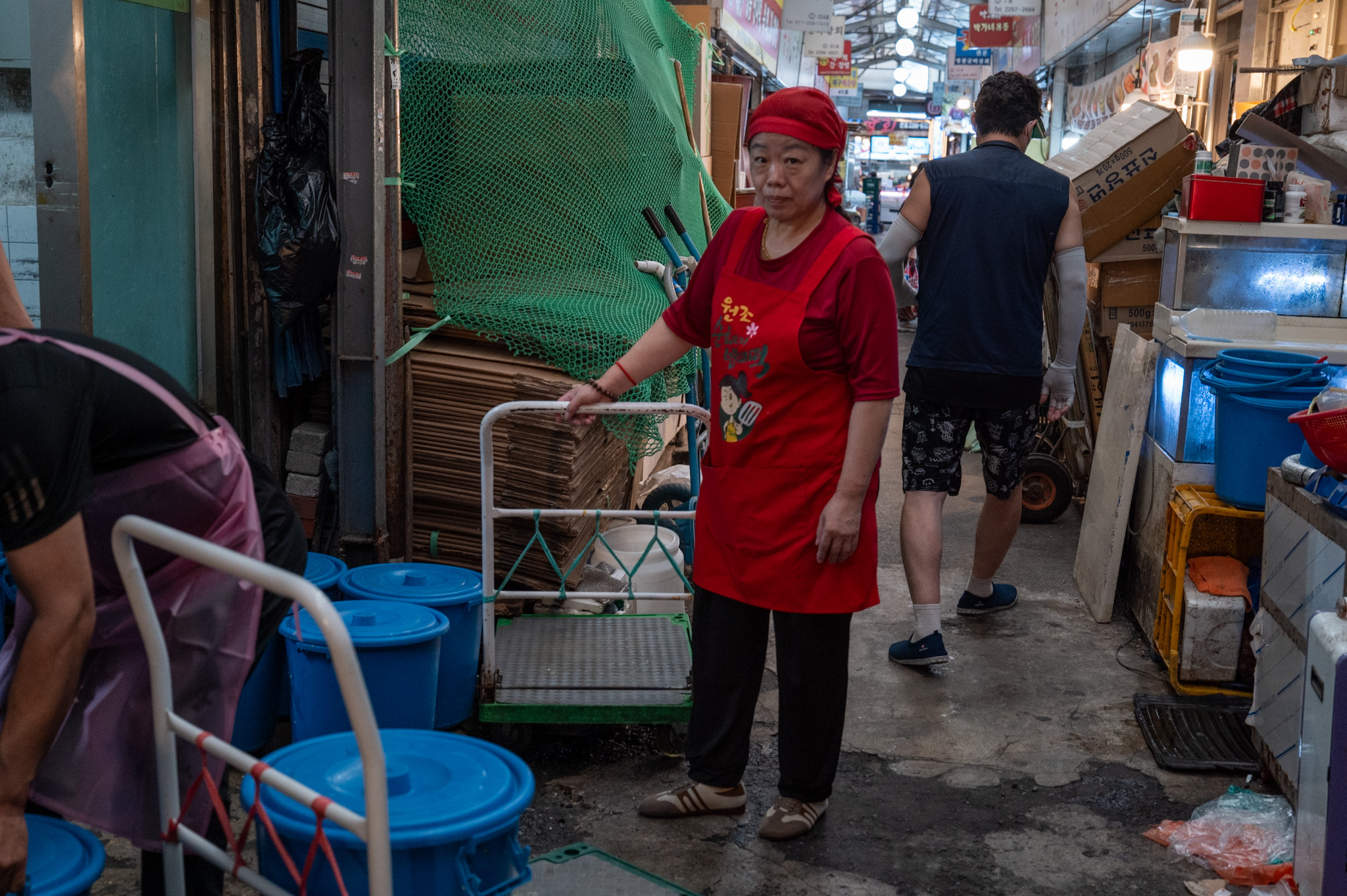
One woman stands almost motionless behind trays of dumplings, blood sausage and prepared dishes, framed by two enormous white lamps. Another, dressed entirely in red, manoeuvres a handcart through a narrow service alley. Three women sit low to the ground cleaning and cutting fish. Elsewhere an elderly woman prepares vegetables in a cramped room surrounded by boxes, bags and produce.
These are not really photographs of food. They are photographs of labour.
Gwangjang has been a place of labour for more than a century.
The market was established in 1905 and is generally described as Korea’s first permanent market operating every day. It emerged from an attempt by Korean merchants to protect and organise domestic commerce at a time when Japanese commercial influence was expanding rapidly. The original market buildings were destroyed during the Korean War; the present complex was constructed during Seoul’s postwar reconstruction, and the market later became known as Gwangjang rather than Dongdaemun Market.
For decades it was particularly associated with textiles and clothing. That history hasn’t disappeared. Upstairs, fabric, tailoring and hanbok businesses remain part of Gwangjang’s commercial life.
But downstairs, food has increasingly become its public face.
Perhaps nothing represents this better than bindaetteok, the thick mung-bean pancakes for which Gwangjang has become famous.
They are difficult to ignore.
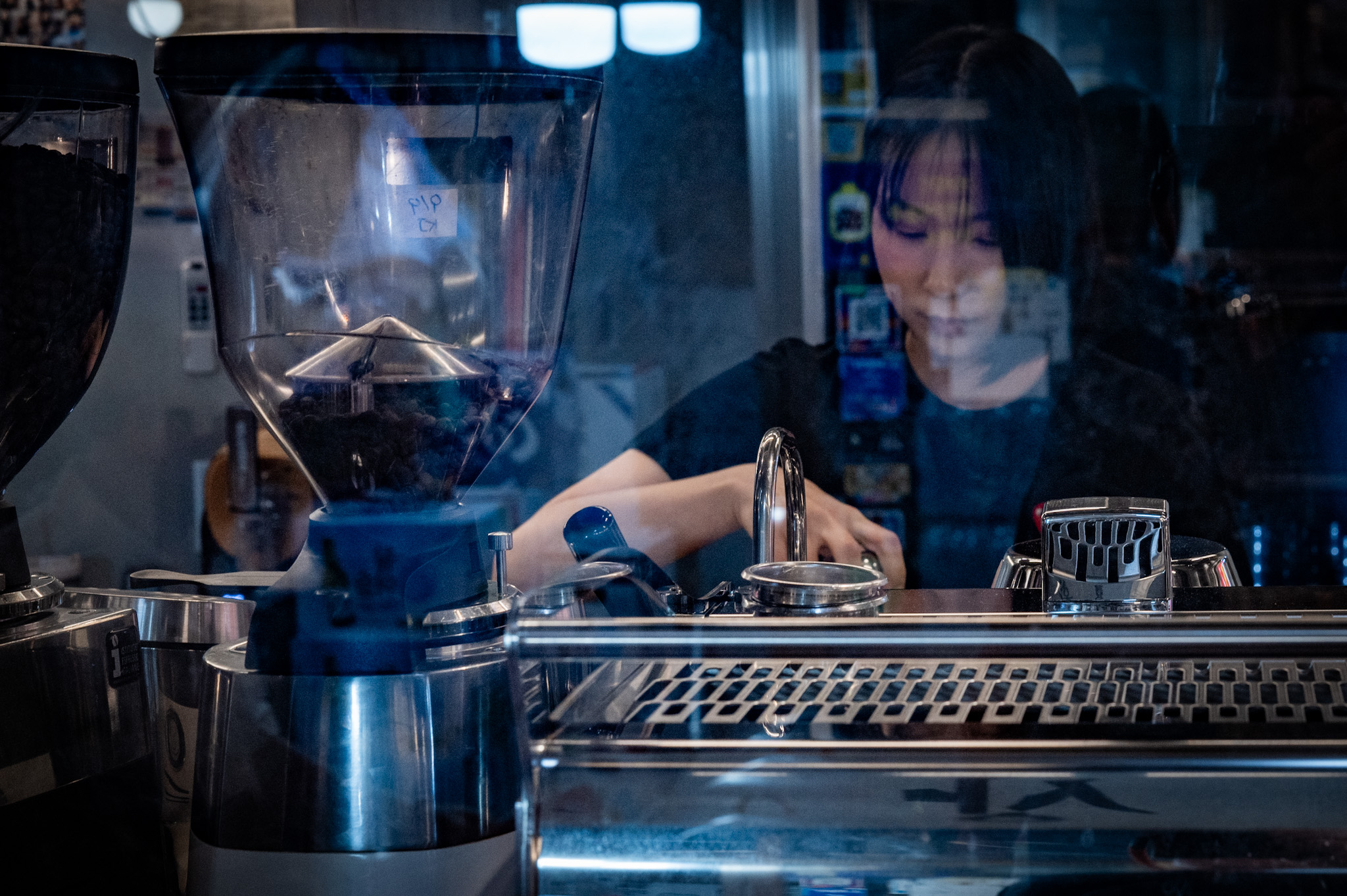
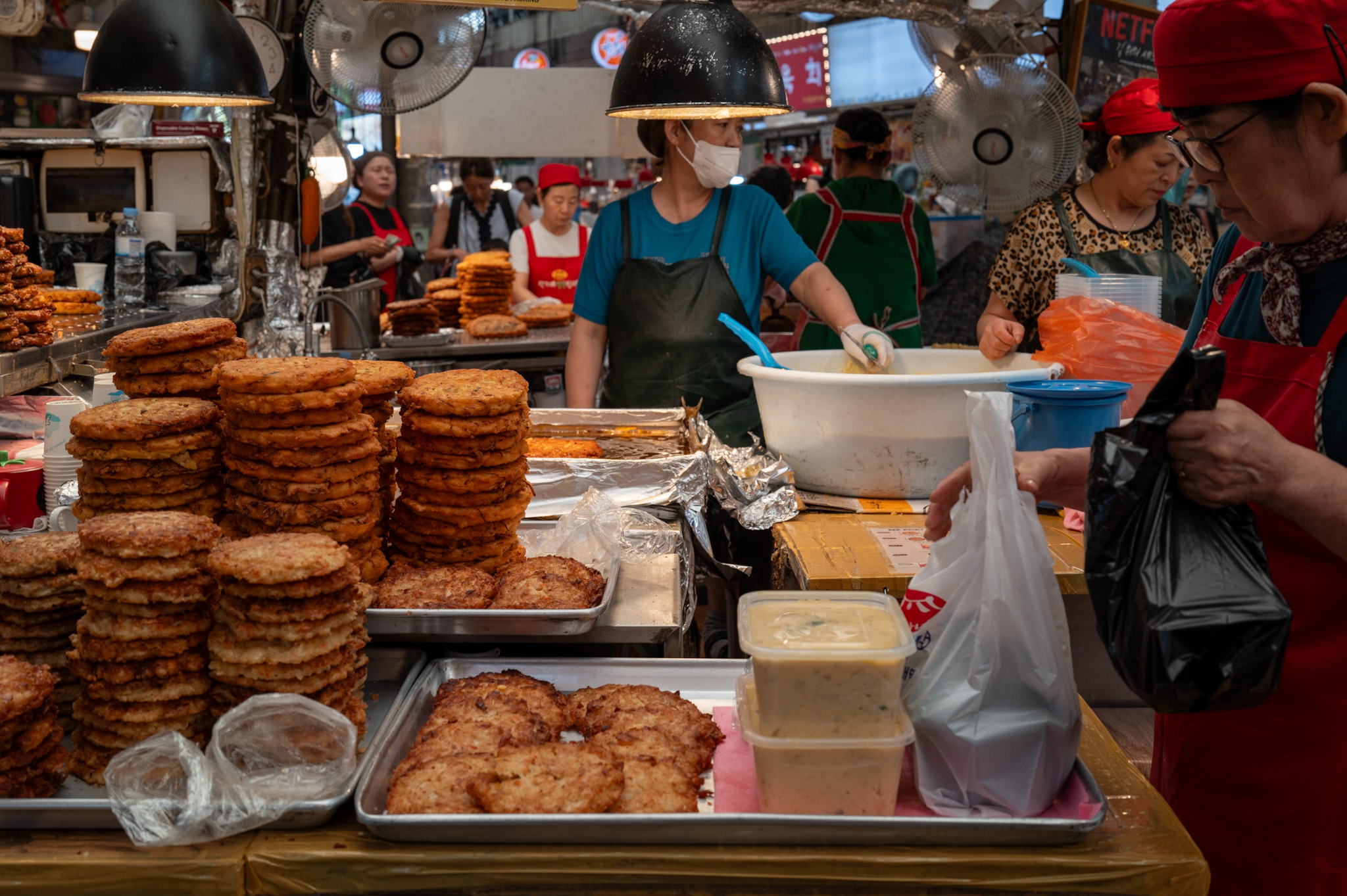
In one of my photographs, they rise in uneven golden towers across the counter. Behind them several women work almost shoulder to shoulder beneath black metal lamps. There is very little theatre involved, although to an outsider the scene feels theatrical: batter, frying pans, trays, aprons, fans, plastic containers, hands moving continuously.
Traditionally, bindaetteok is made from ground mung beans, mixed with ingredients that can include vegetables, kimchi and pork, then flattened and fried until the outside becomes deeply crisp while the centre remains softer. At some Gwangjang stalls, mung beans are still ground before the pancakes are fried on the spot.
The smell travels much farther than the stall.
You hear the pancakes before you eat them: the continuous hiss of oil beneath the conversations and movement of the market. Then comes the contrast between the crunchy exterior and the dense, almost earthy flavour of the mung beans.
It is inexpensive, filling food, historically far removed from the polished presentation of contemporary Korean gastronomy, and trust me, it’s delicious.
Seoul, September 2026, Leica Q3.43
Discover more from THE QUIET REPORT
Subscribe to get the latest posts sent to your email.
