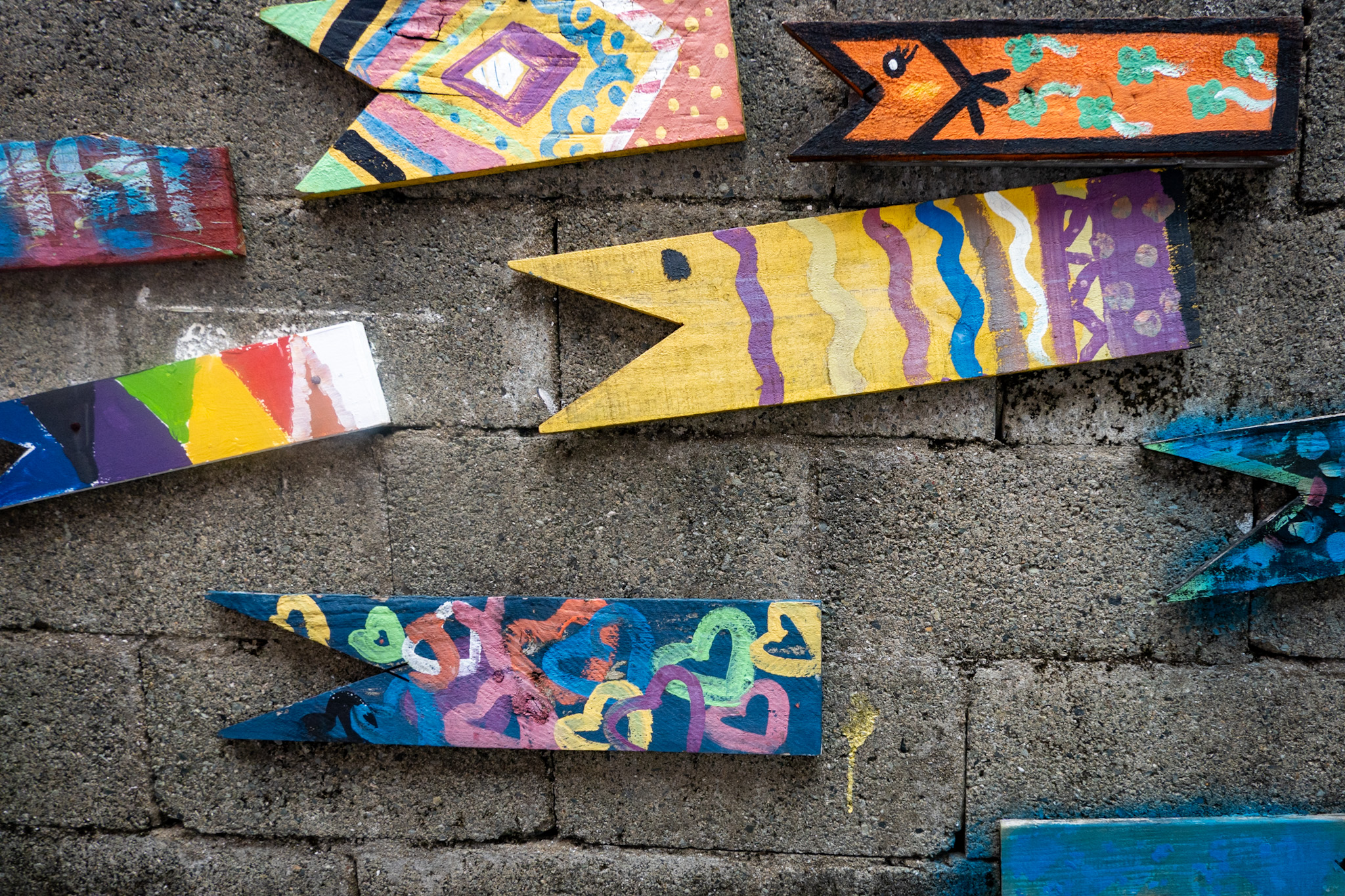
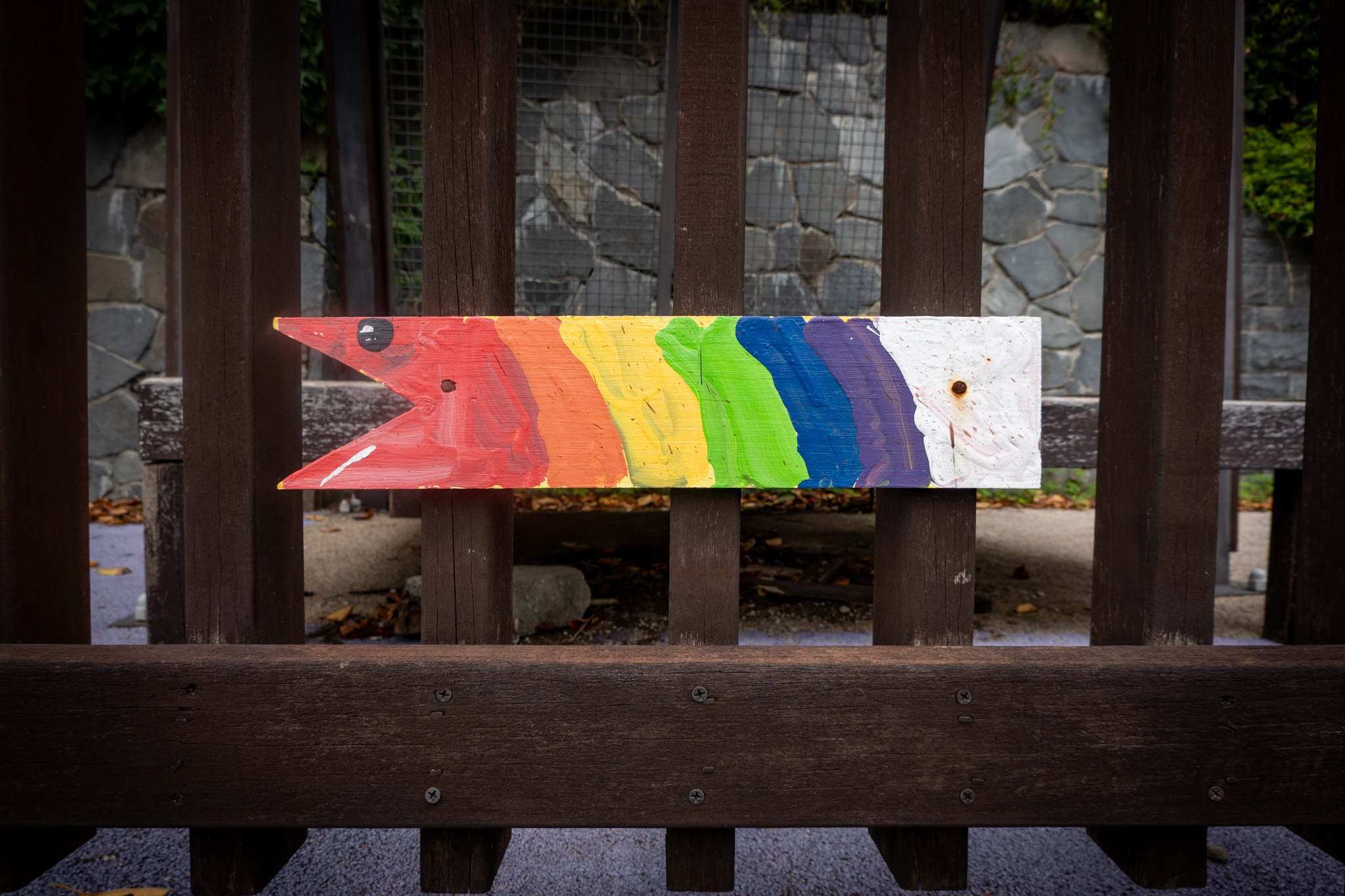
I’m in Busan (South Korea), and in Gamcheon Culture Village fish point the way.
Painted in bright colours and assembled into small schools along walls and narrow passages, they guide visitors through a maze of steep staircases, twisting alleys and houses stacked precariously against the hillside. They are part street signs, part public art, and perhaps the most understated symbol of a neighbourhood that has reinvented itself.
Gamcheon was not built to be beautiful.
Its origins lie in the upheaval of the Korean War, when refugees fleeing the fighting settled on the hills above Busan. Houses were constructed close together, often with limited resources, creating a dense urban landscape where necessity determined architecture. For decades, Gamcheon remained a working-class neighbourhood, far removed from the prosperous image of modern South Korea.
Then came the artists.
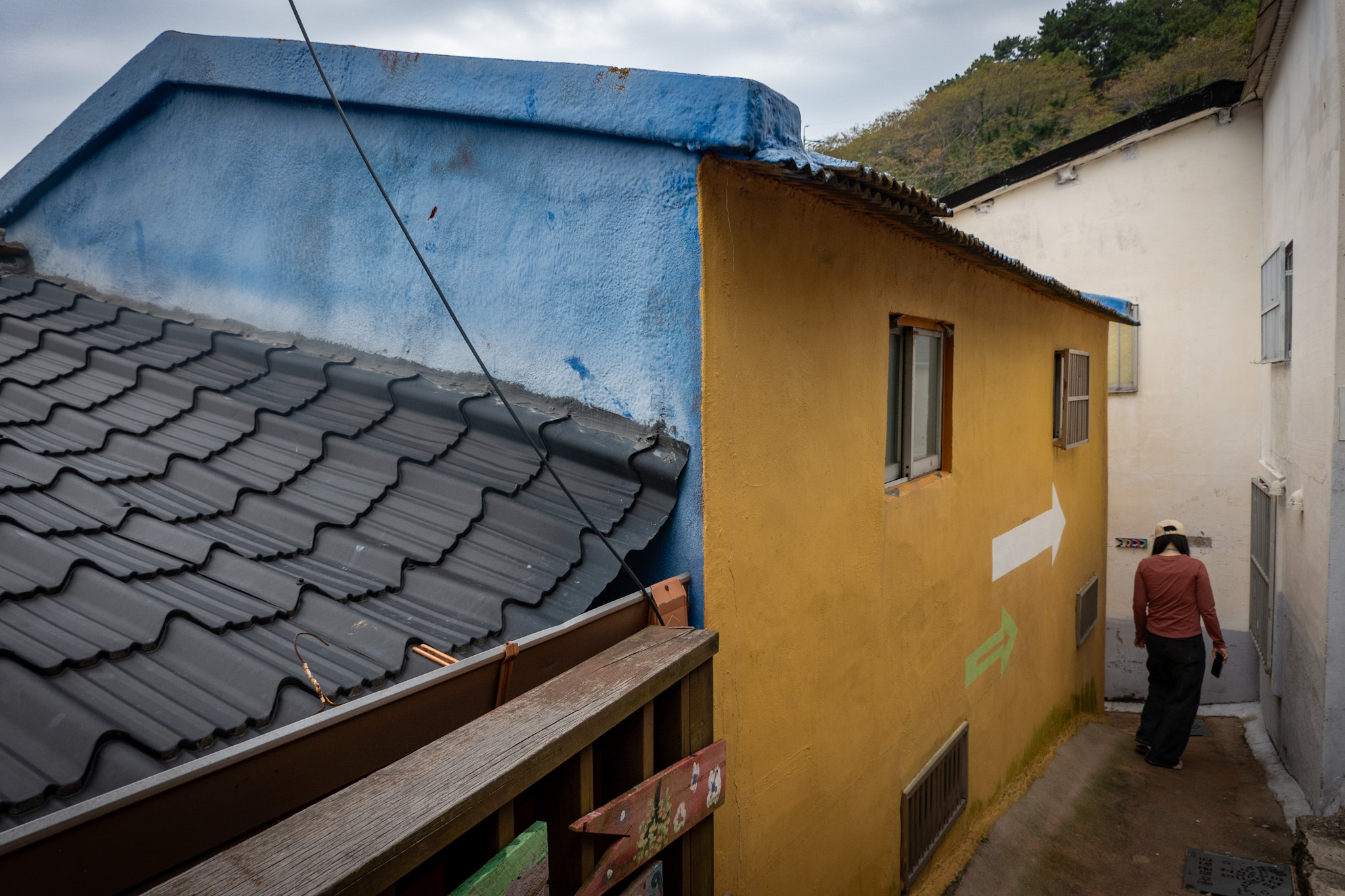
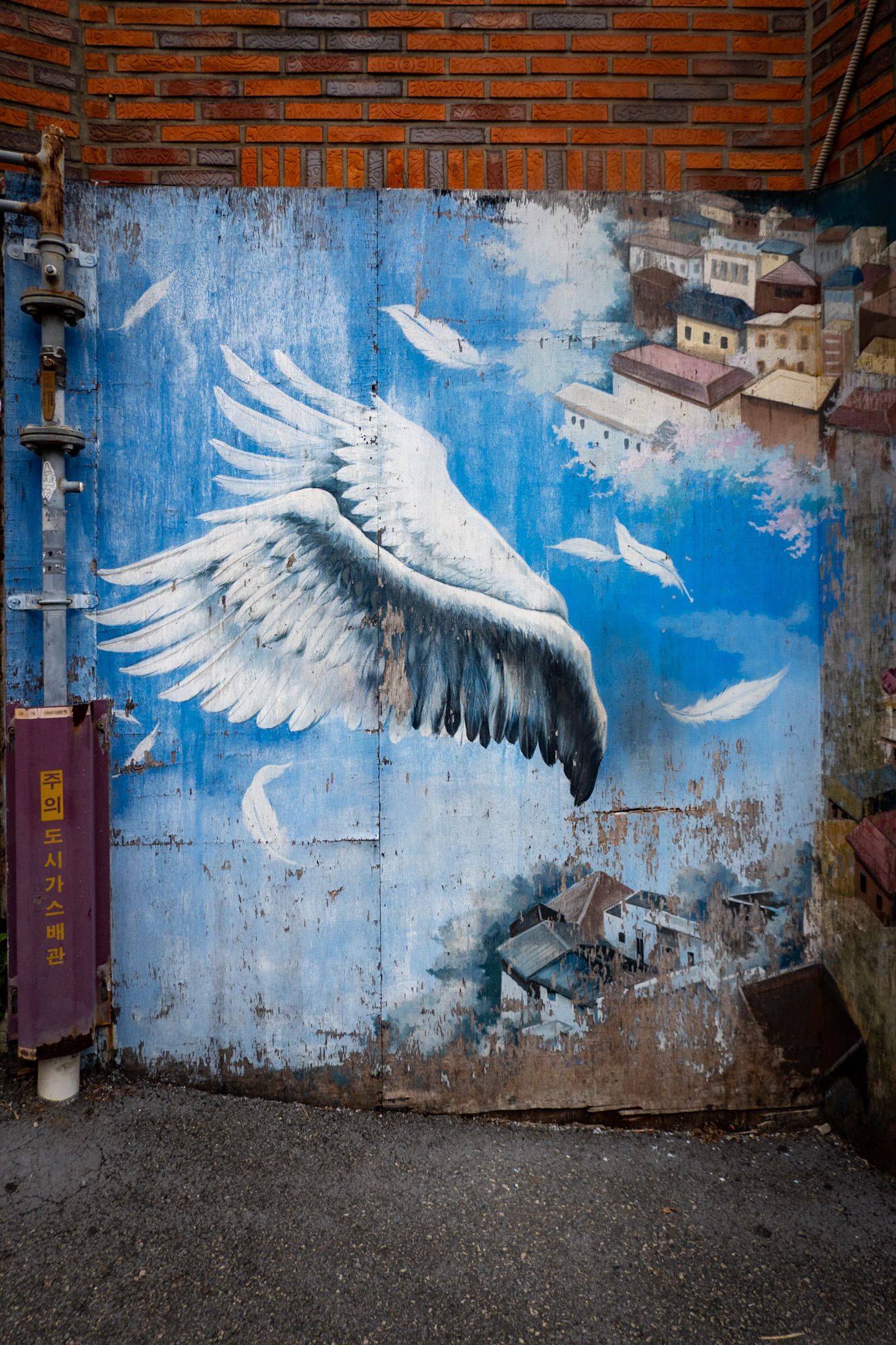
Beginning in 2009, a government-supported regeneration initiative brought murals, sculptures and installations into the village. Walls became canvases, abandoned spaces found new purposes, and the neighbourhood gradually acquired a new identity. Tourism followed.
Today, Gamcheon is frequently described as the Machu Picchu of Busan, a comparison that says more about the tourism industry’s appetite for memorable labels than about the place itself.
The fish are more interesting.
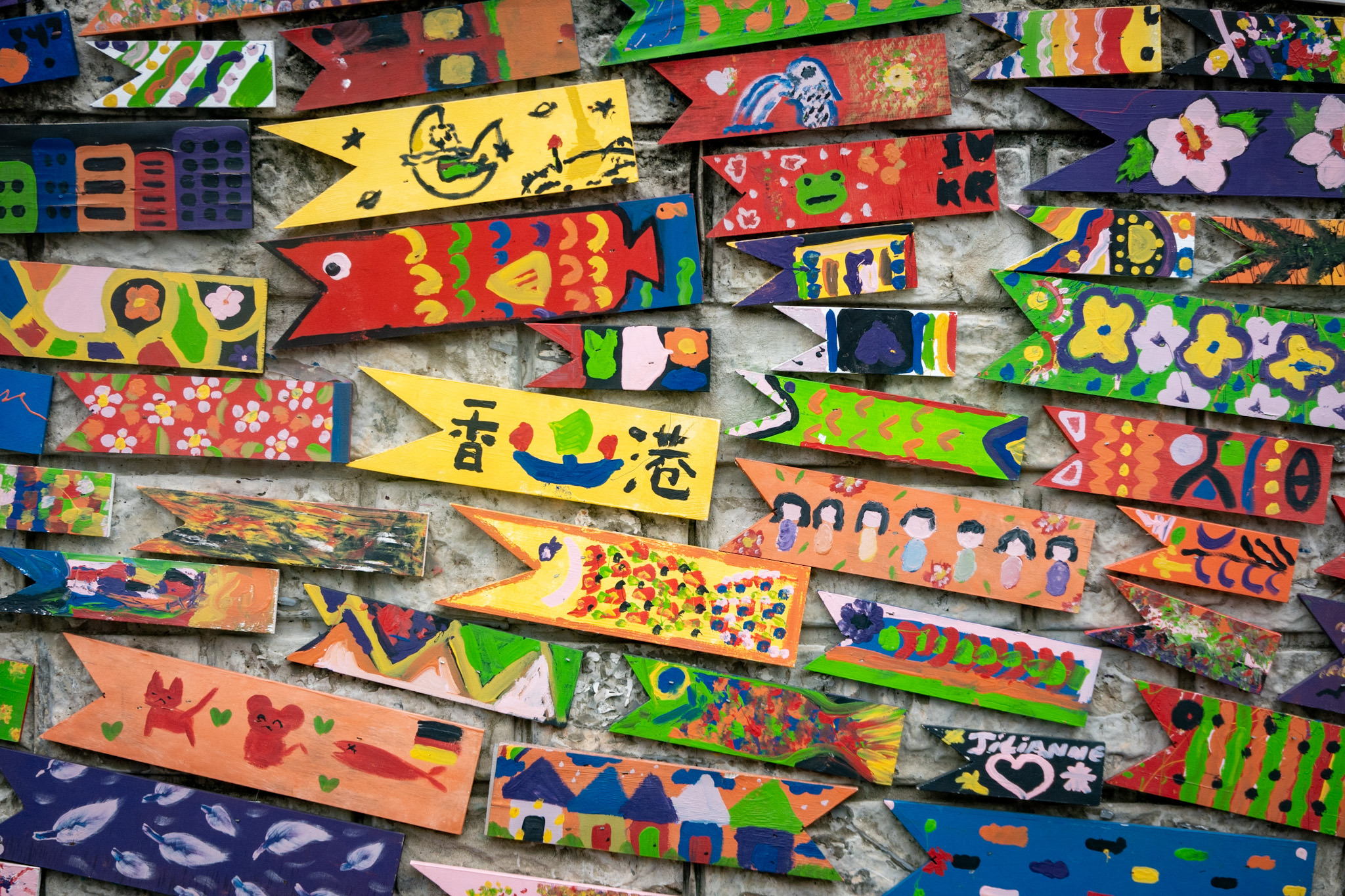
Their practical function is simple: they help visitors navigate a neighbourhood whose streets were never designed for outsiders. But they also evoke Busan’s maritime identity and illustrate how ordinary urban infrastructure can become an artistic statement.
There is, however, a contradiction beneath the bright paint.
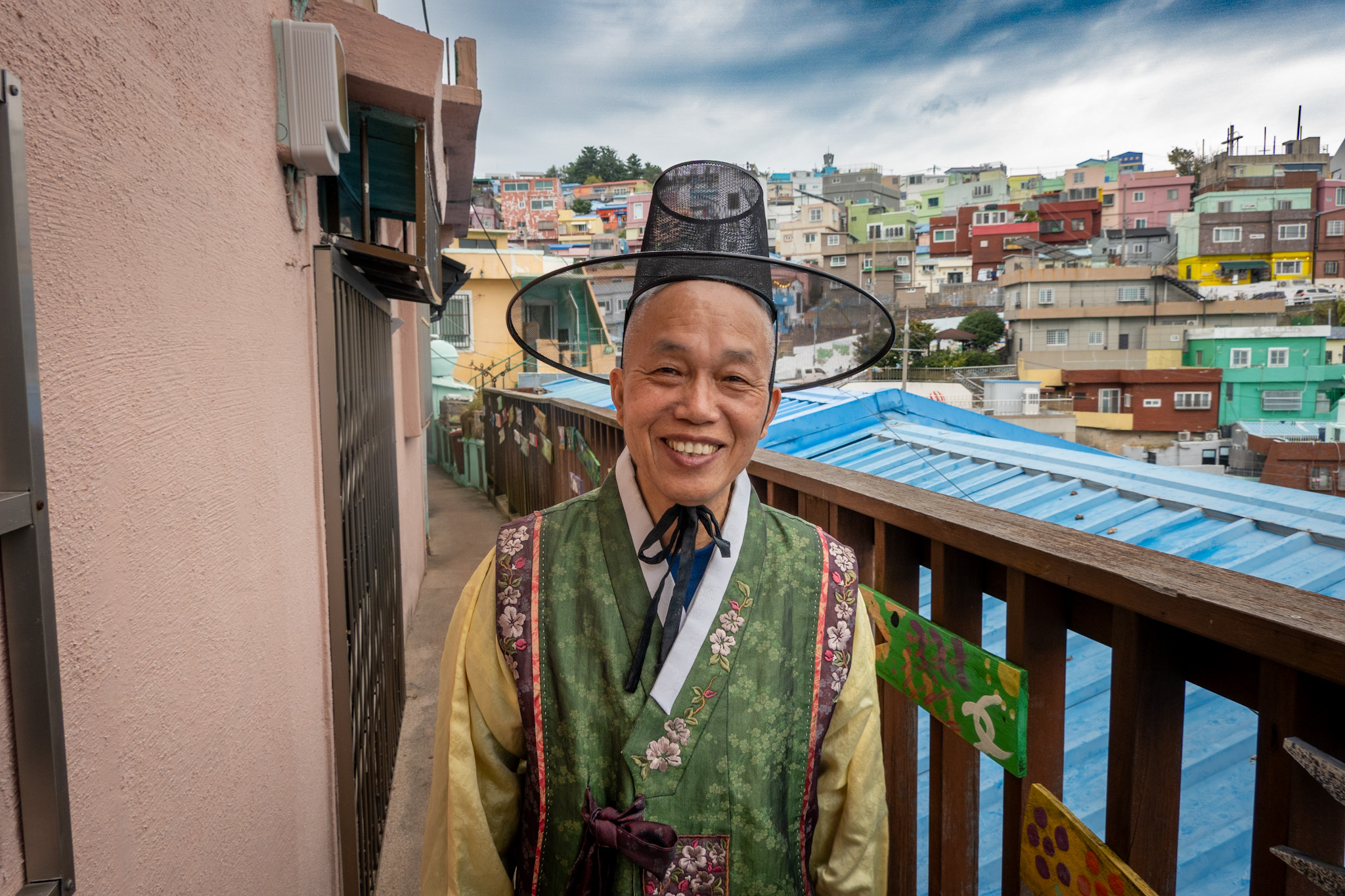
What attracts visitors to Gamcheon is precisely what once defined its poverty: the crowded houses, narrow passages and improvised architecture. What was originally evidence of hardship has become a picturesque backdrop for photographs and social media.
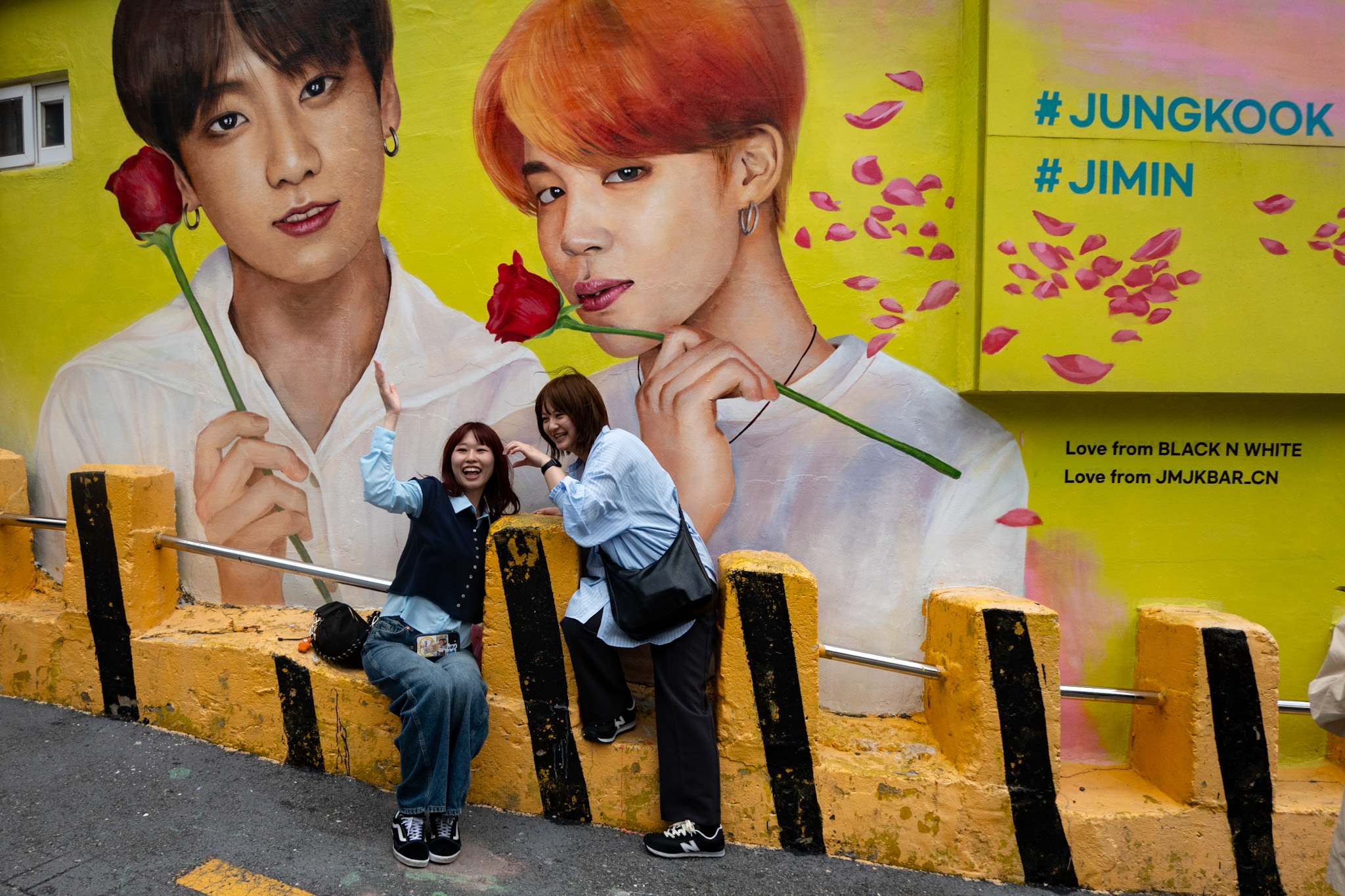
This is not necessarily a bad thing. Regeneration has brought investment, economic opportunities and renewed attention to a neighbourhood that might otherwise have continued to decline. But the transformation raises a familiar question, from Lisbon to Hong Kong: when a community becomes a tourist attraction, whose interests does the new identity serve?
Walking through Gamcheon, the contrast is visible everywhere. Souvenir shops and cafés occupy spaces once devoted entirely to residential life. Visitors pause for photographs outside houses where people still live. Behind the colourful façades, the routines of an ordinary neighbourhood continue, increasingly surrounded by the machinery of tourism.
And the fish keep pointing forward.
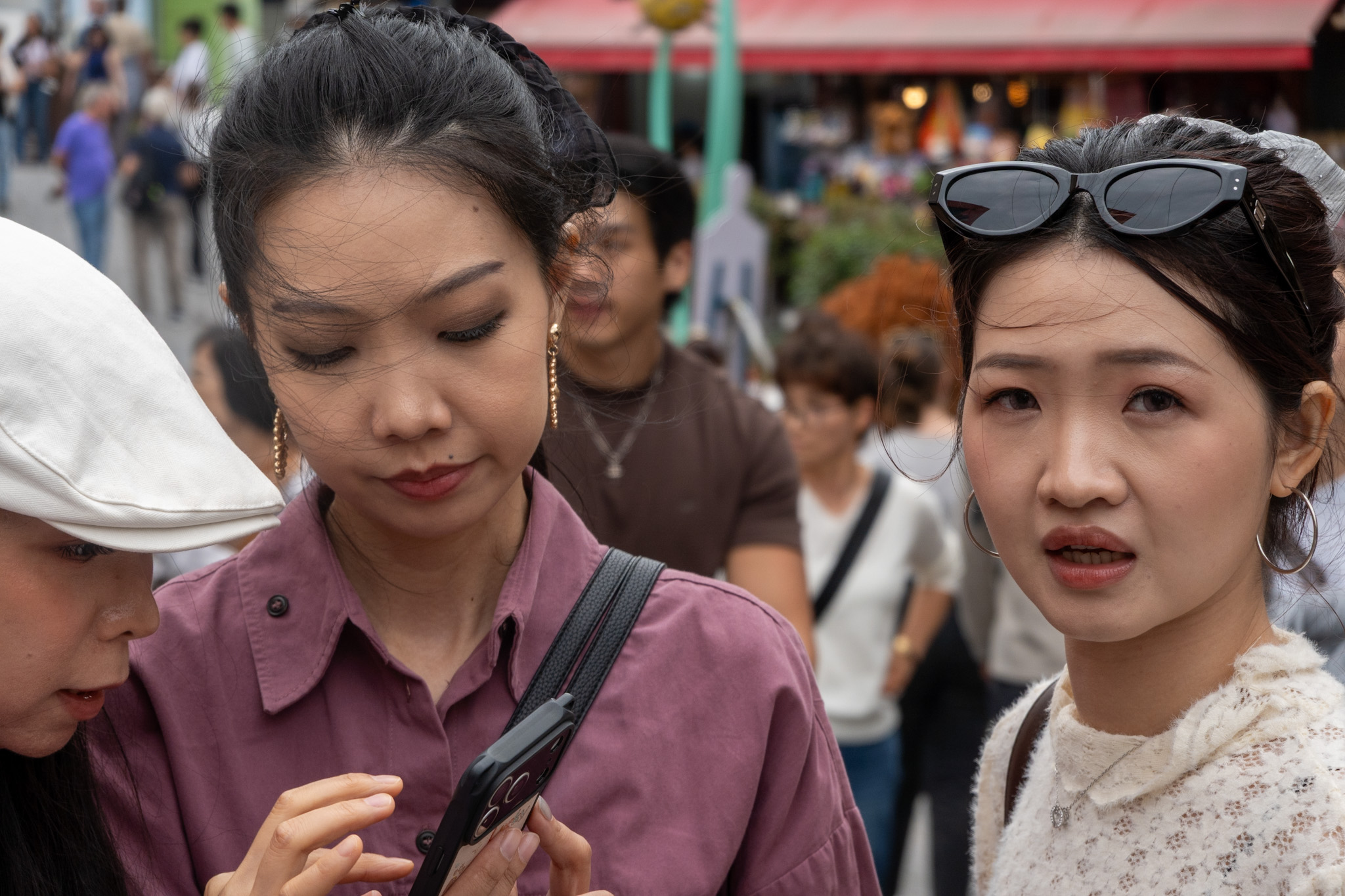
Perhaps that is what makes them such an appropriate symbol. They offer direction without explaining the destination. They lead visitors through the village, but understanding Gamcheon requires occasionally ignoring them, turning into a quieter alley and looking beyond the murals.
Because the real story is not how a poor neighborhood became colorful: it is how a place built out of displacement and survival became an attraction, while remaining, for those who live there, simply home.
Discover more from THE QUIET REPORT
Subscribe to get the latest posts sent to your email.
