BOOKS, BUT NO READER
Written by Maurizio “Mau” Vagnozzi
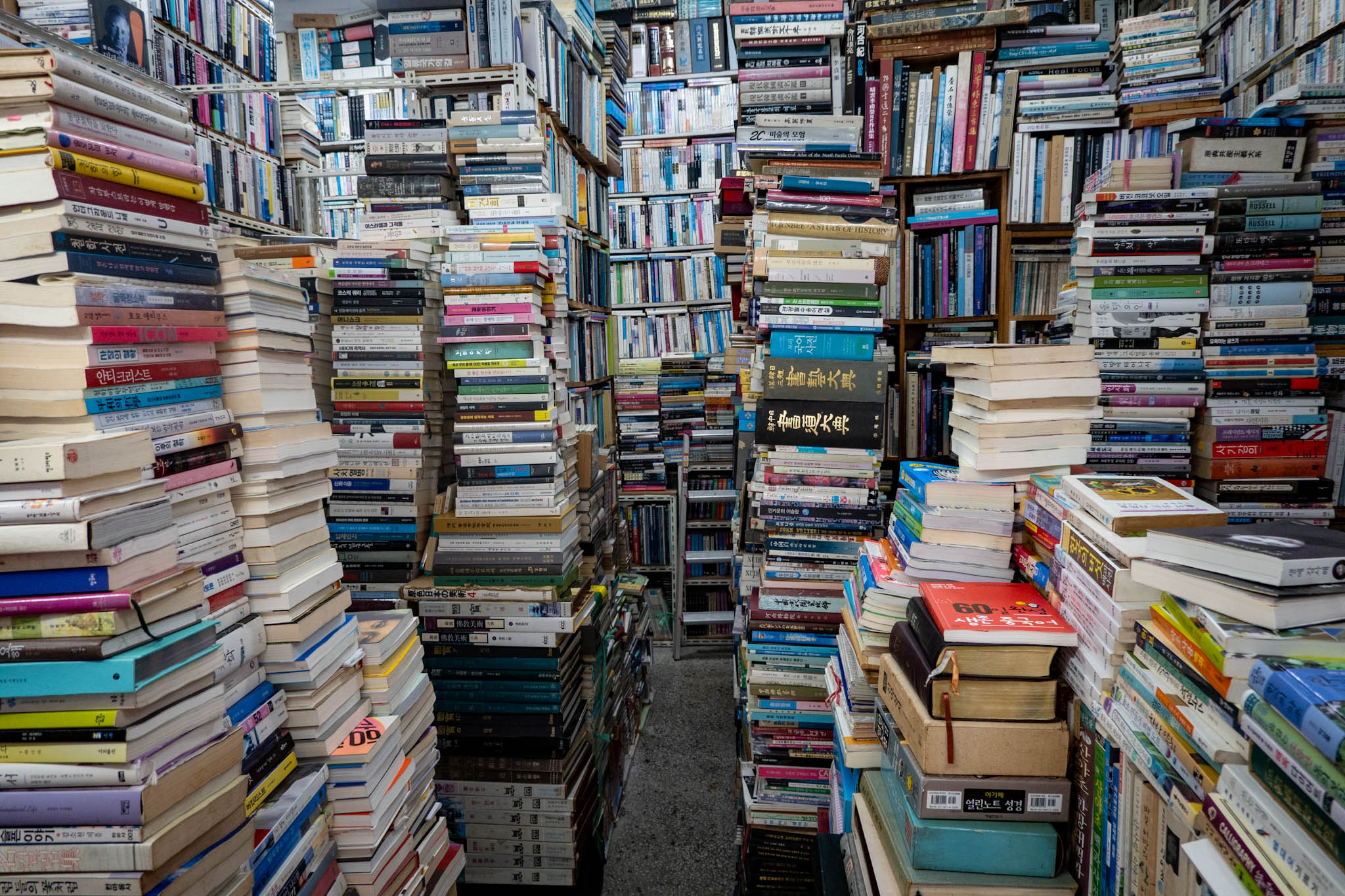
There must be tens of thousands of books in this small shop. They climb the walls, fill narrow corridors and rise in precarious towers from the floor. Literature, philosophy, history, old textbooks and forgotten novels compete for every available centimetre. It is an extraordinary accumulation of human knowledge, compressed into a few square metres. Yet what strikes me most is not the number of books, but the almost complete absence of customers. Walking through Bosu-dong Book Street, one of Busan’s most distinctive historical neighbourhoods, I find shop after shop overflowing with printed volumes, while booksellers sit quietly behind their counters, surrounded by merchandise that seems to attract more curiosity than actual buyers.
The history of this small alley makes the scene particularly poignant. Bosu-dong’s book trade emerged during the Korean War, when Busan became South Korea’s temporary capital and a refuge for people escaping the conflict. Secondhand textbooks and other publications were traded here, providing displaced students and families with access to education at a time when books were valuable possessions. In a devastated country struggling to rebuild itself, knowledge represented opportunity, and owning a book could be an investment in a better future. Over the following decades, the alley developed into an important centre for secondhand books, reflecting South Korea’s remarkable commitment to education and intellectual advancement. Today, the shops remain, their shelves still overflowing, but the atmosphere suggests that the relationship between books and society has changed considerably.
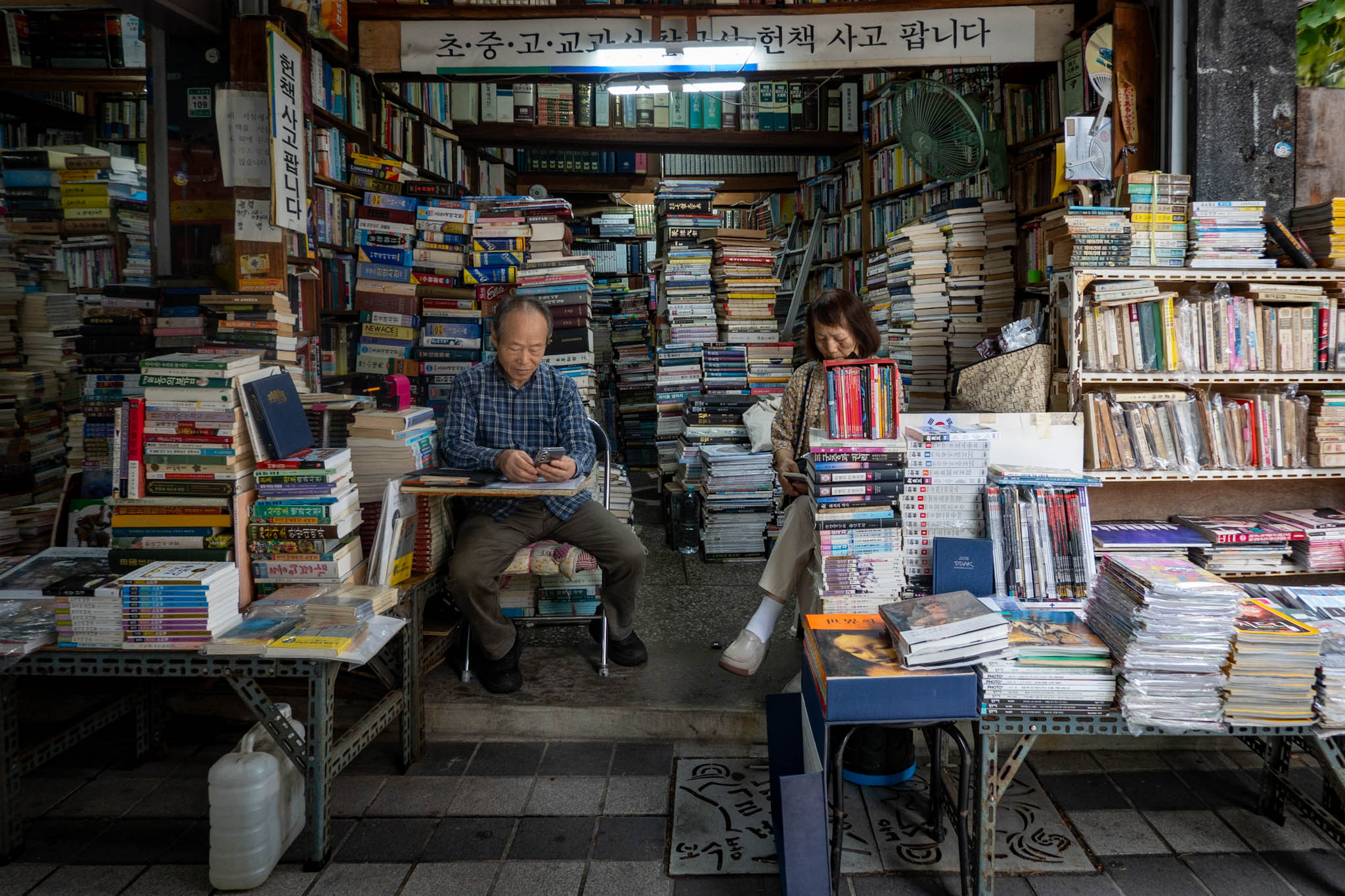
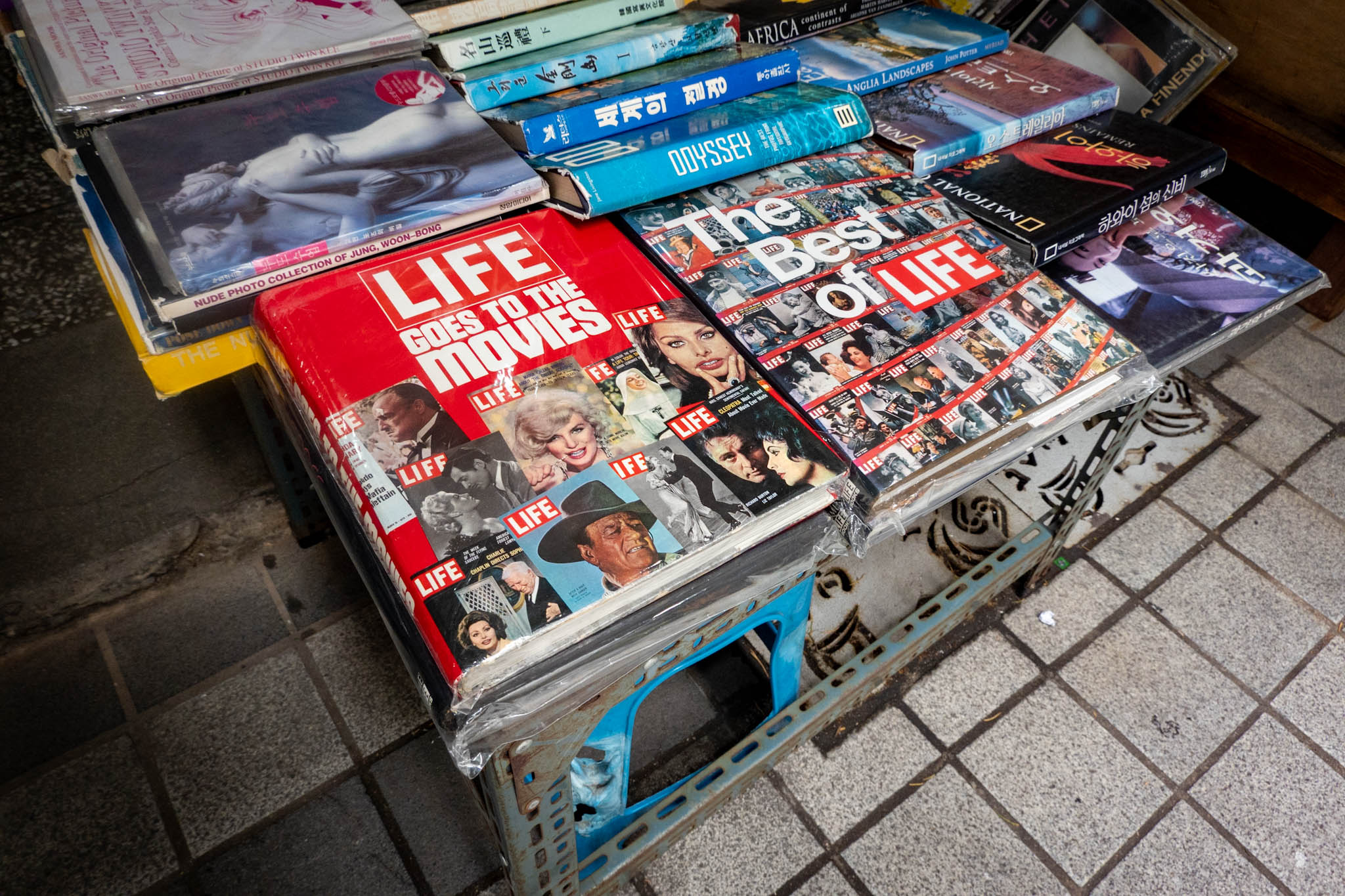
Part of that transformation is easy to explain. The arrival of Amazon’s Kindle and other electronic readers fundamentally altered the economics and convenience of reading. A device weighing a few hundred grams can carry thousands of titles, purchased instantly and often at lower prices than their printed equivalents. In South Korea, where digital technology is deeply integrated into everyday life, smartphones and online reading platforms have further accelerated the transition. Traditional bookshops must now compete not only with large online retailers but also with an entirely different system of distributing and consuming written content. Yet I suspect that what I am observing in Bosu-dong reflects something more significant than the replacement of paper by electronic screens.
The real competition is no longer between a physical book and a Kindle, but between sustained reading and the increasingly fragmented ways in which we consume information. Social media platforms such as TikTok, Instagram and YouTube have transformed our relationship with time and attention. Their extraordinary success rests partly on their ability to deliver a continuous succession of short, immediately rewarding experiences, carefully selected by algorithms designed to keep us engaged. A book, by contrast, requires a different intellectual commitment. It demands concentration, patience and the willingness to follow an argument or a narrative beyond the first few minutes. Reading a serious essay or a novel involves accepting complexity, occasionally revisiting earlier passages and allowing ideas to develop gradually. None of these qualities fits particularly comfortably within the economy of instant gratification.
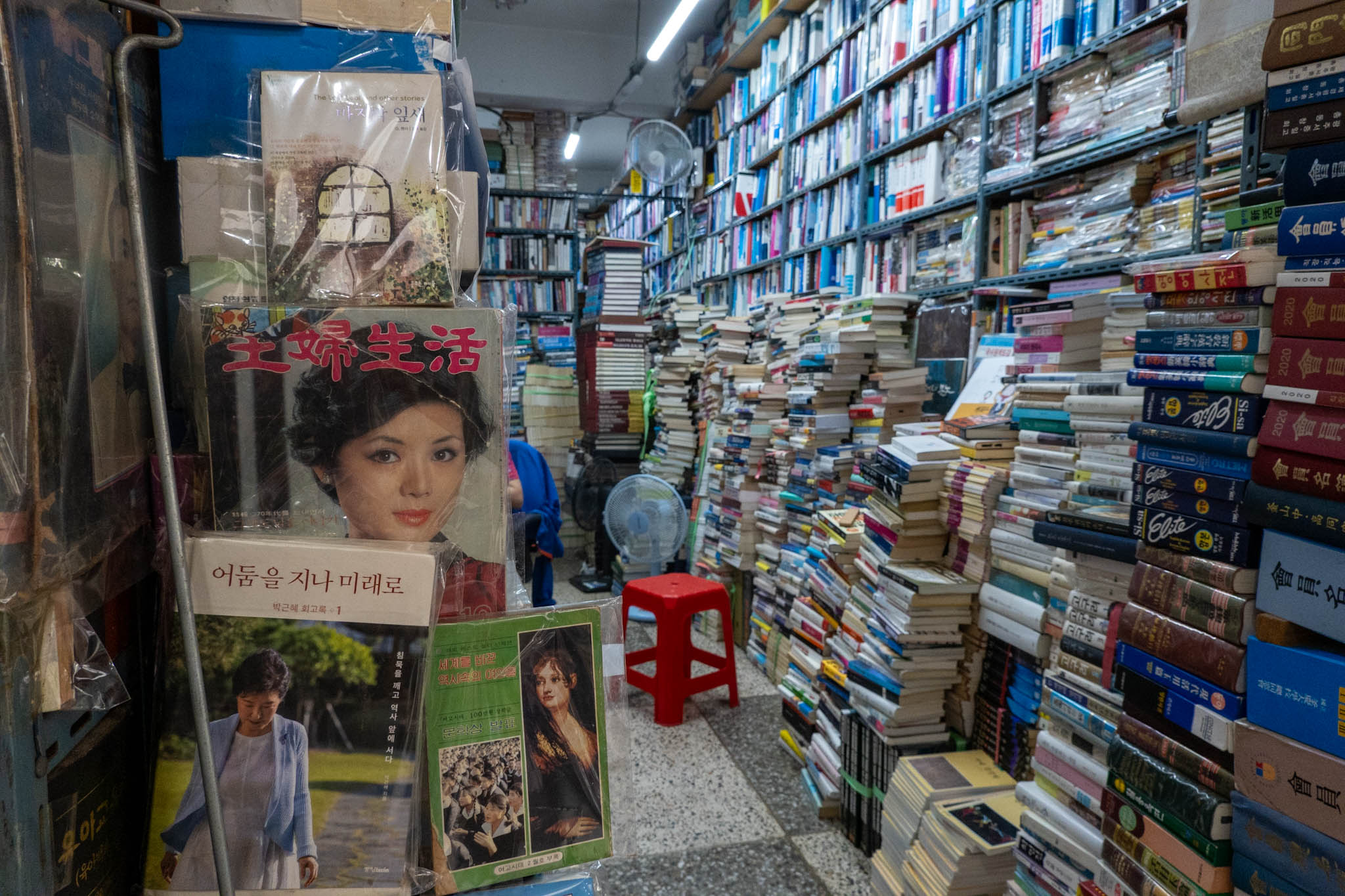
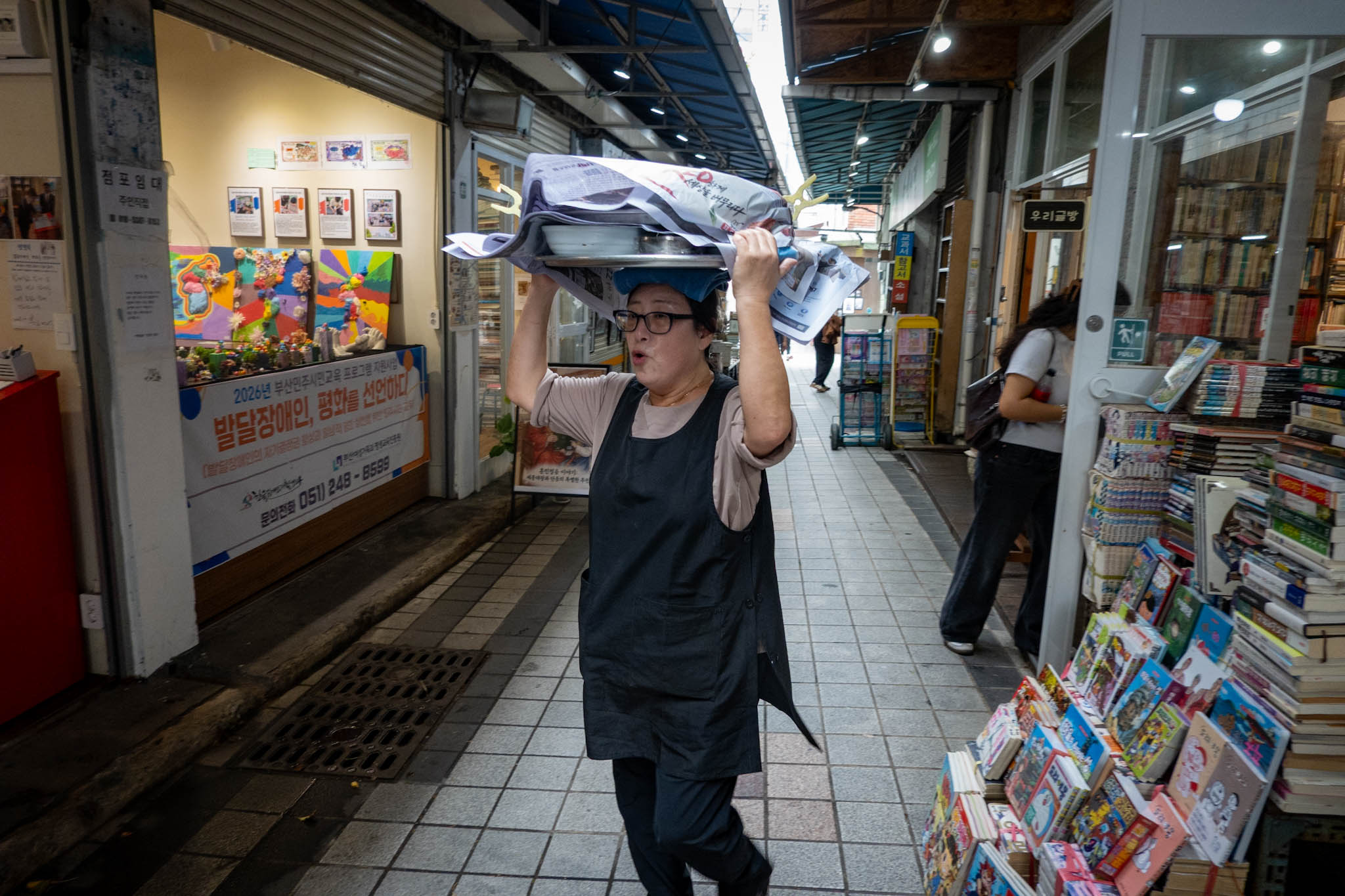
This does not mean that digital technology is necessarily making us less intelligent or that younger generations have abandoned intellectual curiosity. On the contrary, access to information has never been so widespread, and digital platforms have created extraordinary opportunities for learning. Someone with a smartphone can explore subjects that previous generations could approach only through expensive books or specialised libraries. But there is an important distinction between having access to information and developing a deeper understanding of it. The constant availability of explanations, summaries and short videos may encourage the impression that knowledge can be acquired almost instantaneously, without the sustained effort traditionally associated with reading. We increasingly know a little about an extraordinary number of subjects, while perhaps dedicating less time to understanding any one of them in depth.
I find this particularly interesting in South Korea, a country whose extraordinary economic development was built, in considerable part, on education, discipline and the accumulation of knowledge. The same society that once regarded textbooks as essential instruments of social mobility is now among the world’s most technologically connected. There is no contradiction in this evolution, but there is a certain irony in seeing thousands of books gathering dust in a city where almost everyone carries immediate access to an immense digital library. The question is whether that accessibility translates into more reading, or whether books are gradually losing their place to other forms of entertainment and information.
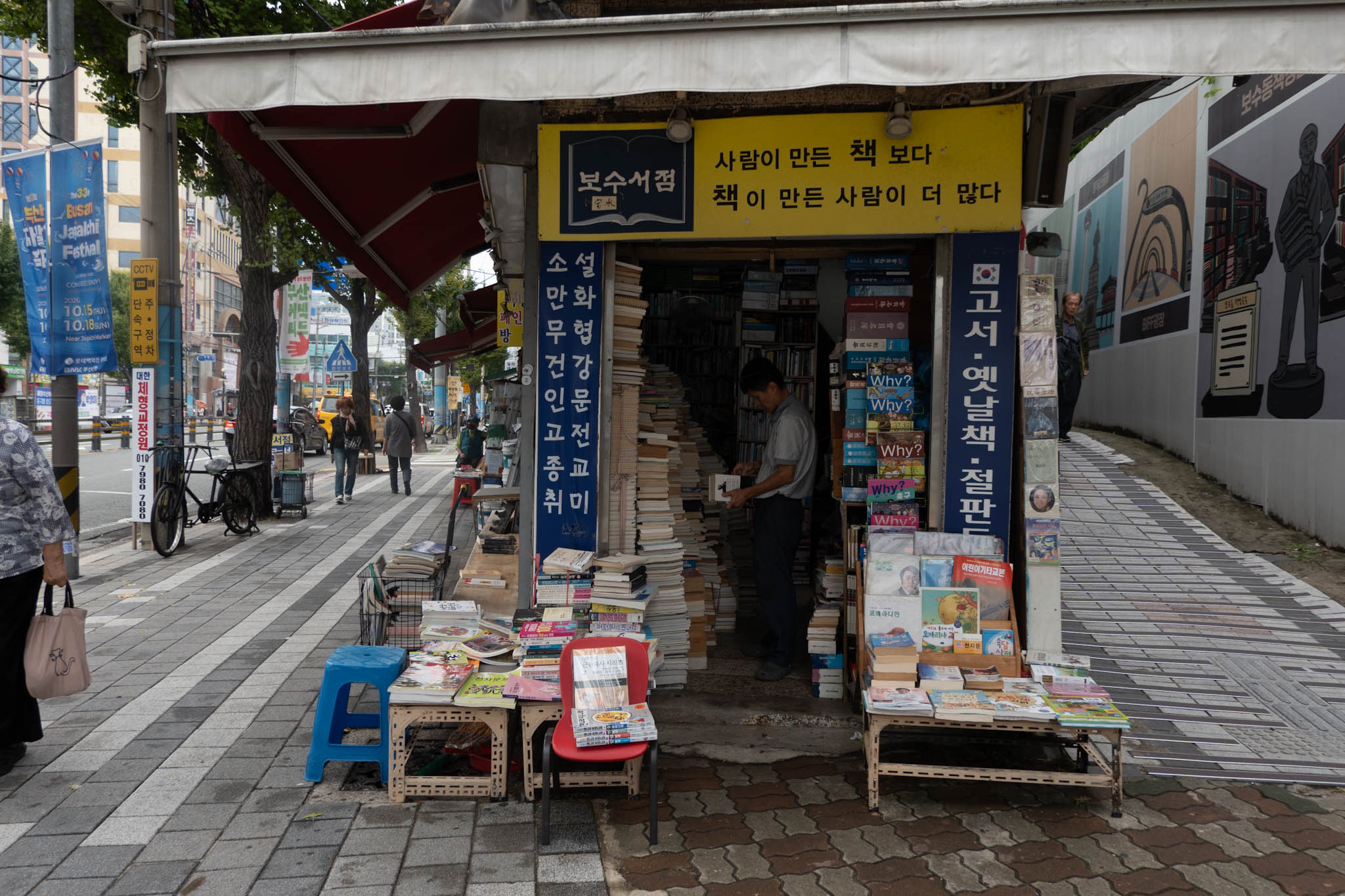
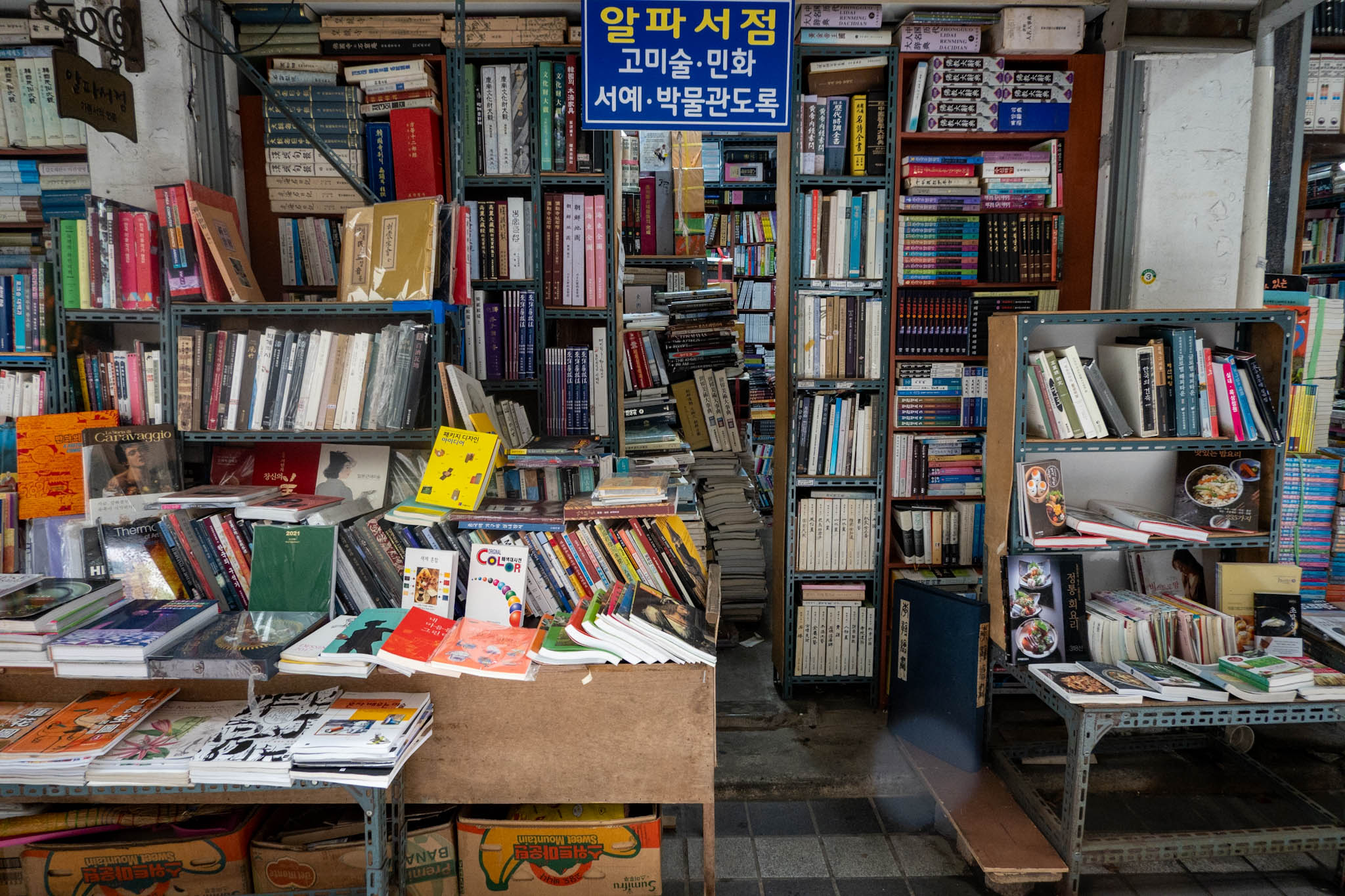
As I continue photographing the shops, I become increasingly fascinated by the physical presence of the books themselves. Every volume represents someone’s effort to organise experience, research a subject, construct an argument or imagine a different world. Some required years of work; others contain ideas that have survived for centuries. Together, they form a remarkable archive of human curiosity. Their value is not simply the information they contain, much of which may now be available elsewhere, but the intellectual journey they invite the reader to undertake. A book allows an author to develop a thought without having to compete for attention every few seconds. It gives the reader an opportunity to enter another person’s reasoning and remain there long enough to question, disagree or understand.
Of course, a quiet visit to Bosu-dong cannot establish that people are reading less, and the absence of customers in a traditional bookshop does not necessarily imply the disappearance of readers. Books may be purchased online, borrowed digitally or consumed in formats that leave no visible trace in these narrow streets. Nevertheless, the scene feels representative of a broader cultural transformation, one that extends far beyond South Korea. We live in an age of unprecedented access to knowledge, but also one in which our attention has become a valuable commodity, continuously contested by platforms whose business models depend on keeping us moving from one piece of content to the next.
Leaving Bosu-dong, I find myself thinking less about the future of printed books than about the future of reading itself. Paper may eventually become a niche preference, just as vinyl records survived the arrival of digital music. That would hardly be a tragedy. What would be more consequential is the gradual erosion of our willingness to engage with difficult ideas, long arguments and complex stories, regardless of the medium through which they are delivered. The ability to read deeply is not simply a cultural habit; it is an essential part of independent thinking, allowing us to resist the simplifications and emotional immediacy that increasingly dominate public conversation.
Back in the alley, the booksellers continue waiting among their extraordinary inventories. Outside, Busan moves at its usual pace, with people navigating the streets while glancing at their smartphones. The contrast is almost too obvious, yet difficult to ignore. Inside those quiet shops are thousands of stories, discoveries and arguments, all patiently available to anyone willing to devote them a little time. Perhaps the most revealing aspect of Bosu-dong is not that so many books remain unsold, but that in a society overflowing with information, the simple act of sitting down and reading one from beginning to end is becoming something increasingly exceptional.
Bosu-dong Book Street, Busan, October 2026
Discover more from THE QUIET REPORT
Subscribe to get the latest posts sent to your email.
