THE BOEMOSA SILENCE
Written by Maurizio “Mau” Vagnozzi
BUSAN, South Korea – The rain had stopped, but the mountains were still holding on to the clouds. This morning, as I approached Beomeosa Temple, on the forested slopes of Geumjeongsan Mountain, a thin veil of fog drifted between the trees, occasionally revealing the curved roofs of buildings that seemed almost absorbed into the landscape. The air was damp and cool, the vegetation unusually vivid after the rainfall. It was one of those mornings when the weather, rather than interfering with a visit, becomes an essential part of the experience.
Beomeosa is among South Korea’s most important Buddhist temples, founded in 678 during the Silla Kingdom, when Buddhism was deeply intertwined with the political and cultural development of the Korean Peninsula. Its name, often translated as the Temple of the Heavenly Fish, comes from a legend about a golden fish descending from heaven to live in a well on the mountain. Over the centuries, the complex has survived destruction, including during the Japanese invasions of the late 16th century, and subsequent reconstruction. Today, it remains an active center of Korean Buddhism, rather than simply a historical monument maintained for tourists.
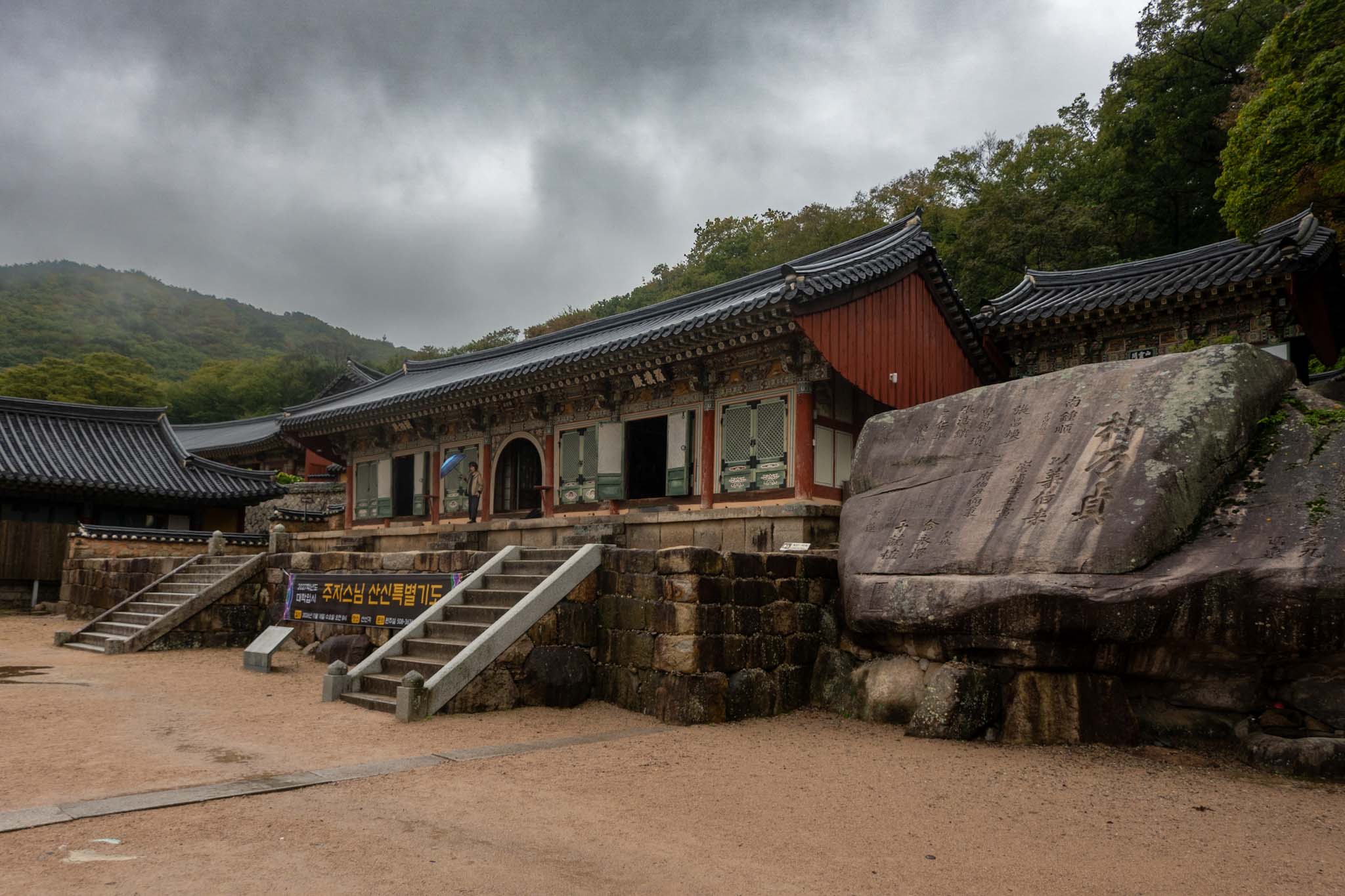
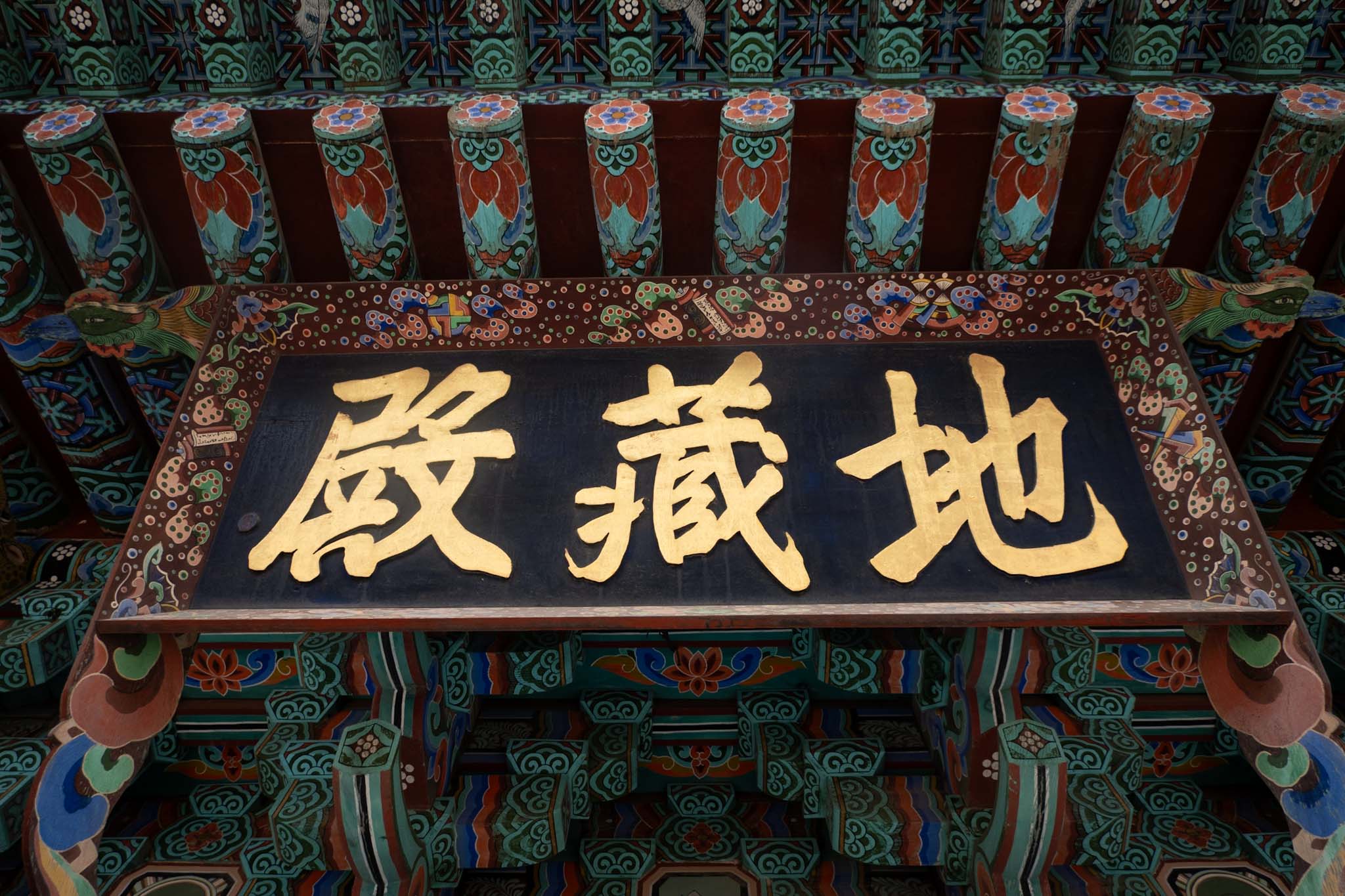
What immediately strikes me, however, is not its history but its extraordinary relationship with the surrounding mountains. Unlike the monumental religious buildings of Europe, designed to dominate their urban surroundings, Beomeosa seems to have been conceived as part of the natural landscape. Its courtyards, gates and prayer halls follow the contours of the hillside, while the dense green forests of Geumjeongsan provide an almost continuous backdrop. This morning, with the mountain peaks disappearing into the fog, the distinction between architecture and nature seemed particularly fragile.
And then there are the colors.
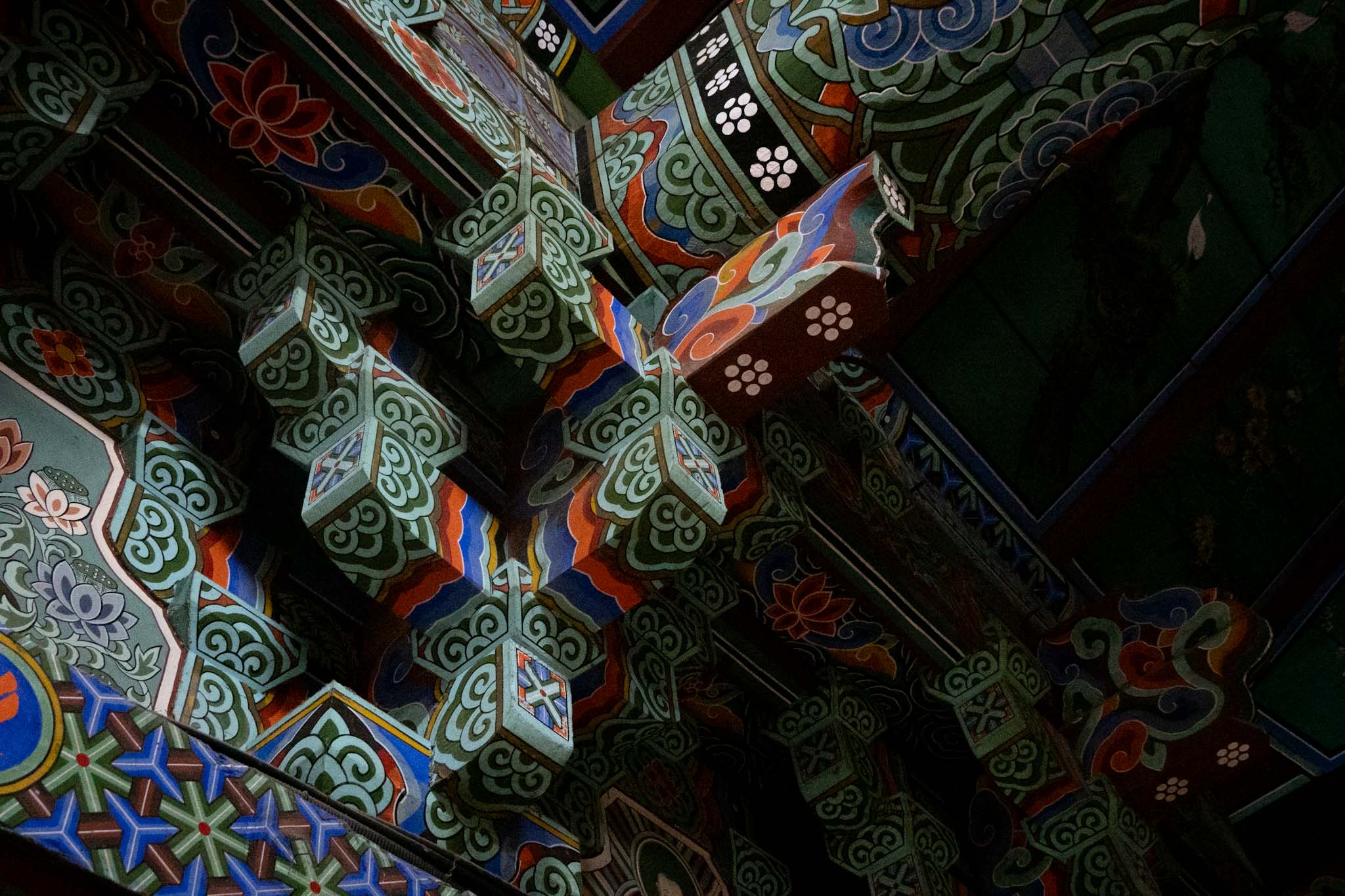
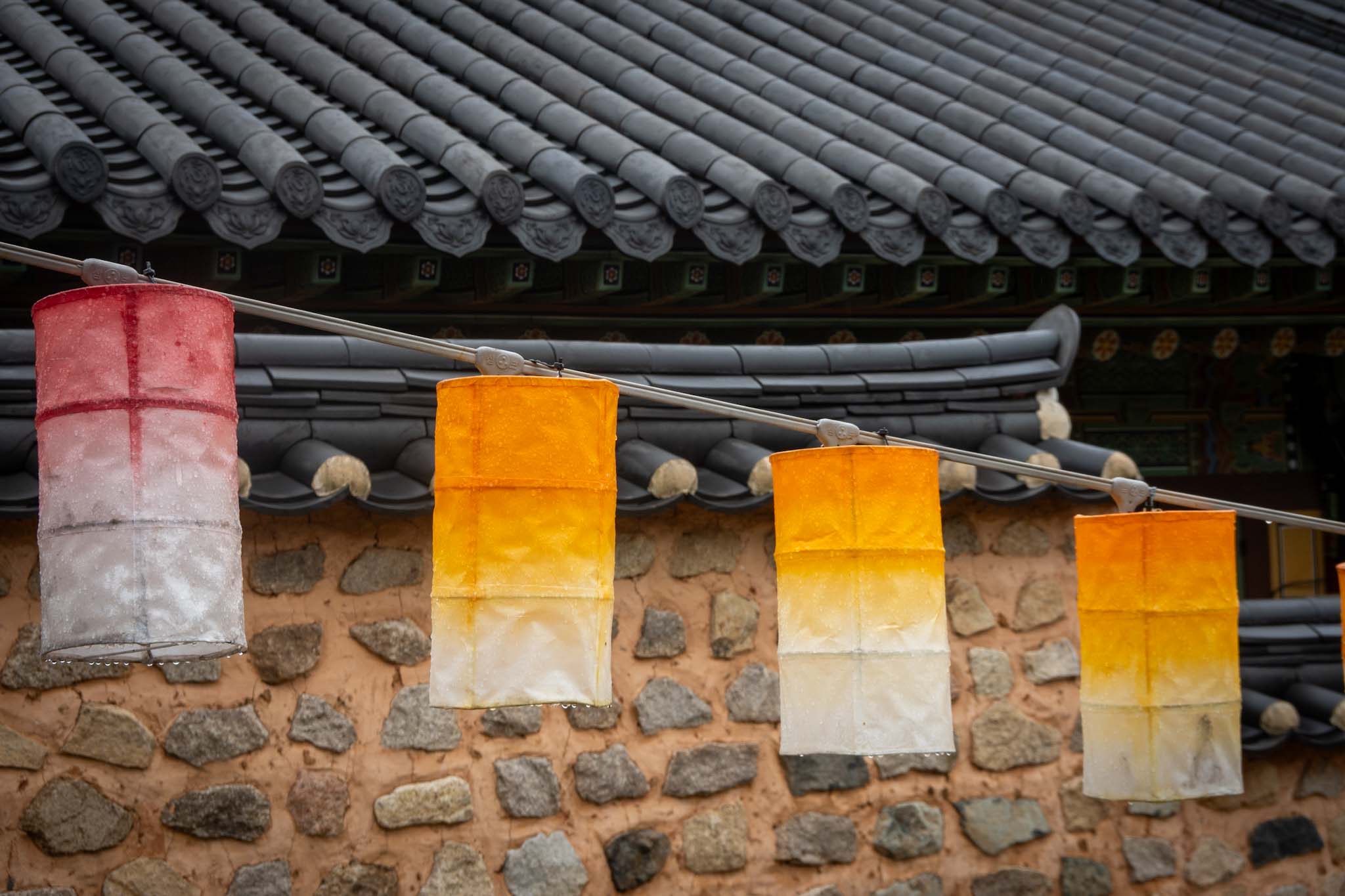
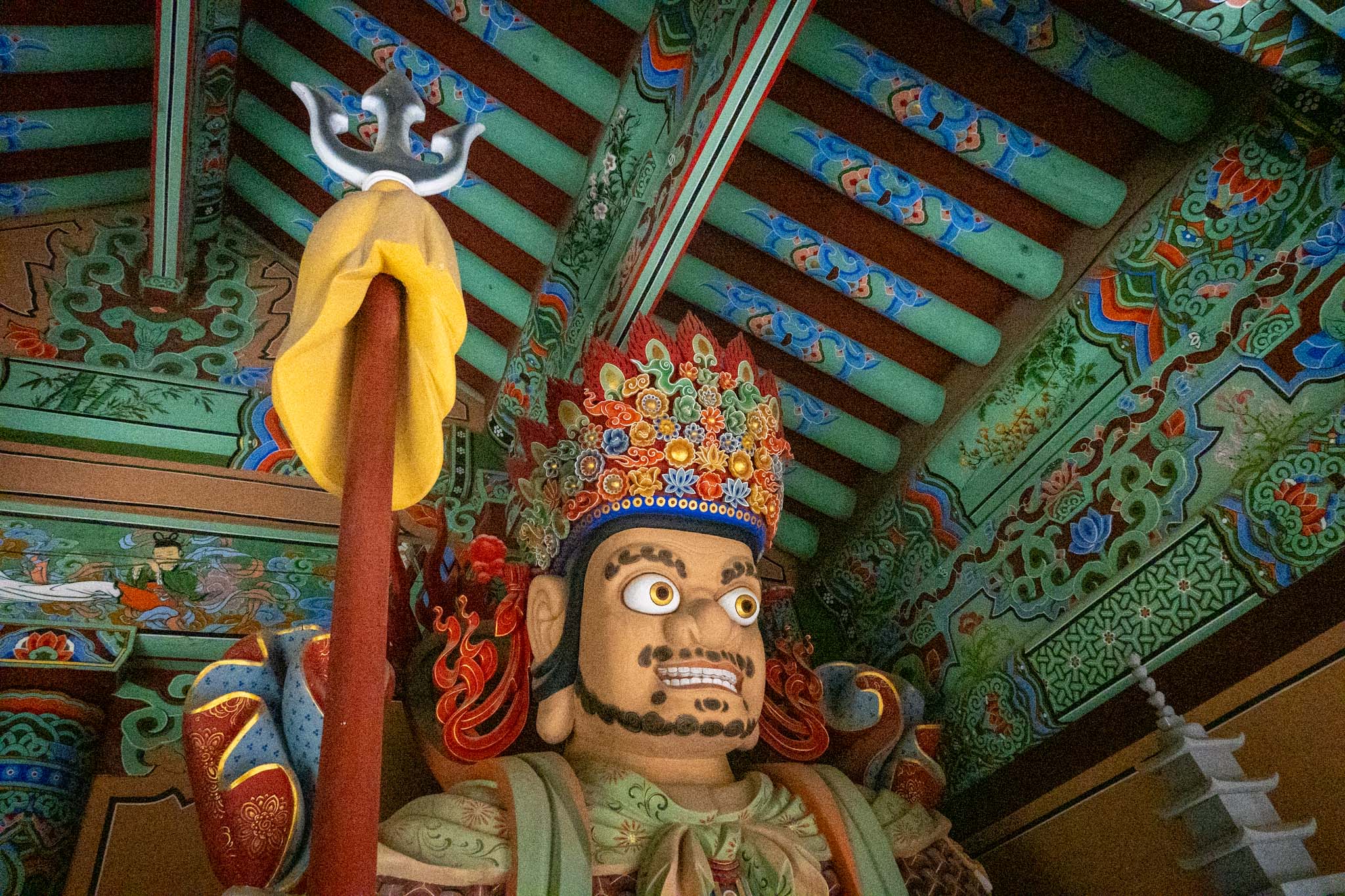
Korean Buddhist temples are celebrated for their dancheong, the traditional decorative painting that covers wooden beams, ceilings and architectural details in intricate combinations of turquoise, emerald green, vermilion, blue and gold. At Beomeosa, the effect is extraordinary. Beneath the elegantly curved roofs, elaborate geometric and floral patterns transform the wooden structures into compositions of remarkable visual intensity. After the rain, the colors appeared even more saturated, standing out against the dark roof tiles, wet stone pavements and surrounding vegetation.
There is an apparent contradiction in this abundance of decoration. We often associate Buddhist spirituality with restraint, simplicity and the absence of distraction. Yet here, in the middle of the mountains, spirituality is expressed through an almost exuberant celebration of color. The painted surfaces are not merely ornamental: their patterns and symbolism belong to a long artistic and religious tradition, intended to protect the buildings while expressing Buddhist ideas of harmony and the sacred.
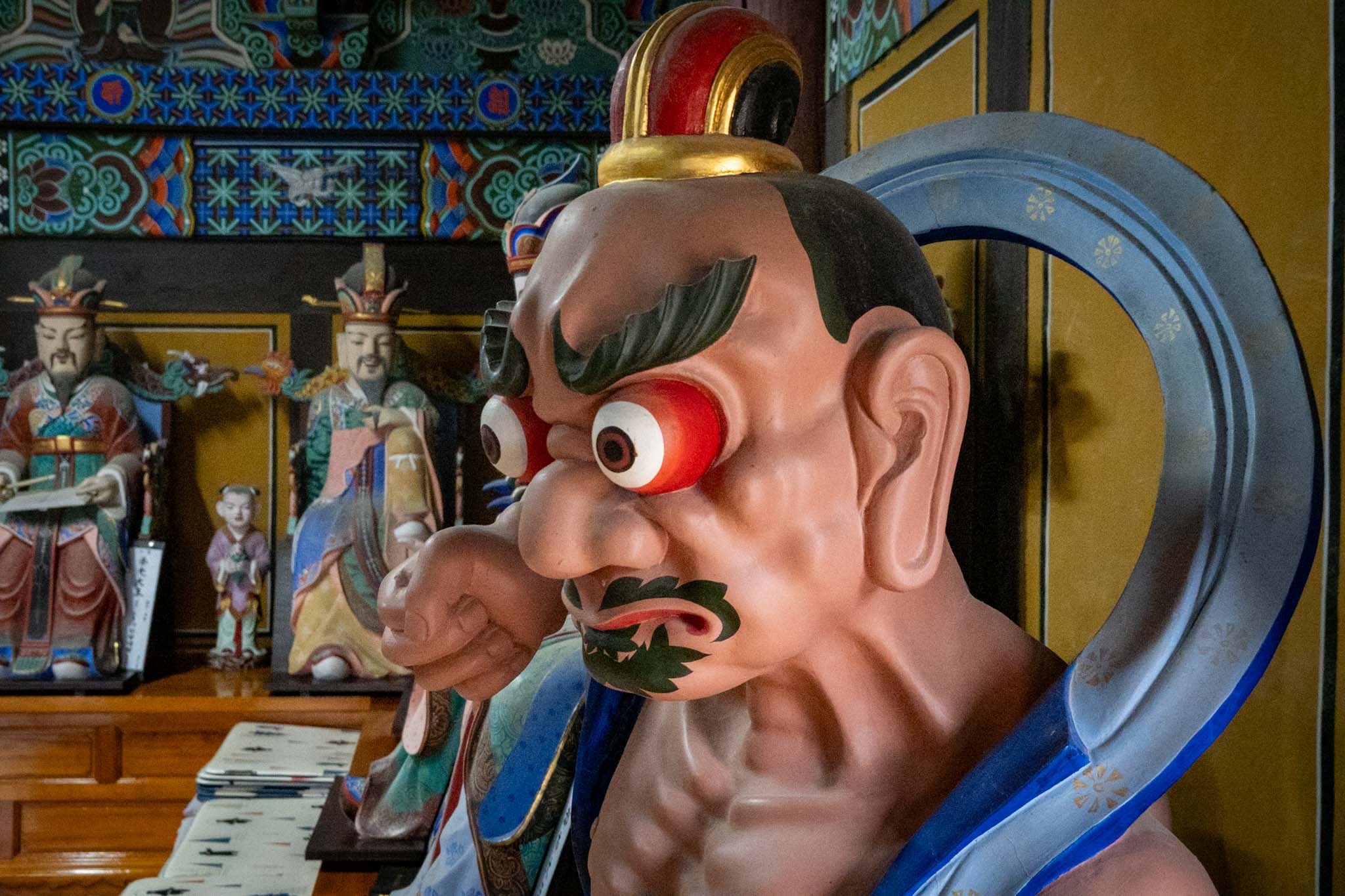
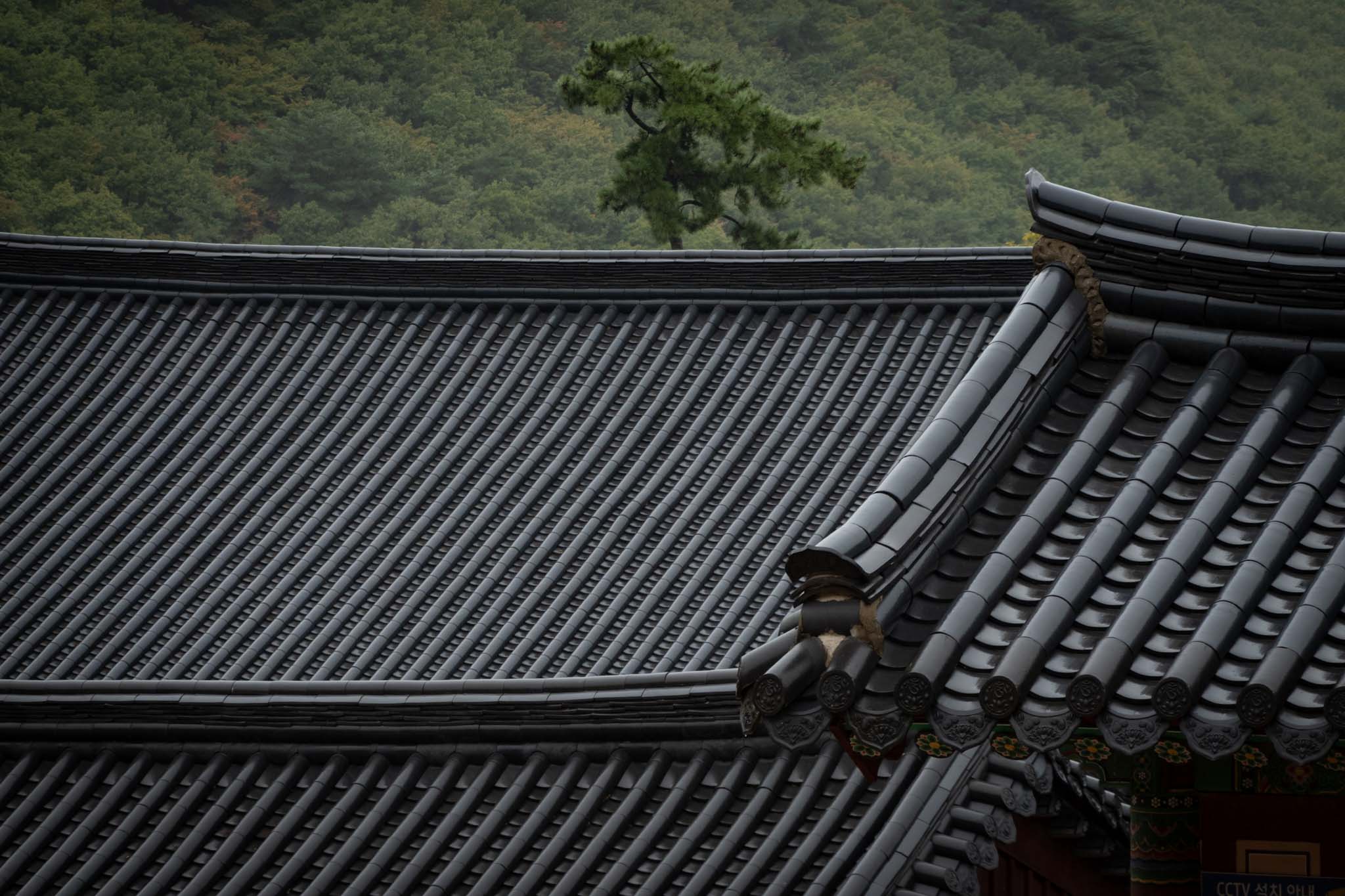
The result is a place that feels simultaneously peaceful and visually exhilarating. Silence does not mean emptiness, and contemplation does not require austerity. The eye moves constantly between the elaborate ceilings, the carved wooden details, the stone lanterns and the forest beyond, discovering new relationships between architecture and landscape.
Walking through the complex, I found myself slowing down, less interested in identifying individual buildings than in observing how the entire place worked together. A roof framed by branches, a flight of stone steps still wet from the rain, a distant pavilion partly concealed by mist: each offered a different composition. For a photographer, Beomeosa is almost overwhelming, not because of any single spectacular feature, but because of the remarkable coherence of its visual language.
There is also something particularly Korean about this balance between the cultivated and the natural. In a country whose cities have undergone some of the world’s most dramatic transformations over the past few decades, places like Beomeosa preserve a different understanding of time. Buildings are repaired, wooden structures replaced, painted decorations renewed. Continuity does not necessarily mean leaving everything untouched. It means maintaining a living relationship with traditions that have survived successive generations.
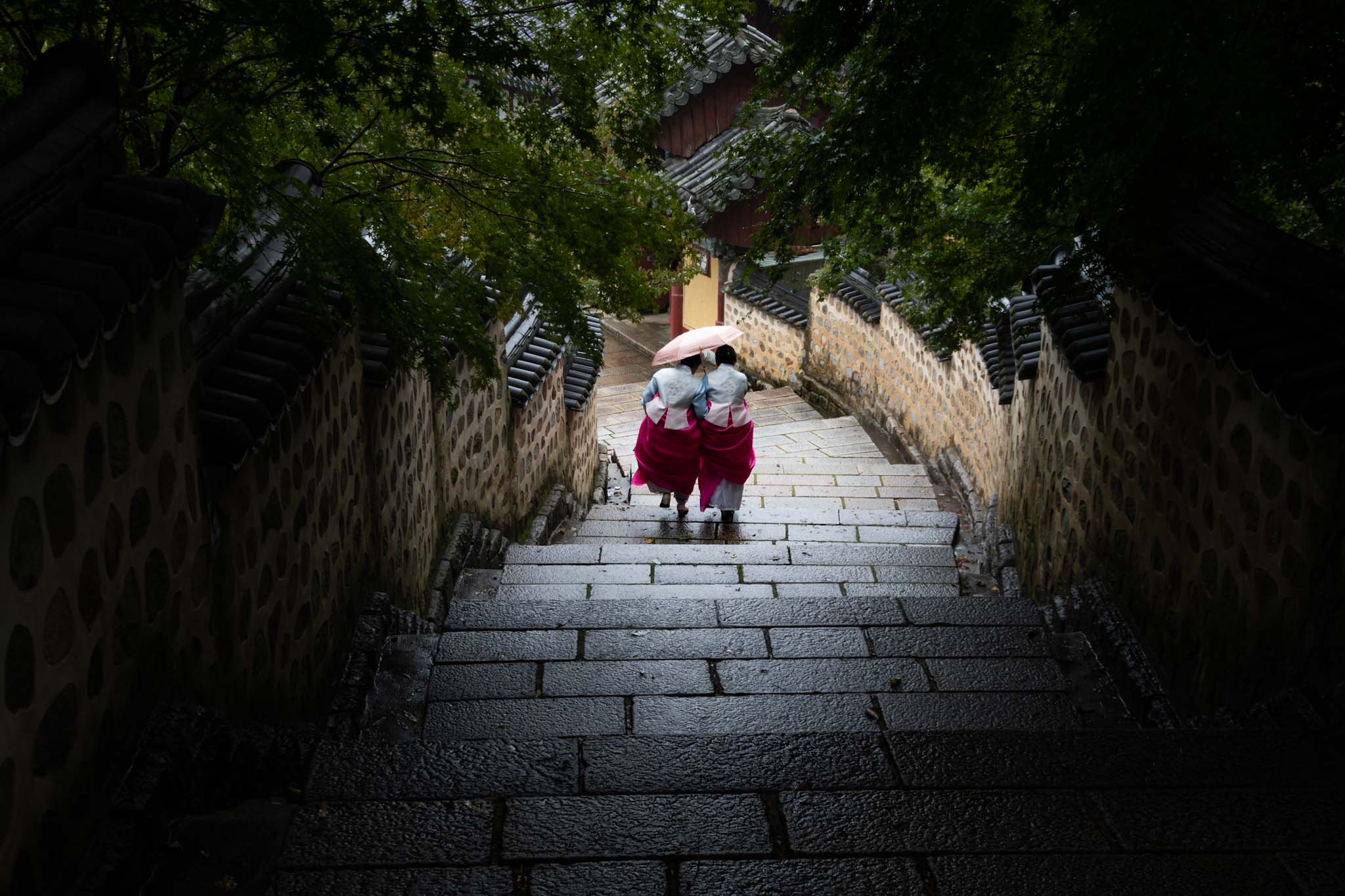
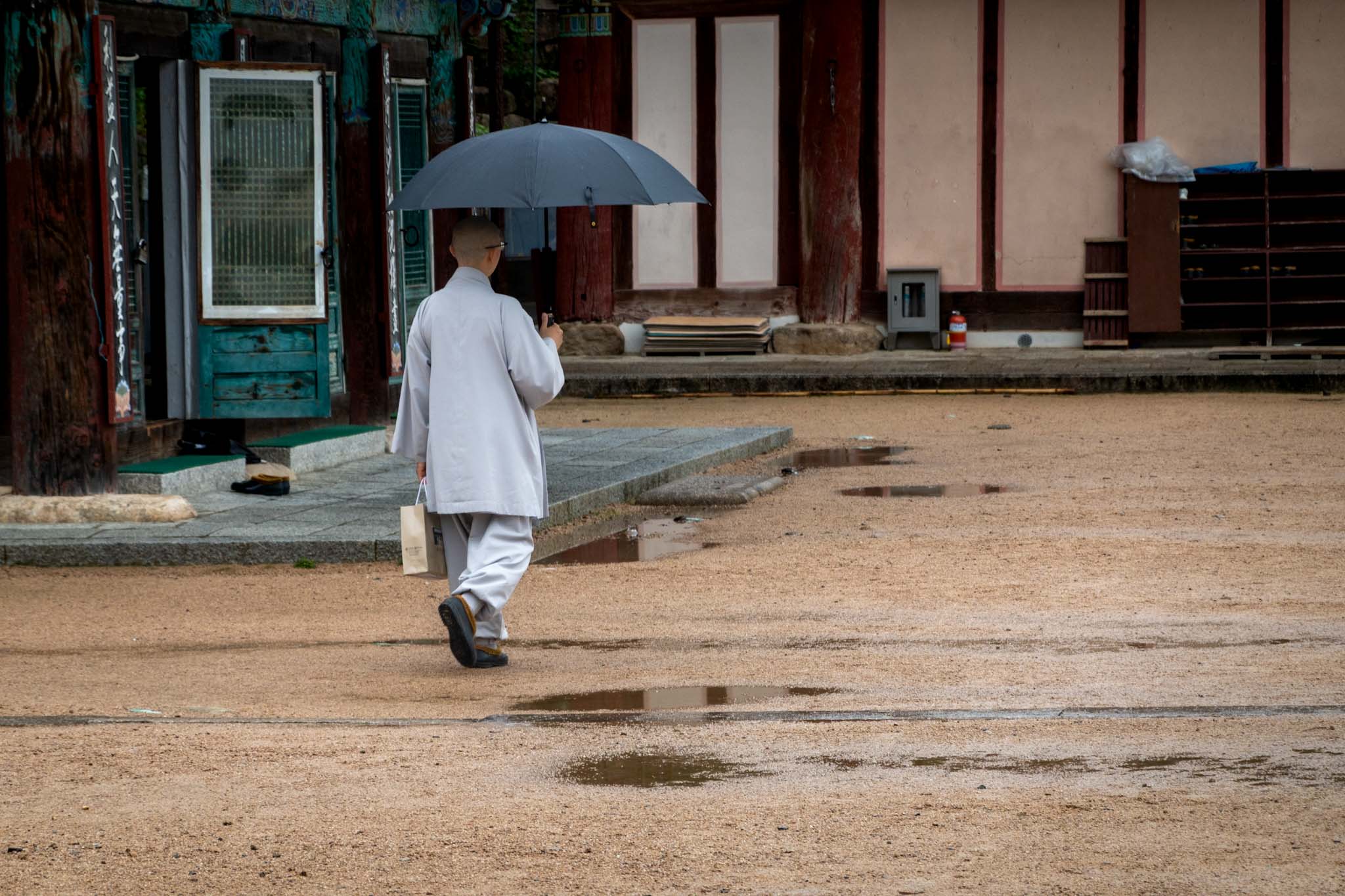
During these days in Busan, I have been exploring a city often defined by its busy port, seafood markets, beaches and modern skyline. But the mountains surrounding it tell another story. They remind us that South Korea’s urban energy coexists with a deeply rooted spiritual and cultural landscape, one that remains surprisingly accessible just beyond the crowded neighborhoods.
By the time I left Beomeosa, the fog had begun to lift, revealing more of the green slopes surrounding the temple. The buildings looked different in the changing light, their painted details emerging more clearly as the clouds retreated.
I had arrived expecting to visit an important historical temple. I left with something more memorable: the impression of a place where beauty does not compete with silence, but gives it color.
Busan, October 2026
Discover more from THE QUIET REPORT
Subscribe to get the latest posts sent to your email.
