GUARDIANS OF THE PAST
Written by Maurizio “Mau” Vagnozzi
Sometimes, when walking through a city with my camera, I stop for reasons that have little to do with what I originally intended to photograph. It might be an expression, an unexpected contrast of colors, or simply the way sunlight falls on someone’s face. At Gyeongbokgung Palace, it was a combination of all three.
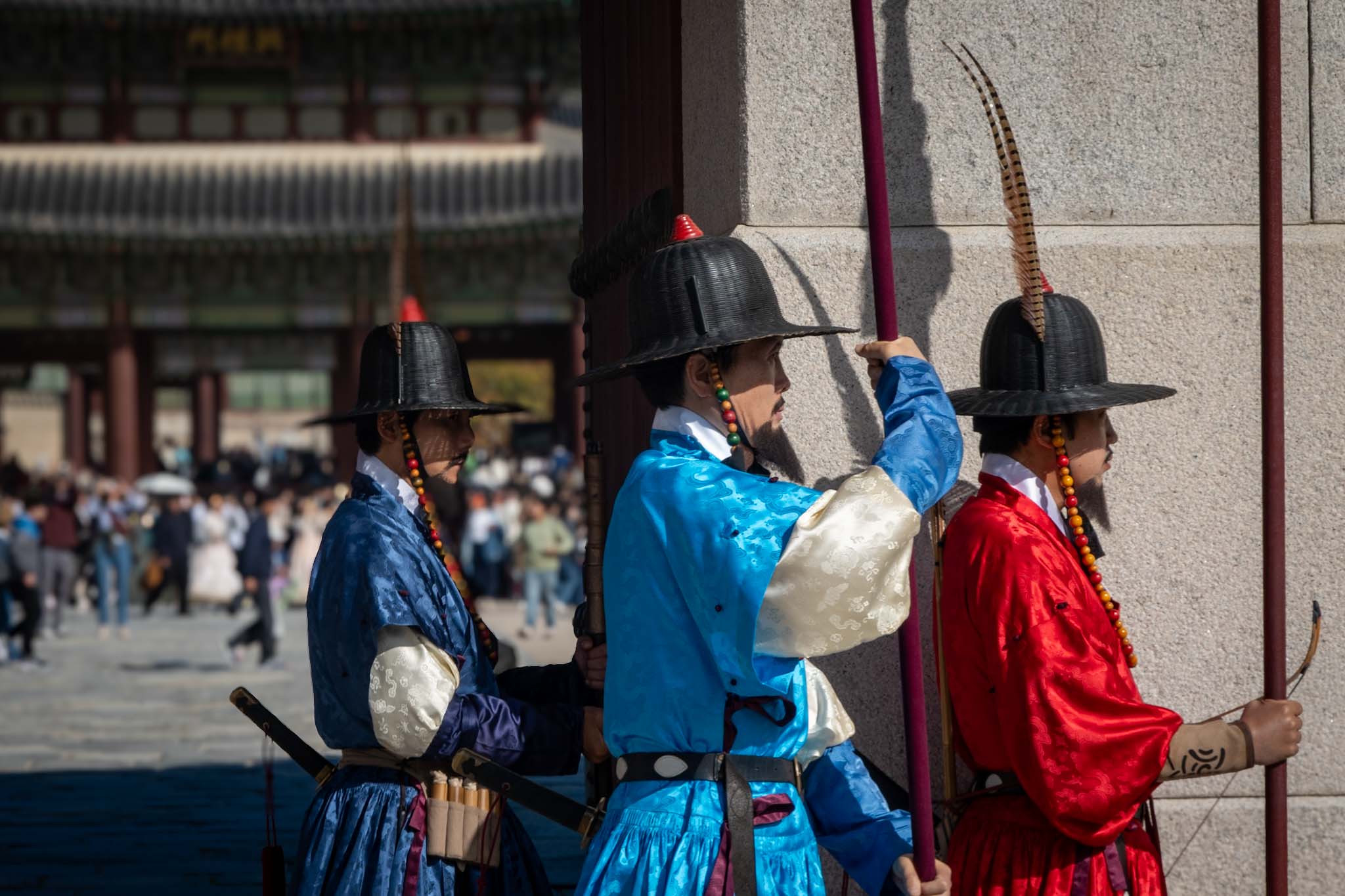
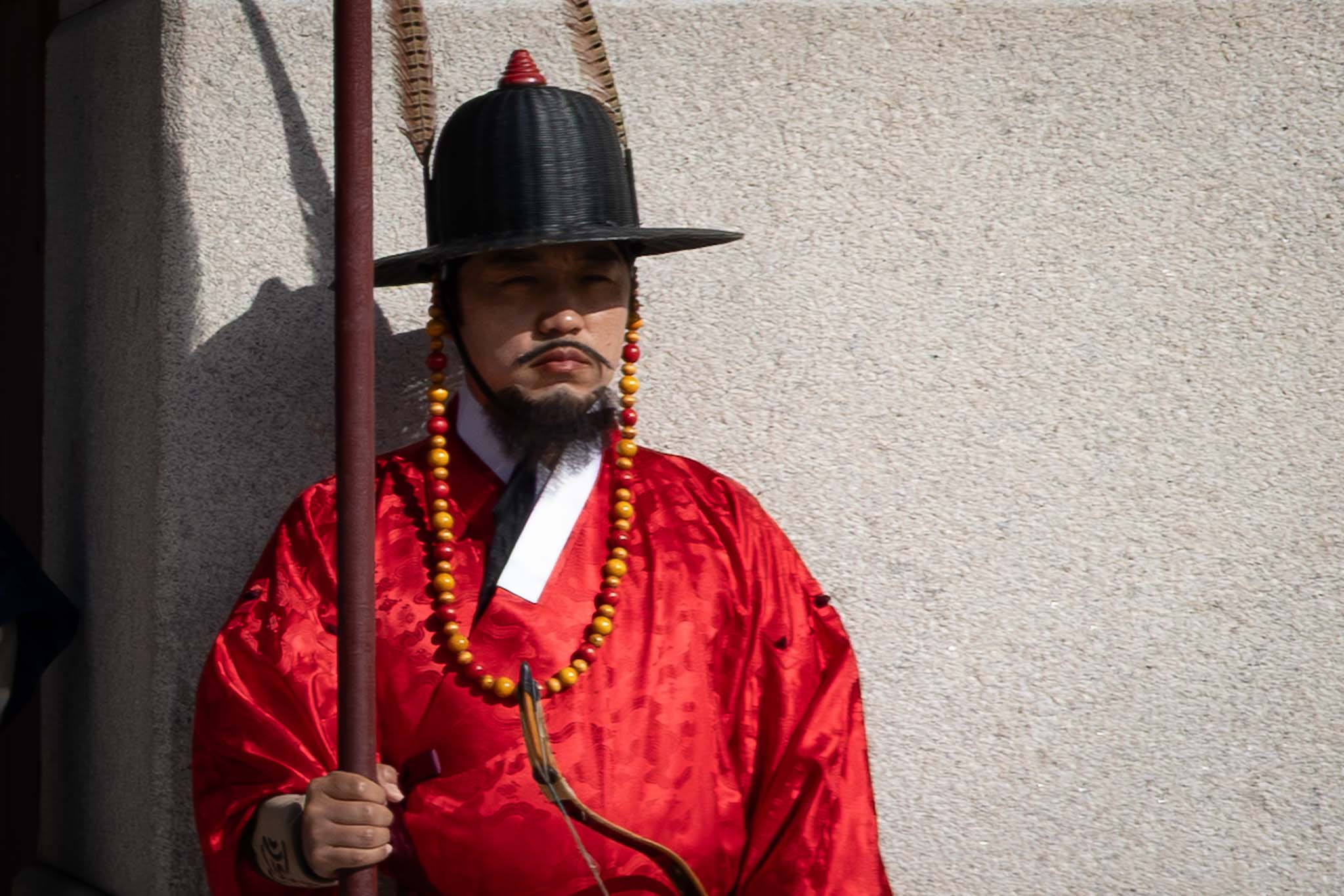
I had (again in the last 3 weeks) come to explore one of Korea’s most important historical landmarks, a place that has witnessed more than six centuries of royal power, invasions, destruction, and reconstruction. This time my attention has been captured by a group of men standing almost motionless near the palace gates. Dressed in extraordinary silk uniforms of turquoise, scarlet, and deep blue, they wore broad black hats decorated with strings of colorful beads. Their faces were stern, framed by carefully shaped beards, their eyes fixed somewhere beyond the crowds passing in front of them.
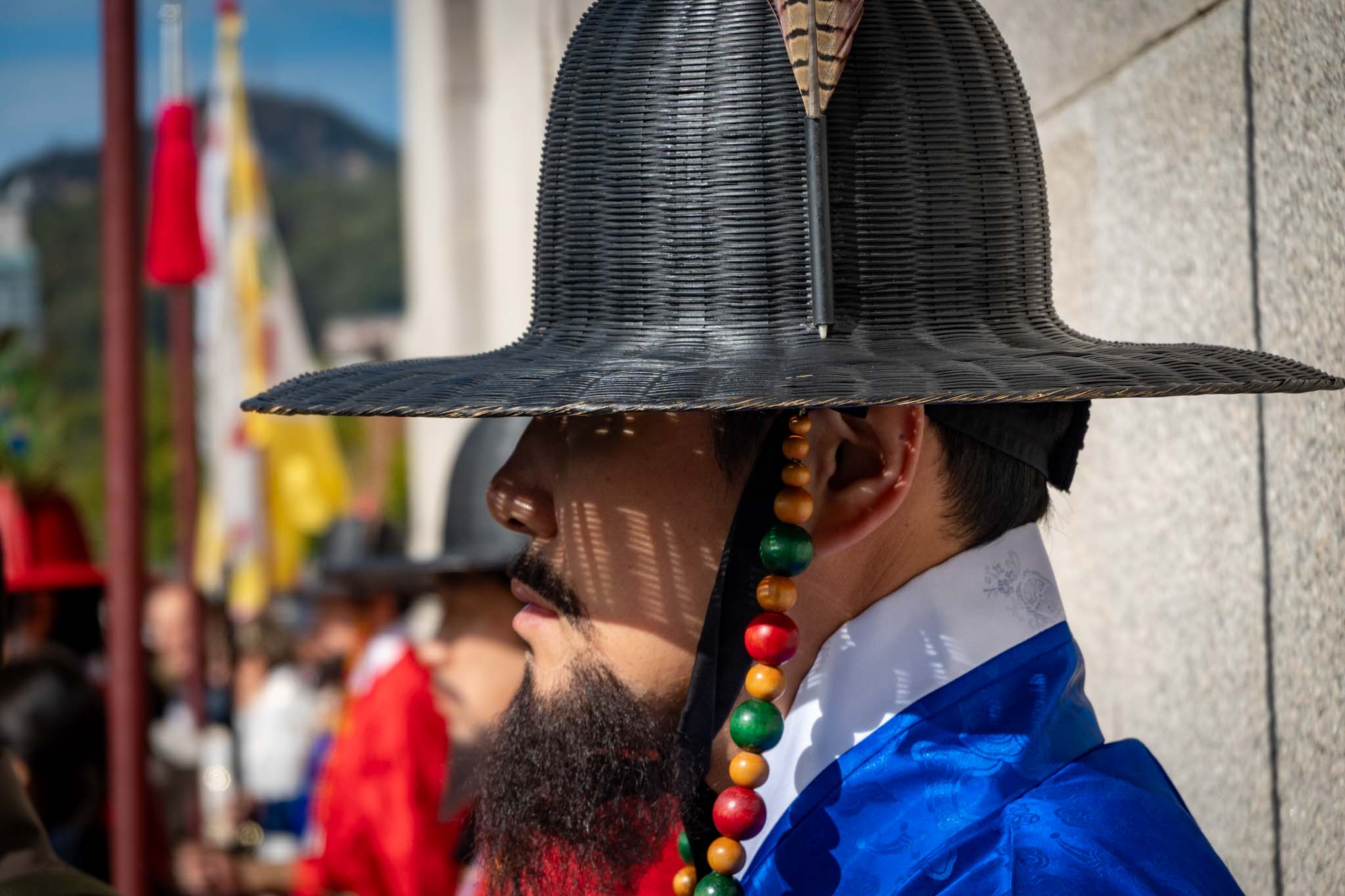
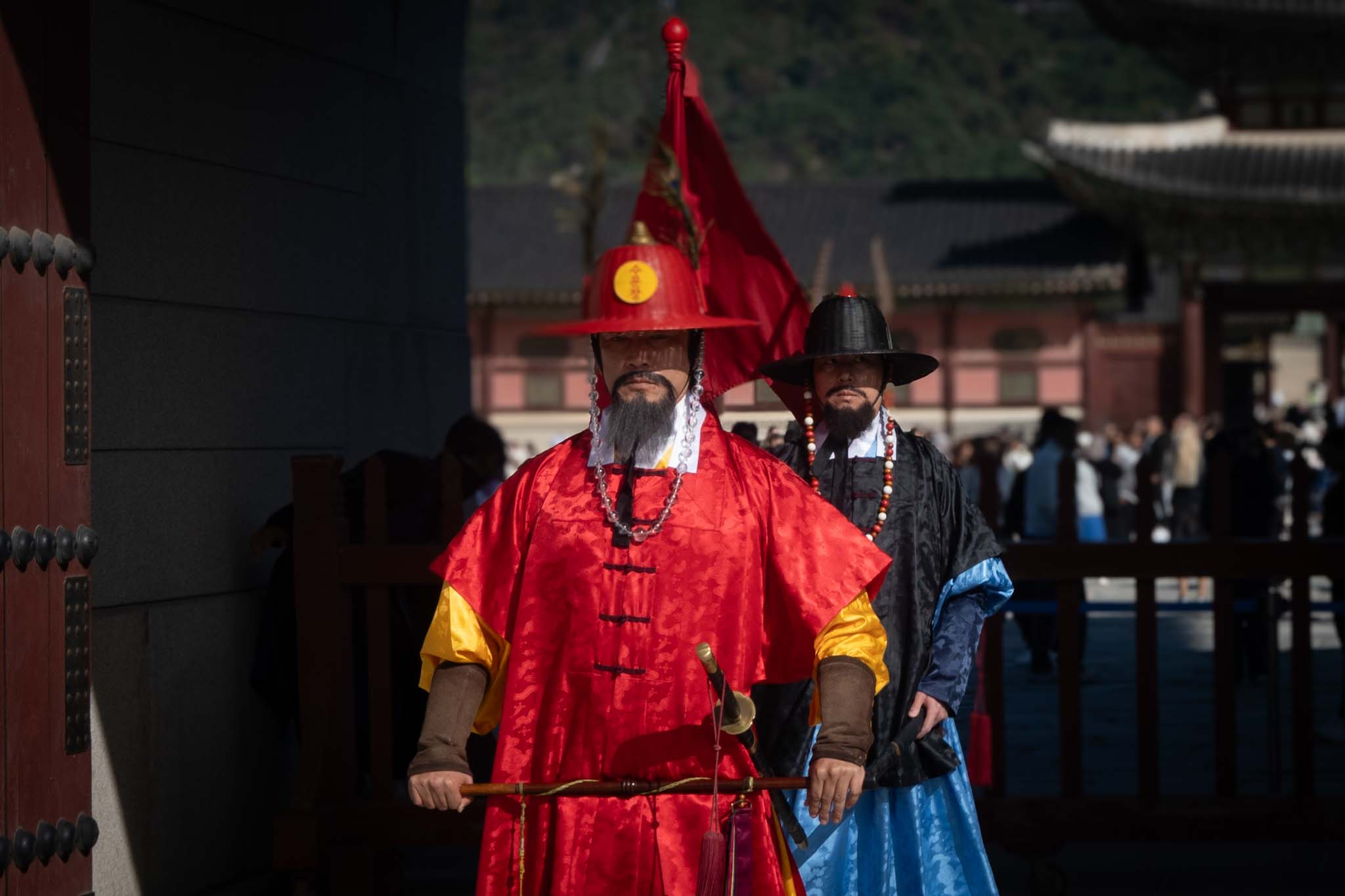
They are the royal guards, or rather their modern-day interpreters, participating in a ceremonial reconstruction of traditions from the Joseon Dynasty, which ruled Korea from 1392 until 1897. The changing-of-the-guard ceremony has become one of Gyeongbokgung’s most popular attractions, drawing visitors who gather to watch rituals inspired by the military protocols of the royal court, and the yummy opportunity to instagram that!
Looking through my camera, I found myself increasingly uninterested in the spectacle itself. What fascinated me were the individuals behind it.
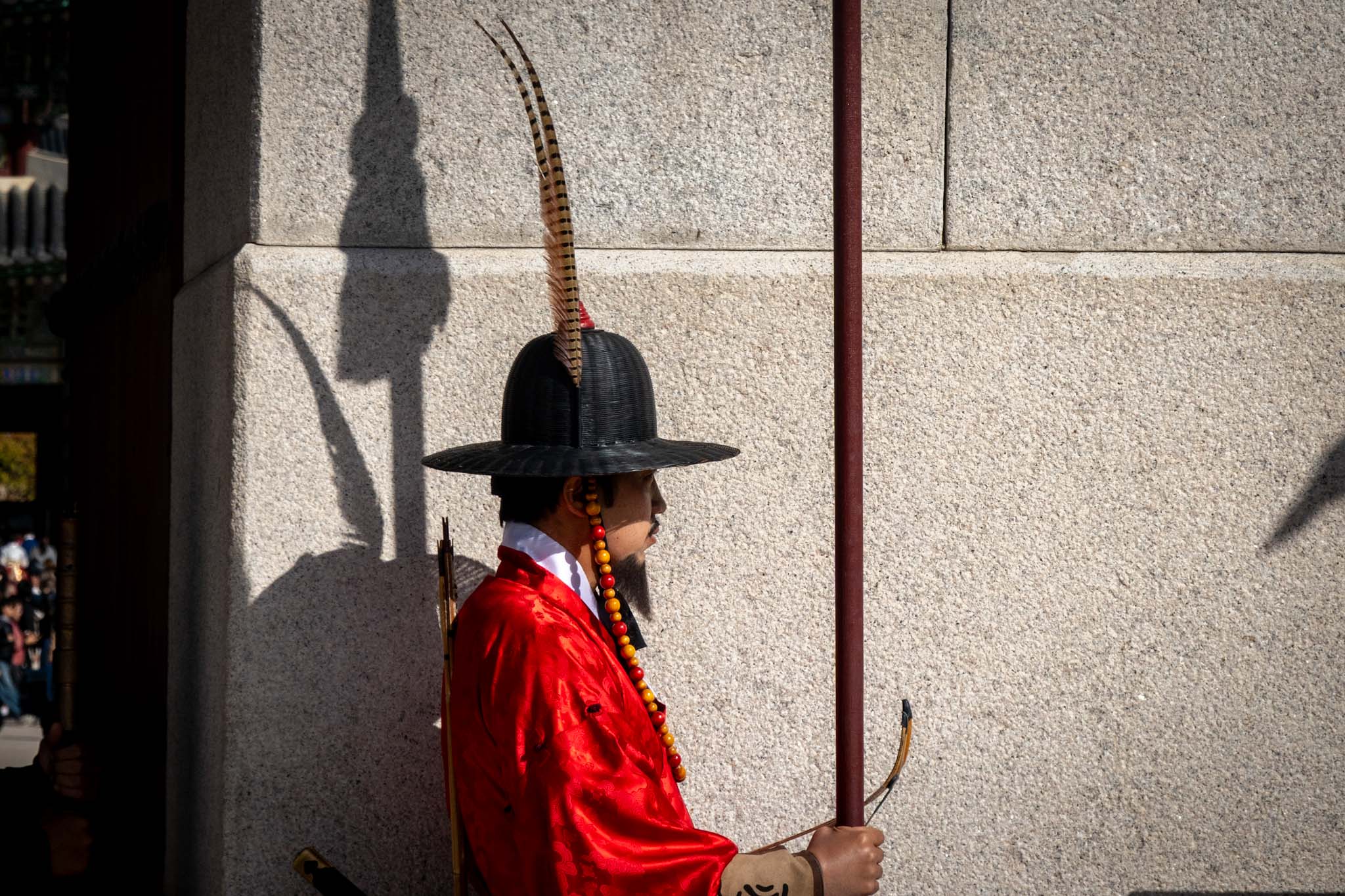
One guard stood against a pale granite wall, his turquoise uniform glowing in the afternoon sunlight. The shadow of his hat divided his face, giving his expression an unexpected intensity. Another, dressed in red, held a long ceremonial pole, apparently indifferent to the visitors moving around him.
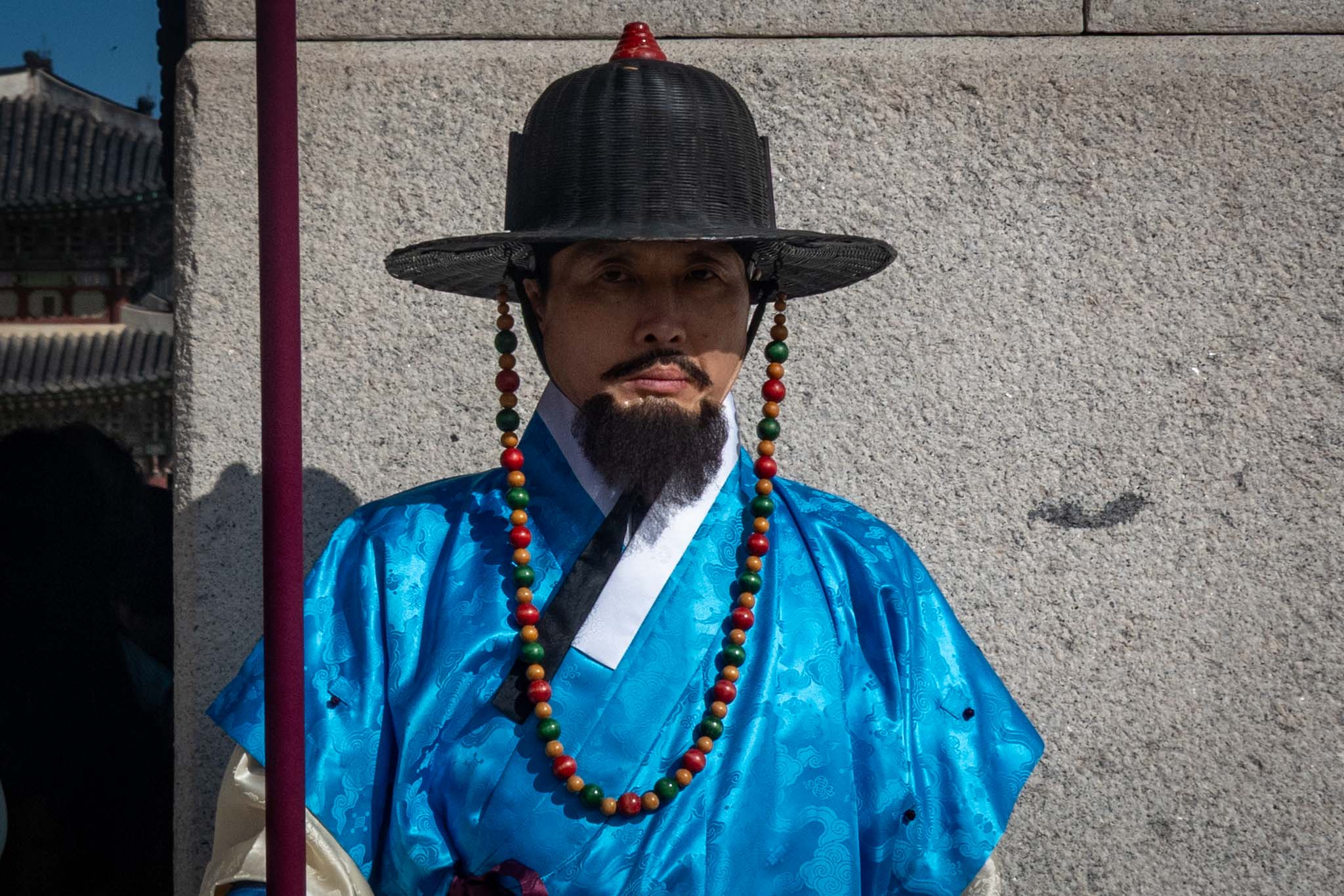
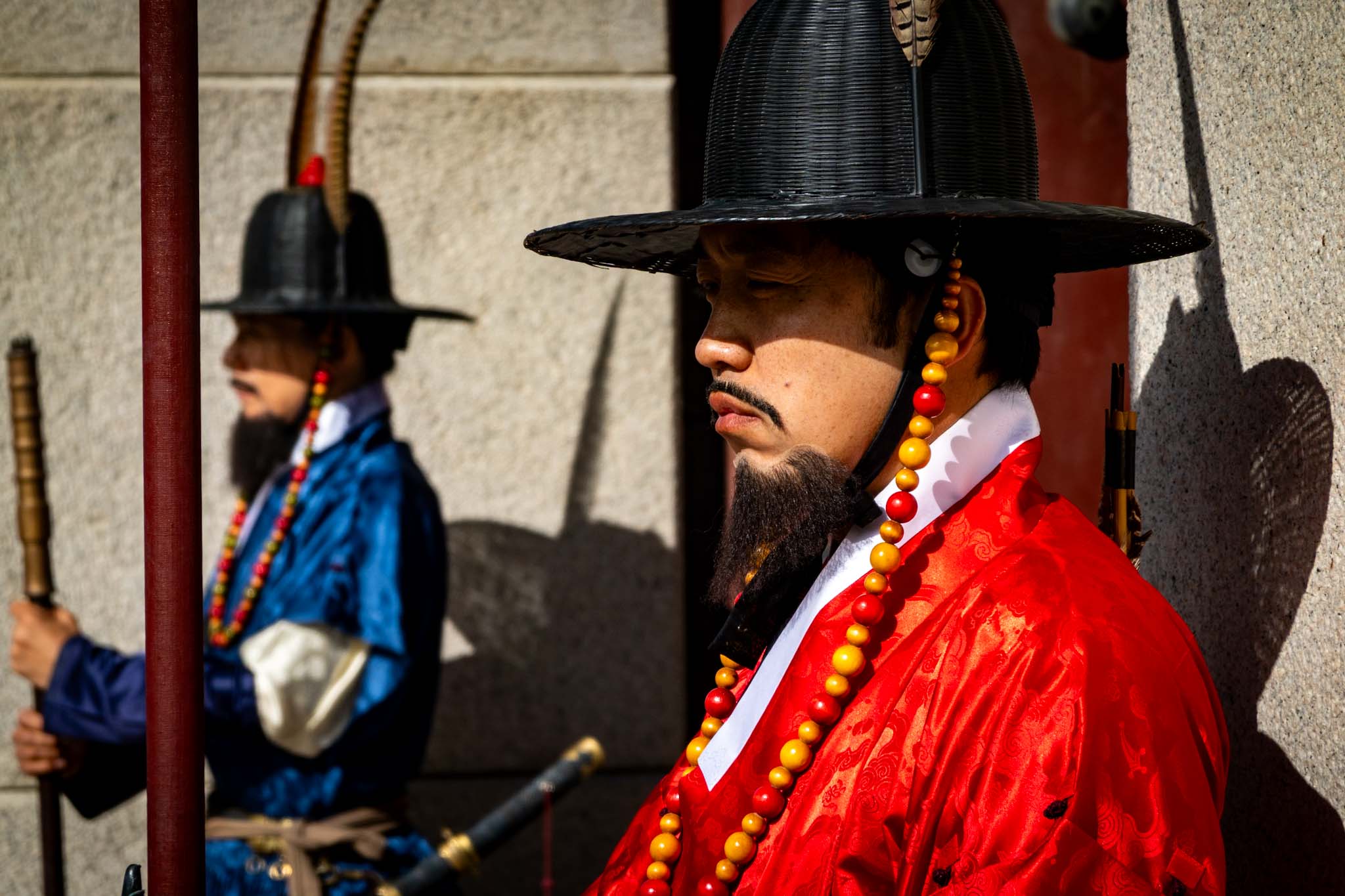
I photographed them individually and together, trying to isolate their expressions from the busy surroundings. With the right framing, the modern world briefly disappeared. No smartphones, no tourists, no contemporary Seoul. Only a man, his uniform, a rough stone wall, and the illusion of another century.
Gyeongbokgung was built in 1395, shortly after the founding of the Joseon Dynasty. For generations, it served as the principal royal palace, the symbolic center of a political system deeply influenced by Confucian philosophy, where hierarchy, discipline, and ceremonial order governed society.
Its history, however, has been anything but peaceful. Much of the complex was destroyed during the Japanese invasions of the late 16th century and remained in ruins for more than 250 years. Rebuilt in the 19th century, it suffered further destruction during Japanese colonial rule. What visitors see today is the result of decades of restoration, an effort to recover not merely historic buildings but an essential part of Korea’s cultural identity.
The ceremony is, of course, a reconstruction rather than an uninterrupted tradition. But perhaps that makes it even more meaningful. It represents a conscious decision to preserve a connection with the past in a country that has transformed itself with extraordinary speed.
As I left the palace, I thought again about the faces I had photographed. I knew nothing about the men behind those carefully maintained expressions. Yet, for a few moments, they had become something more than performers in a historical reconstruction, they had become portraits.
And perhaps that is what I enjoy most about photography: finding an individual story, or at least the suggestion of one, where everyone else is looking at the spectacle. The palace was magnificent. But what I brought home were the faces.
Discover more from THE QUIET REPORT
Subscribe to get the latest posts sent to your email.
