There is a moment in every crowded market when the food becomes secondary and the people take over. At Gwangjang, in central Seoul, that moment seems to arrive almost immediately. Beneath the low-hanging lamps, surrounded by enormous bowls of noodles, steaming pots and trays of food, the vendors are engaged in a continuous performance, although most of them would probably reject the description.
I returned to Gwangjang with my camera, this time less interested in what people were eating than in those preparing and serving it. The market is an extraordinary collection of faces, each occupying a small territory of stainless steel, plastic containers and cooking equipment. Some vendors have the confident expressions of people who have spent decades behind the same counter. Others are more theatrical, smiling at customers, inviting photographs or turning the preparation of food into a small public spectacle.
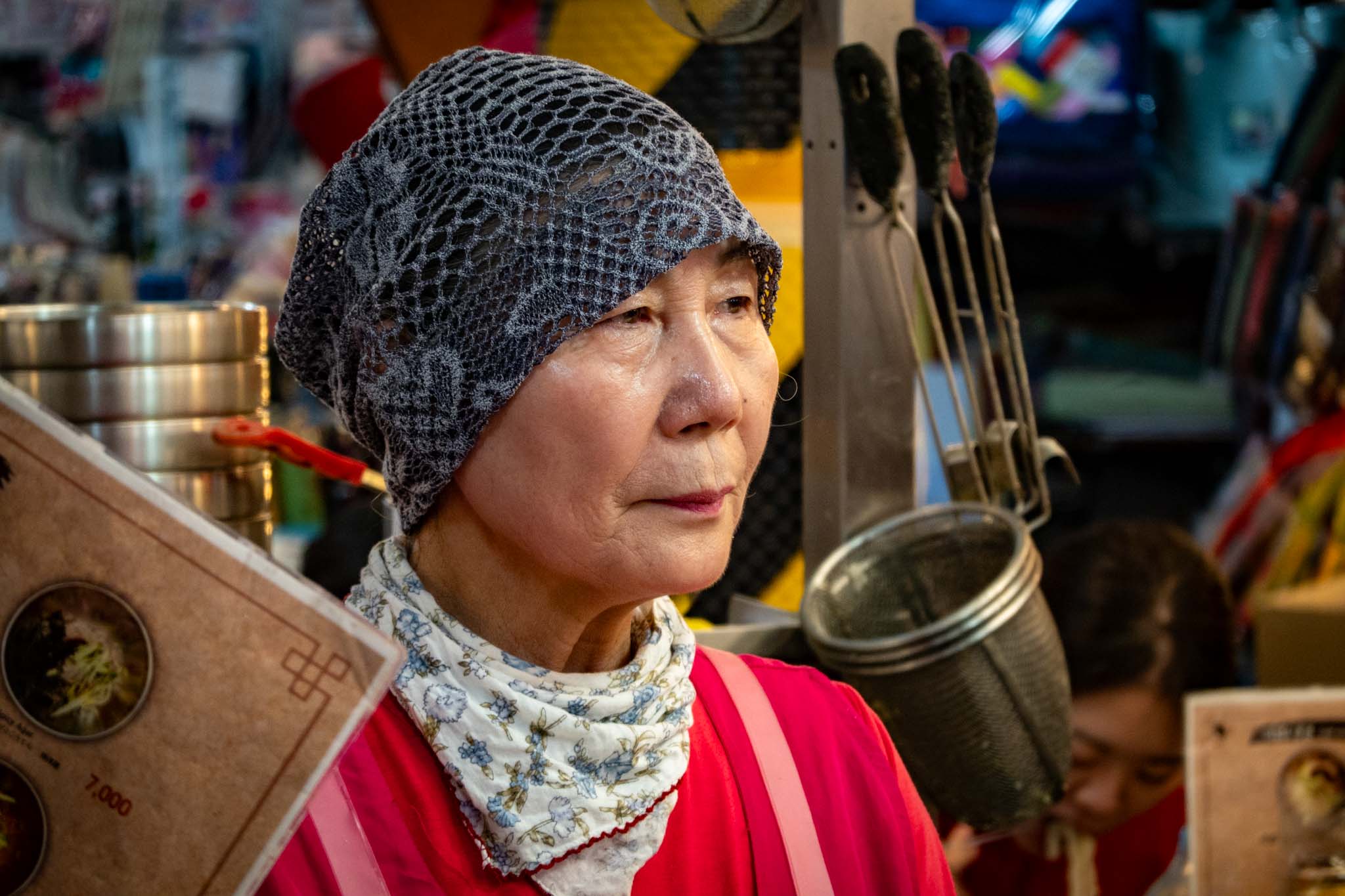
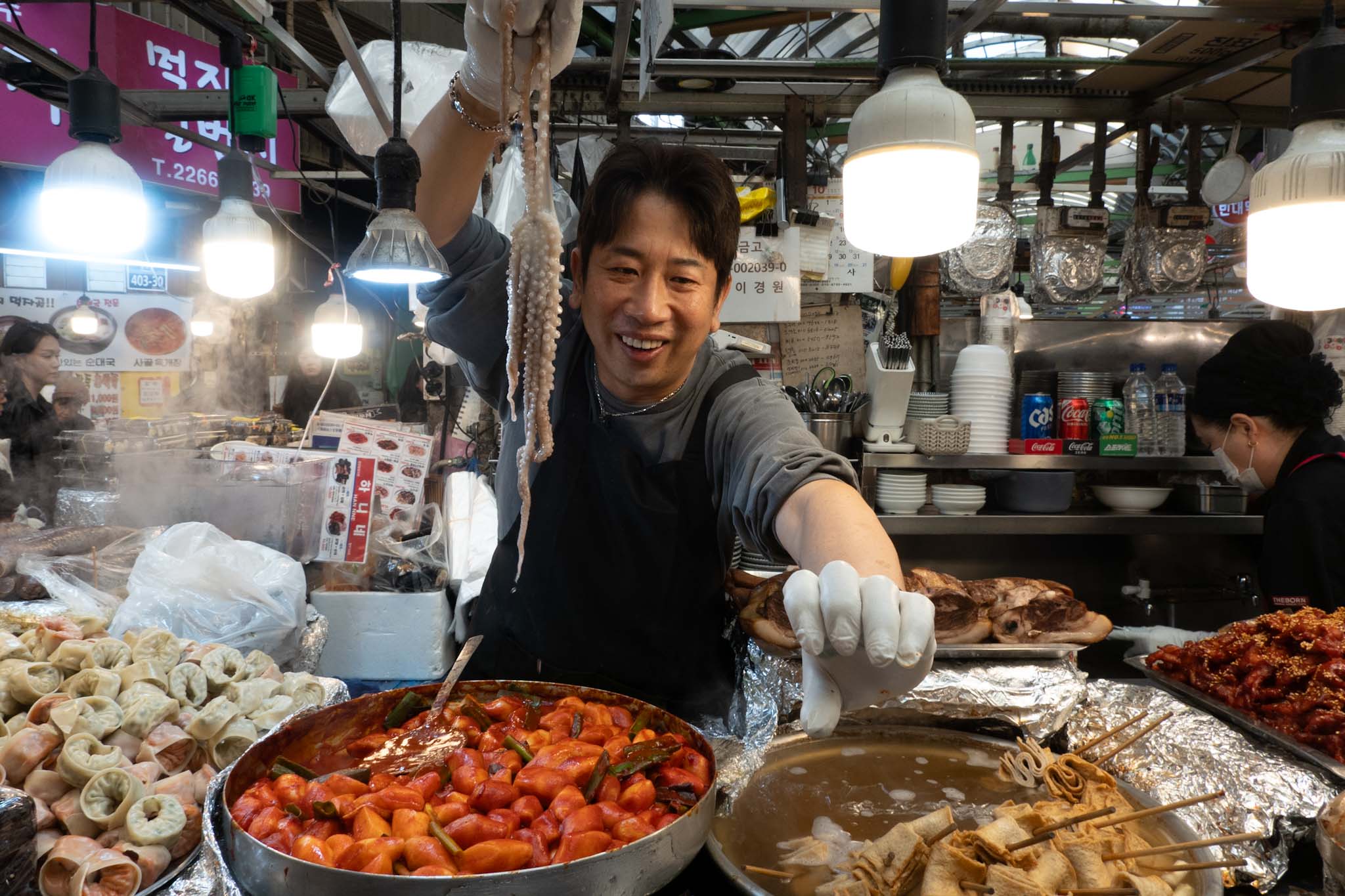
One young man, surrounded by bubbling pots of tteokbokki and skewers of fish cake, lifted a long octopus tentacle towards my camera with an enormous smile. It was a spontaneous exchange, the kind that makes street photography so rewarding. For a few seconds, the relationship between photographer and subject became part of the market itself. He was selling food, certainly, but also offering something less tangible: personality, humour and a moment of connection.
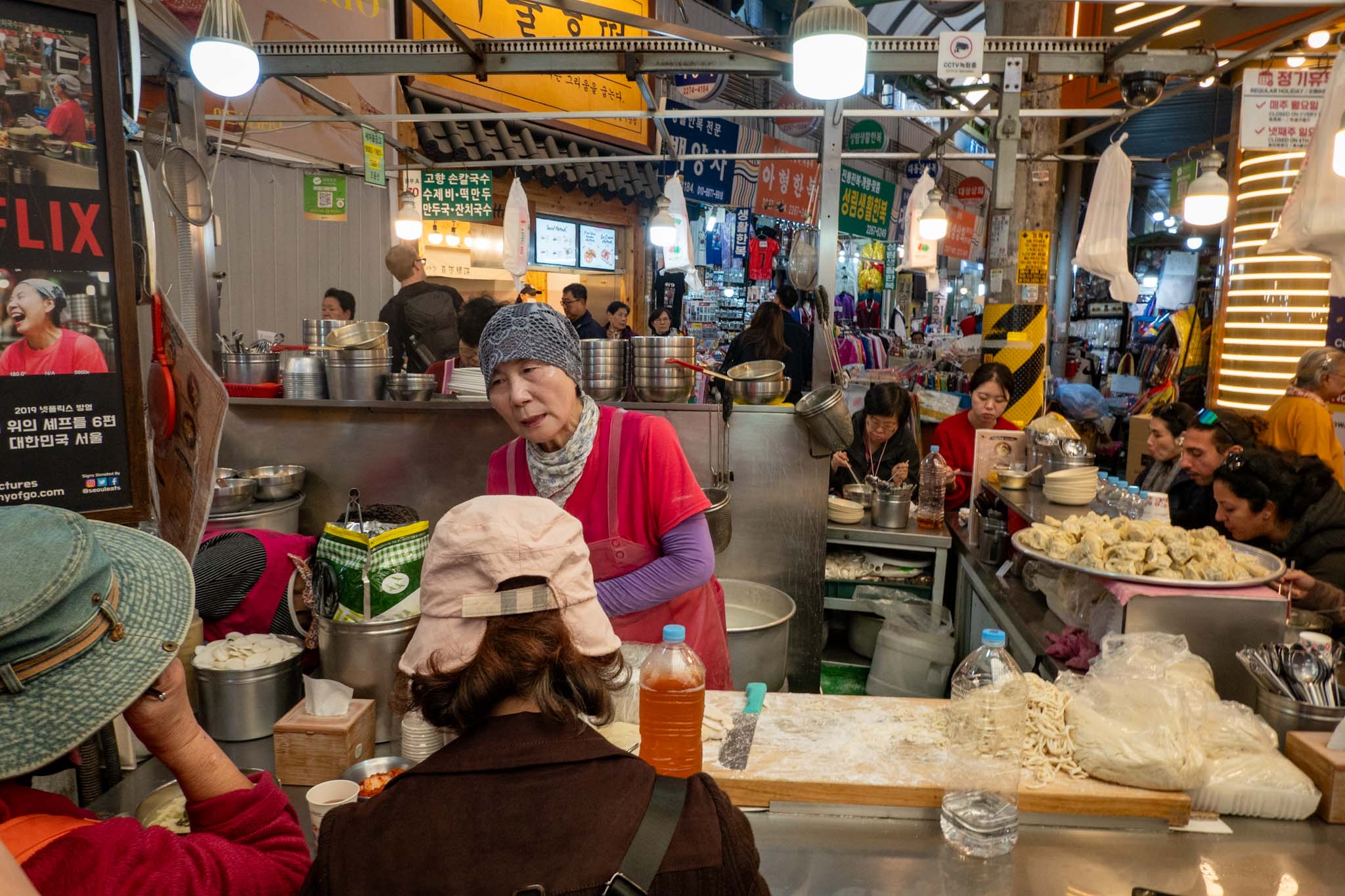
A few stalls away, the atmosphere was entirely different. Older women worked behind mountains of vegetables and glass noodles, their expressions serious, their movements precise. One woman, wearing a delicate knitted cap, seemed momentarily lost in thought amid the surrounding activity. Another stood behind her counter with the quiet authority of someone who knew exactly how things should be done. Their faces interested me more than the dishes in front of them.
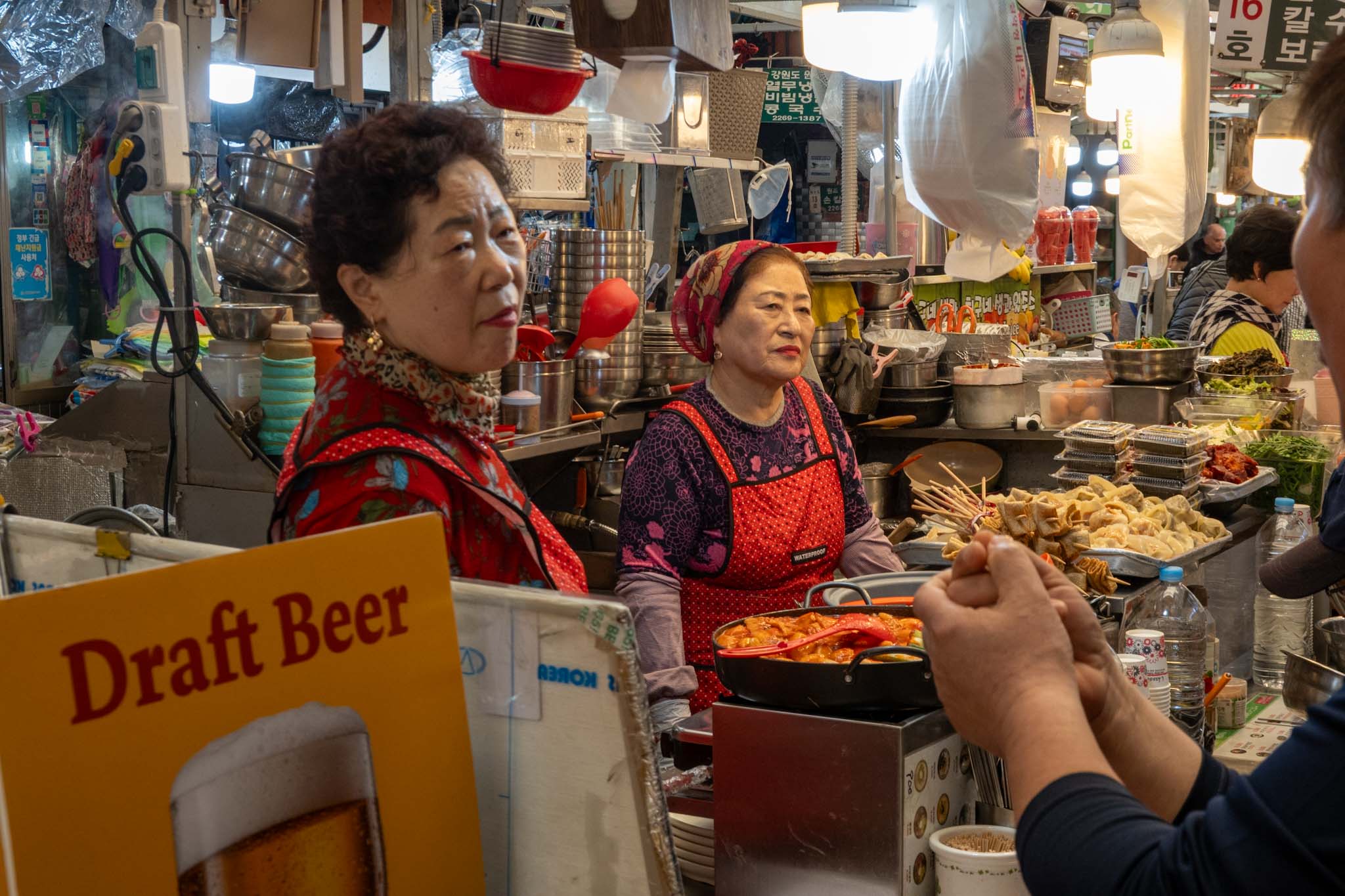
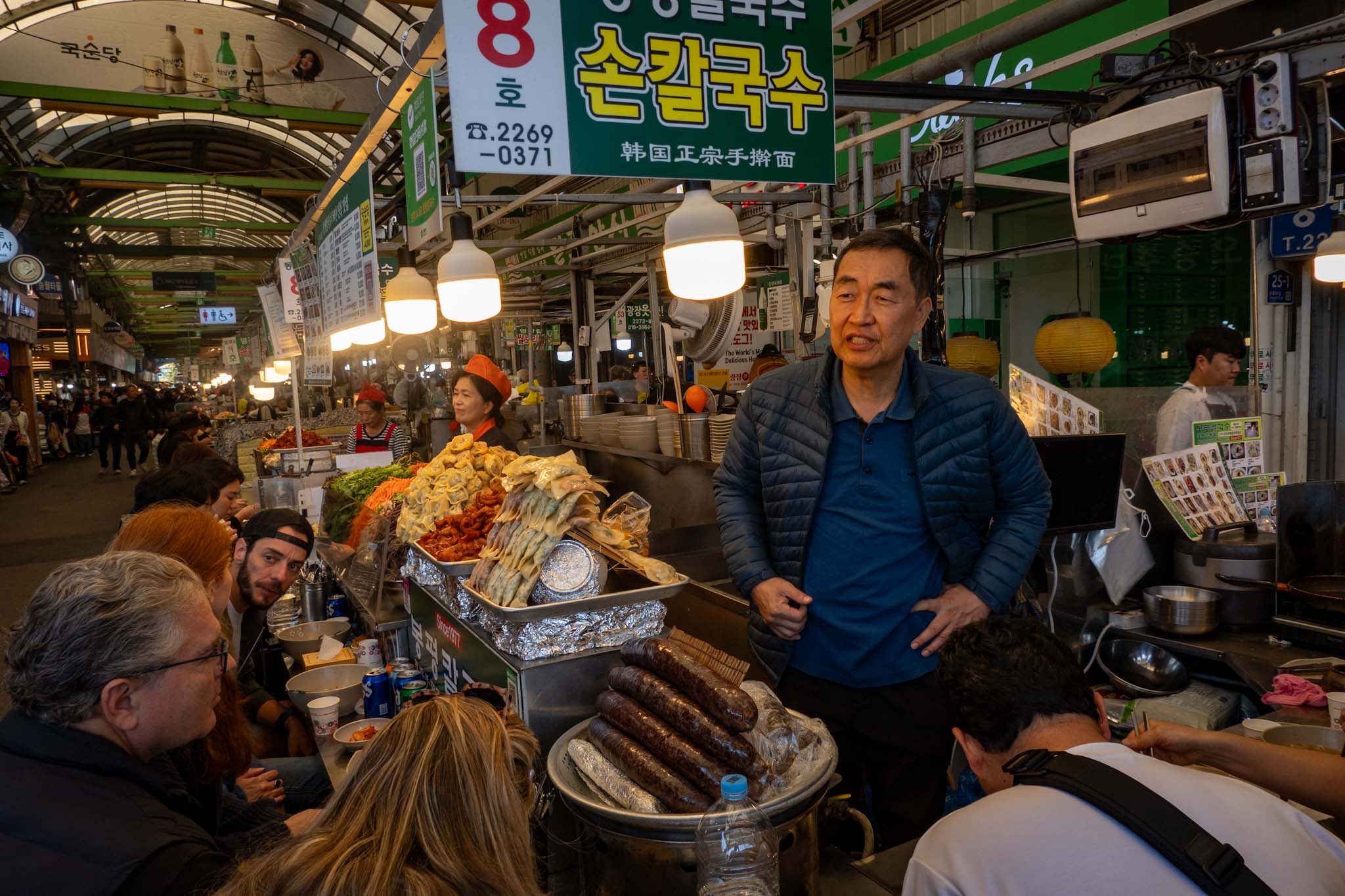
What struck me was the coexistence of these different temperaments within such a confined space. Gwangjang is crowded, noisy and intensely commercial, yet every stall retains something individual. There is no corporate choreography here, no standardized greeting or carefully designed customer experience. Each vendor brings a different personality to the counter, and the market becomes a mosaic of small human encounters.
Perhaps this is what distinguishes places like Gwangjang from the increasingly polished commercial environments of contemporary Seoul. Not necessarily the food, which can be reproduced elsewhere, but the unpredictable interaction between people. A smile, an impatient glance, a moment of concentration, an unexpected gesture towards a stranger holding a camera.
Walking away, I realized that the photographs I liked most were not really about Korean cuisine. They were portraits of people at work, surrounded by the objects and routines that define their daily lives, and perhaps that is the real attraction of Gwangjang: you arrive to discover what Korea eats, but you leave remembering the people who feed it.
Discover more from THE QUIET REPORT
Subscribe to get the latest posts sent to your email.
